
Trump says 'no comment' on use of force over Greenland
 2 Min Read
US President Donald Trump declined to rule out the use of force over Greenland while threatening tariffs on Europe, intensifying transatlantic tensions over sovereignty, security, and trade.
-
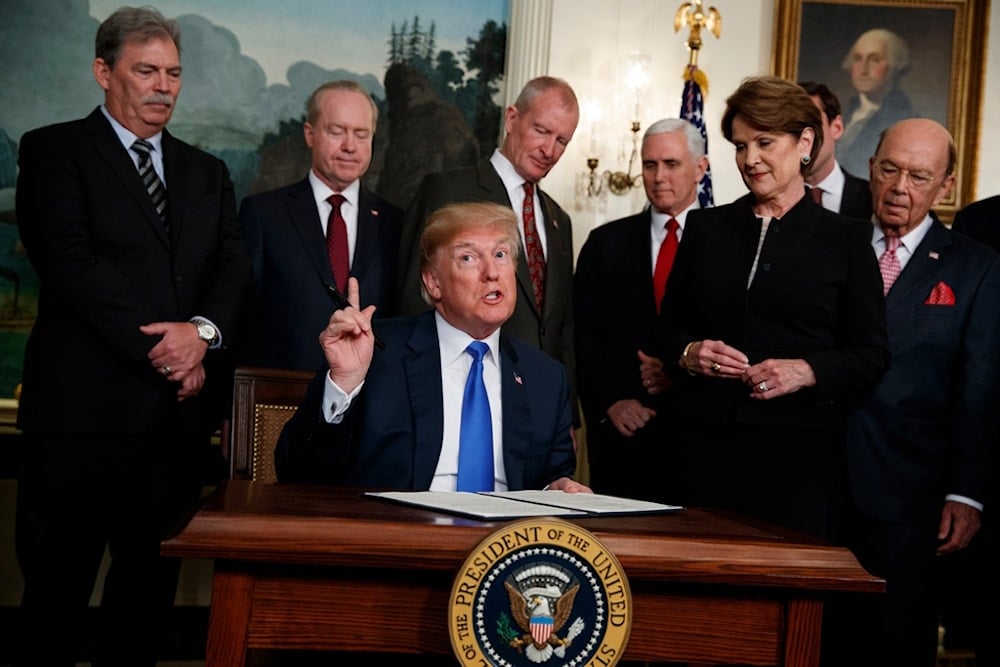
FILE - President Donald Trump speaks before he signs a presidential memorandum imposing tariffs and investment restrictions on China in the Diplomatic Reception Room of the White House, March 22, 2018, in Washington. (AP Photo/Evan Vucci, File)
US President Donald Trump declined to say whether he would consider using military force to take control of Greenland, while renewing threats to impose tariffs on European countries if negotiations over the Arctic territory fail.
Asked by NBC News on Monday whether he would resort to force to seize Greenland, Trump responded, “No comment.”
The remarks come amid a renewed push by Trump to press US claims over Greenland, an autonomous territory within the Kingdom of Denmark, and as relations between Washington and European capitals have become increasingly strained. Trump argued that Europe should focus its attention on the conflict in Ukraine rather than opposing Washington’s position on Greenland.
Trump also warned of economic retaliation if no agreement is reached, saying he is “100% determined” to impose tariffs on European countries should a Greenland deal fail to materialize.
Arctic Pressure Escalates
The timing of Trump’s comments reflects a broader escalation in his approach to Europe and the Arctic. In recent weeks, the US president has revived proposals first floated during his previous term to bring Greenland under American control, framing the issue as a national security priority linked to Arctic competition, missile defense infrastructure, and control over strategic resources.
European officials and analysts say the rhetoric has intensified following growing resistance from Denmark, Greenland’s elected leadership, and other European governments, as well as protests rejecting any forced transfer of sovereignty. Trump’s threats also coincide with rising transatlantic trade frictions, as Washington weighs the use of tariffs as leverage against European allies.
The renewed pressure campaign has raised concern across NATO, as it combines coercive trade measures with ambiguity over the potential use of force in a dispute involving allied territory, challenging long-standing norms governing alliance cohesion and territorial sovereignty.
Read more: EU rejects Trump tariff threats over Greenland sovereignty


