
Trump threatens Europe with tariffs to force Greenland Takeover
 4 Min Read
Trump warns European allies of tariffs rising to 25% unless a deal is reached for the US purchase of Greenland, risking NATO tensions.
-
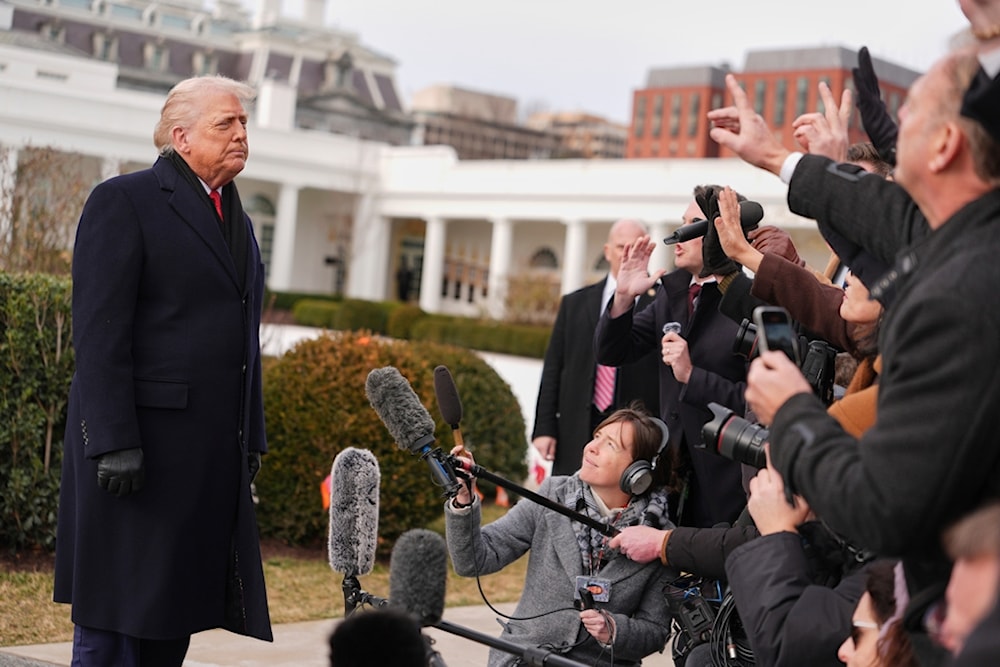
President Donald Trump takes questions from reporters before departing on Marine One from the South Lawn of the White House, Friday, January 16, 2026, in Washington (AP)
Donald Trump on Saturday escalated his push to acquire Greenland, threatening to impose sweeping tariffs on several European nations unless a takeover deal is reached to purchase the Danish territory, a move that could trigger unprecedented strains within the NATO alliance.
In a post on Truth Social, Trump said that starting February 1, Denmark, Norway, Sweden, France, Germany, the United Kingdom, the Netherlands, and Finland would face a 10% tariff on all goods exported to the United States. He added that the tariff would rise to 25% on June 1, 2026, remaining in place “until such time as a Deal is reached for the Complete and Total purchase of Greenland.”
Criticism for troop deployment to NATO
Trump singled out Denmark, a NATO ally, and criticized European states that have recently deployed troops to Greenland, a vast and mineral-rich territory at the gateway to the Arctic with a population of roughly 57,000. He said those countries were “playing a very dangerous game” by increasing what he described as security risks in the region.
“Therefore, it is imperative that, in order to protect Global Peace and Security, strong measures be taken so that this potentially perilous situation end quickly, and without question,” Trump wrote.
If implemented, the threatened tariffs would mark an extraordinary escalation against Washington’s NATO partners, raising questions about alliance cohesion at a time of heightened geopolitical competition in the Arctic. It was not immediately clear under what legal authority the US president would impose tariffs of up to 25%.
Since returning to office, Trump has rolled out broad tariff measures against a wide range of trading partners, framing them as a response to what Washington describes as unfair trade practices and as leverage to advance US strategic objectives.
EU lawmakers weigh freezing US trade deal
European lawmakers are debating whether to halt implementation of the trade agreement with the United States, as US President Donald Trump's threats to acquire Greenland strain transatlantic relations and force a reassessment of economic priorities against core principles of sovereignty.
The European Parliament faces a critical decision ahead of scheduled January 26-27 votes that would formalize the EU's commitments under an agreement already facing significant criticism for its asymmetric terms.
The tensions over Greenland transformed what was primarily an economic debate into a question of whether Europe will proceed with major trade concessions while the US president openly threatens the territorial integrity of an EU member state.
On January 14, a group of 23 lawmakers led by Danish MEP Per Clausen formally requested that European Parliament President Roberta Metsola freeze the agreement "for as long as claims for Greenland and threats are made by the US administration."
Parliamentary opposition crystallizes
The signatories, drawn primarily from the Left Group but including Social Democrats and Greens, argued that proceeding while Trump threatens to acquire Greenland "by any manner" would amount to rewarding aggressive behavior toward a member state.
Valerie Hayer, leader of the centrist Renew Europe group, indicated that her faction would consider postponing the vote if threats continue. Green lawmaker Anna Cavazzini noted that "Trump's actions show again and again that chaos is his only offer," undermining claims that the agreement would bring stability.
The Parliament's cross-party trade committee met Wednesday morning to debate postponement but reached no decision, instead agreeing to reconvene the following week. Parliamentary sources indicated left-leaning and centrist groups favor taking action, though significant concerns remain about potential American retaliation.
Freezing the agreement would uphold sovereignty principles the EU has long championed, but risks triggering the 30 percent tariffs Trump originally threatened. The Trump administration has ruled out any concessions until the EU implements its zero-tariff commitments. Conversely, proceeding while annexation threats continue would signal that economic pressure can override core principles, which some analysts argue could further embolden Trump against Europe.


