
EU lawmakers weigh freezing US trade deal over Greenland threats
 3 Min Read
Trump's threats to acquire Greenland force lawmakers to weigh economic interests against sovereignty principles and alliance commitments.
-
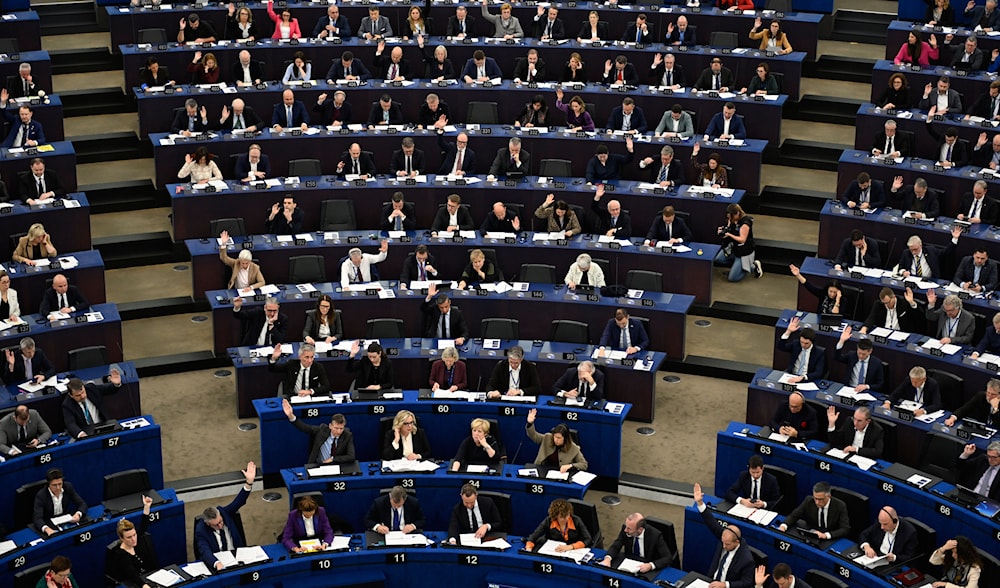
European Parliament members vote on the trans-Atlantic trade deal between South American nations of the Mercosur bloc and the 27-nation European Union, Tuesday, Dec. 16, 2025, at the European Parliament in Strasbourg, eastern France (AP)
European lawmakers are debating whether to halt implementation of the trade agreement with the United States, as US President Donald Trump's threats to acquire Greenland strain transatlantic relations and force a reassessment of economic priorities against core principles of sovereignty.
The European Parliament faces a critical decision ahead of scheduled January 26-27 votes that would formalize the EU's commitments under an agreement already facing significant criticism for its asymmetric terms.
The tensions over Greenland transformed what was primarily an economic debate into a question of whether Europe will proceed with major trade concessions while the US president openly threatens the territorial integrity of an EU member state.
Parliamentary opposition crystallizes
On January 14, a group of 23 lawmakers led by Danish MEP Per Clausen formally requested that European Parliament President Roberta Metsola freeze the agreement "for as long as claims for Greenland and threats are made by the US administration."
The signatories, drawn primarily from the Left Group but including Social Democrats and Greens, argued that proceeding while Trump threatens to acquire Greenland "by any manner" would amount to rewarding aggressive behavior toward a member state.
Valerie Hayer, leader of the centrist Renew Europe group, indicated that her faction would consider postponing the vote if threats continue. Green lawmaker Anna Cavazzini noted that "Trump's actions show again and again that chaos is his only offer," undermining claims that the agreement would bring stability.
The Parliament's cross-party trade committee met Wednesday morning to debate postponement but reached no decision, instead agreeing to reconvene the following week. Parliamentary sources indicated left-leaning and centrist groups favor taking action, though significant concerns remain about potential American retaliation.
Strategic risks
Freezing the agreement would uphold sovereignty principles the EU has long championed, but risks triggering the 30 percent tariffs Trump originally threatened. The Trump administration has ruled out any concessions until the EU implements its zero-tariff commitments. Conversely, proceeding while annexation threats continue would signal that economic pressure can override core principles, which some analysts argue could further embolden Trump against Europe.
Uncertain timeline
The Parliament's International Trade Committee is expected to vote on implementing legislation in late January, with a full plenary vote potentially occurring in subsequent months, depending on whether postponement prevails. Former US Ambassador to NATO Julianne Smith characterized the dispute as posing an existential test, warning that it "risks breaking the EU."
Trump's interest in acquiring Greenland has escalated dramatically since his return to office. The president has characterized control of the Arctic territory as an "absolute necessity" for American national security, citing increased Russian and Chinese activity.
On January 11, he declared, "One way or the other, we are going to have Greenland," declining to rule out military force. Danish Prime Minister Mette Frederiksen responded, stating any unilateral American action would constitute "the end of NATO," while seven major European nations issued a joint statement affirming that "Greenland belongs to its people."
The crisis has prompted European NATO members to discuss an "Arctic Sentry" military presence in Greenland, underscoring how thoroughly Trump's threats have disrupted traditional alliance dynamics.


