
Trump says 'unfair' for Iran to be barred from ballistic missiles
 4 Min Read
US President Donald Trump says Iran should not be restricted on ballistic missiles if other regional countries possess them, while also addressing US presence in the Gulf.
-
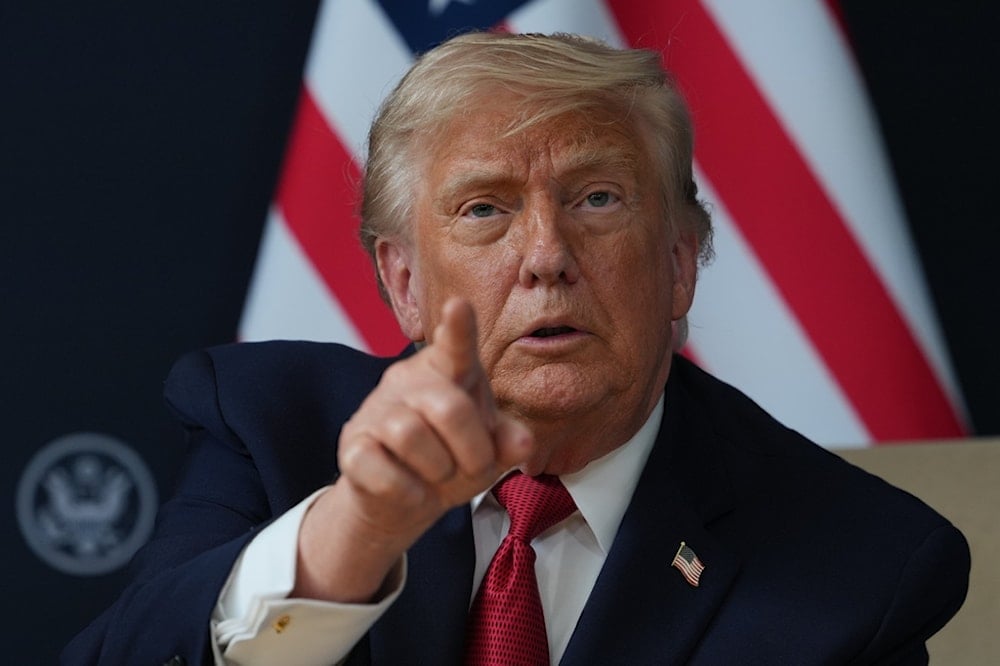
US President Donald Trump gestures as he meets with India's Prime Minister Narendra Modi on the sidelines of the G7 summit, Wednesday, June 17, 2026, in Evian-les-Bains, France. (AP Photo/Julia Demaree Nikhinson)
US President Donald Trump said on Wednesday it would be “unfair” for Iran to be barred from possessing ballistic missiles while other regional countries maintain similar capabilities.
“If other countries have them [ballistic missiles], it’s a little bit unfair for them [Iran] not to have some,” Trump said. “But if Saudi Arabia and Qatar, and they all have some, I would say, in relative proportion, I think it’s ok.”
Trump also commented on the US military presence in the Gulf, indicating that US forces are likely to remain deployed in the region for the foreseeable future.
“We haven’t thought about it. Probably for a while. It’s a good place to stay,” he said when asked about the issue.
Separately, Trump also said that the United States and Iran are expected to sign a memorandum of understanding within the next 48 hours, while also addressing regional security issues and the continued presence of US forces in the Gulf.
Speaking to reporters, Trump gave a brief timeframe for the anticipated agreement when asked about negotiations with Tehran, saying, “I’d say over the next 48 hours."
Frozen Iranian assets will eventually have to be returned
Earlier, the president also said Washington will eventually have to return Iran's frozen assets, arguing that indefinitely withholding the funds would damage international confidence in the US dollar and the broader financial system.
Speaking during a press conference in Evian, France, Trump acknowledged that the assets belong to Iran and suggested their eventual release is necessary to preserve trust in the dollar.
"It's not our money, it's their money, and we froze it at a certain point in time," Trump said. "I guess we're going to have to give it back. If we didn't give it back, nobody would ever invest in the dollar again."
Trump also said the United States possesses sufficient leverage to ensure compliance with the ceasefire arrangement between "Israel" and Hezbollah, describing the Lebanese front as a "much smaller conflict" that should be easier to resolve than other regional disputes.
He further thanked Russian President Vladimir Putin and Chinese President Xi Jinping for their neutral positions during the US confrontation with Iran, saying both leaders could have made the situation "much more difficult" for Washington but chose not to do so.
The remarks come as discussions continue over a potential US-Iran framework agreement that could address frozen Iranian assets, sanctions relief, regional security arrangements, energy exports, and the future management of the Strait of Hormuz. Negotiations remain ongoing, with several key issues, including implementation guarantees and post-war arrangements, still under discussion.
Pezeshkian says final agreement has yet to take shape
Meanwhile, Iranian President Masoud Pezeshkian said the understandings reached so far with the United States constitute an important step toward ending the war and opening a path toward negotiations, stressing that a final agreement has not yet fully taken shape.
Pezeshkian said Iran remains prepared for all scenarios, adding that the government's priority will continue to be serving the Iranian people "with honesty and sincerity" regardless of whether an agreement is ultimately reached.
He added that Iranians had learned from the martyred leader, Sayyed Ali Khamenei, not to submit to humiliation or insult, emphasizing that national unity remains the country's principal source of strength.
"As long as we remain united, no power will be able to harm the country," he said, arguing that Iran's adversaries had expected military action to weaken public support for the system, but that Iranians instead defended "the revolution, the system, and their homeland with unparalleled bravery."
Pezeshkian's statements come as Tehran and Washington prepare to enter a 60-day negotiating process in Switzerland aimed at reaching a final agreement on Iran's nuclear program, sanctions relief, and post-war arrangements. The comments also come amid renewed Israeli attacks on southern Lebanon, with Iran's Khatam al-Anbiya Central Headquarters warning that the Israeli occupation should "await a harsh response" over the continued aggression.


