
Trump’s war on Iran ends with political, strategic setback: Atlantic
 6 Min Read
The US war on Iran is ending with an uneasy deal that critics say falls short of US President Donald Trump’s goals, amid rising Republican and global scrutiny.
-
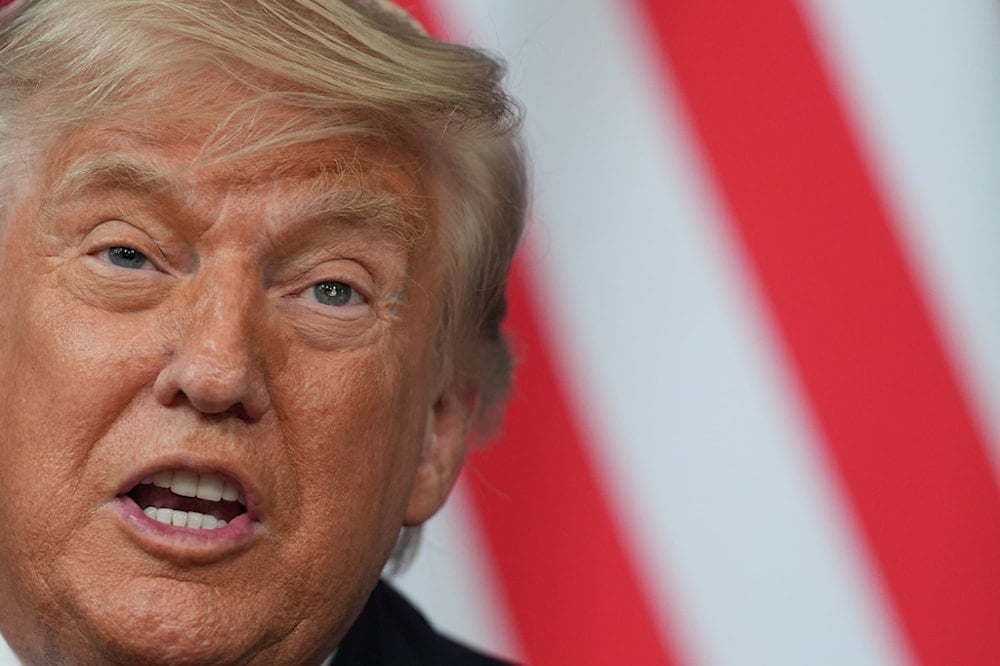
US President Donald Trump meets with Egypt's President Abdel Fattah al-Sisi on the sidelines of the G7 summit, Wednesday, June 17, 2026, in Evian-les-Bains, France. (AP Photo/Julia Demaree Nikhinson)
US President Donald Trump is heading toward a ceasefire agreement with Iran following a brief but costly war that, The Atlantic reports, is ending in what amounts to a strategic and political setback for his administration.
According to an opinion piece written in The Atlantic, the war concluded with an expected cease-fire agreement set to be signed in Geneva later this week. While the White House is portraying the outcome as a diplomatic success, the piece characterizes it as a “humbling whimper” that leaves the United States weaker militarily, strategically, economically, and potentially morally.
The war was conducted alongside “Israel,” yet, as The Atlantic notes, it failed to achieve the core objectives Trump articulated at the outset of the war.
Strategic objectives fall short as Iran gains ground
The Atlantic reports that the military operation did not accomplish its stated goals and instead strengthened the so-called hardliners in Tehran. The piece argues that Iran may now be more likely to pursue a nuclear weapon in the long term, despite public commitments to the contrary.
During the war, Trump repeatedly issued threats against Iran but later pulled back from escalation, allowing Tehran to test the credibility of US warnings, according to *The Atlantic*. The report also notes tensions between Trump and Israeli Prime Minister Benjamin Netanyahu, particularly over Israeli actions that risked undermining ceasefire negotiations.
Trump pushes deal as victory amid internal frustration
According to analysis, Trump has been aggressively presenting the emerging agreement as a major win, despite private frustration over comparisons to the Obama-era Iran nuclear deal.
The piece, citing advisors and individuals familiar with internal discussions, says Trump has expressed anger at Iran hawks within his political coalition and the Republican Party who have questioned the deal’s strength. At the same time, he has pushed for a rapid end to the war as concerns grew over economic costs and political fallout ahead of the midterms.
Trump’s political position is increasingly fragile, the report notes, with rising polling pressure and growing Republican dissatisfaction contributing to his transition toward a lame-duck phase.
Secretive negotiations and disputed terms of the agreement
The emerging agreement, which is expected to be signed in Geneva, has been criticized for its lack of transparency. The analysis reports that Trump and his team have indicated the text will not be fully released until after signing.
The deal includes a 60-day extension of the cease-fire and provisions affecting maritime operations in the Strait of Hormuz. These measures would allow for the lifting of a US naval blockade and the resumption of oil shipments from the region.
Iran, however, has reportedly agreed only to suspend fees on the strait temporarily, with unresolved questions about what happens afterward. The Atlantic also notes that the agreement delays addressing Iran’s uranium enrichment program, despite Trump previously framing it as the central justification for military action.
Divisions inside the Trump administration
The Atlantic writes that internal divisions have emerged within the administration over the deal’s structure and long-term viability.
Vice President JD Vance, along with negotiators Jared Kushner and Steve Witkoff, have reportedly supported the agreement. However, senior officials, including Secretary of State Marco Rubio, Secretary of Defense Pete Hegseth, and CIA Director John Ratcliffe, have expressed private reservations about implementation risks and enforcement mechanisms.
These disagreements, according to The Atlantic, reflect broader uncertainty inside the administration over whether the agreement can hold or effectively constrain Iran’s regional and nuclear ambitions.
Republican backlash from Iran hawks
Outside the administration, the agreement has triggered sharp criticism from Republican Iran hawks. The Atlantic reports that conservative commentator Mark Levin publicly questioned why the deal remains undisclosed, posting, “I have asked for days, why can’t we, the people, see the damn MOU?”
Senator Lindsey Graham has also raised concerns while avoiding direct criticism of Trump, instead attributing responsibility for aspects of the negotiation process to Vice President Vance, according to the report.
Other conservative figures, including Erick Erickson, have accused Trump of effectively conceding to Iran, while Marc Thiessen has warned that the emerging framework resembles the Obama-era nuclear agreement Trump once rejected.
The Atlantic also notes that the war escalated rapidly following joint US and Israeli attacks on Iranian targets. However, Iran adapted quickly, responding with regional pressure tactics that disrupted energy flows and contributed to a global oil crisis. Gas prices surged internationally, including in the United States, adding economic strain at home.
The report writes that Iran retained key military capabilities, including missile systems and proxy networks such as Hezbollah and Ansar Allah, while also tightening its leverage over the Strait of Hormuz.
Military costs, casualties, and economic strain
According to The Atlantic, the war has imposed high financial and military costs on the United States. The Pentagon reportedly spent around $25 billion by the end of April, with independent estimates suggesting total costs are now substantially higher.
The war has also depleted US munitions stockpiles, raising concerns about readiness in other strategic regions, including Asia and Europe. Civilian casualties have further intensified criticism, including reports of more than 170 deaths in a single strike on a girls’ school during the early phase of the war.
Overall, more than 3,000 people were killed in Iran during the war, alongside 13 US service members.
Political consequences and Trump’s shrinking global leverage
The Atlantic argues that the outcome of the war has weakened Trump’s international standing and accelerated perceptions of political decline. The report notes that world leaders, once cautious in dealing with his administration, are increasingly willing to challenge U.S. positions.
At home, Trump continues to hold significant political power, but Republican resistance and judicial setbacks are growing, as per The Atlantic. The report also notes expectations that Democrats could gain control of at least one chamber of Congress in upcoming elections, potentially constraining Trump’s agenda and triggering investigations.
Looking forward, The Atlantic reports that Trump is likely to continue pursuing an assertive foreign policy, including potential new initiatives involving Cuba, Greenland, and renewed diplomatic efforts in other wars. However, the war with Iran is presented as a turning point that may hasten his transition into a politically weakened, lame-duck presidency.
Read more: As Washington changes course, Netanyahu misses the turn


