
Trump weighs end to Iran war; top aides seek 'calm' before midterms
 7 Min Read
Trump is reportedly weighing an end to the war on Iran as senior aides seek to contain escalation before the November midterms
-
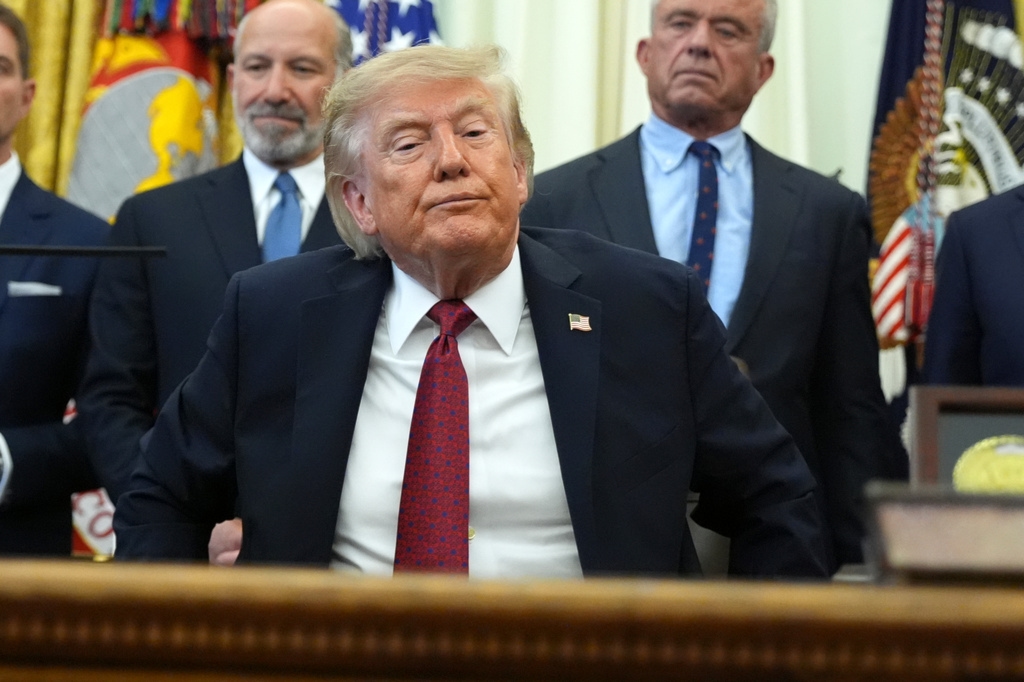
US President Donald Trump prepares to depart after speaking in the Oval Office of the White House, Monday, Aug. 31, 2026, in Washington (AP)
US President Donald Trump is reportedly holding private discussions with senior aides over diplomatic moves that could allow Washington to declare an end to its war on Iran, as the conflict places growing pressure on his administration ahead of the November 3 midterm elections.
According to The Wall Street Journal, the discussions center on the possibility of bringing the war to an end even as US attacks and Iranian retaliatory operations continue across the region.
The deliberations come more than six months into a campaign that has imposed mounting political and military costs on Washington without forcing Tehran to accept US demands. They also point to an increasingly urgent effort inside the White House to prevent the war from becoming a greater liability for Trump's Republican Party before Americans head to the polls.
No formal decision to end hostilities has been announced. However, the discussions coincide with a broader effort by senior administration officials to prevent another major escalation in the weeks leading up to the elections.
Washington seeks pre-midterm calm
This comes as Reuters reported on Wednesday that senior White House aides are pushing to keep the war relatively "quiet" before the November vote, with four people familiar with internal deliberations saying the administration is concerned about the conflict's electoral consequences for Republicans.
The strategy does not mean Washington has ruled out further military escalation. According to Reuters, US officials could reconsider a broader campaign after the elections, although a return to full-scale warfare remains uncertain.
For now, the Trump administration is increasingly turning toward economic coercion rather than expanding military operations, using sanctions and other pressure measures in an effort to extract concessions from Tehran.
"We are keeping the pressure on Iran," one White House official told Reuters. "But November is a priority," underscoring how strongly Washington's calculations are being shaped by the US electoral calendar.
Unpopular war weighs on Republicans
Public opposition to the war has grown sharply in the United States, with a late-August Reuters/Ipsos poll showing that only 31% of Americans approve of the conflict, while 63% disapprove.
The war's economic repercussions have added to the administration's difficulties, particularly as voters contend with higher gasoline prices. Trump's approval rating has also fallen from 40% to 33% since the conflict began, according to Reuters/Ipsos polling.
For Republicans defending narrow majorities in the House and Senate, preventing another major escalation before November could help keep the increasingly unpopular war from dominating the final weeks of campaigning.
Trump has denied that electoral considerations are shaping his decisions, saying his policy remains focused on preventing Iran from obtaining a nuclear weapon. Still, two White House officials cited by Reuters said Vice President JD Vance and Secretary of State Marco Rubio support keeping the war relatively "quiet" until after the elections.
Prolonged war strains US military
Washington's political concerns coincide with mounting military constraints after more than six months of operations against Iran.
Reuters reported in August that US forces had used "virtually all" of their supply of certain precision missiles, raising concerns over Washington's ability to sustain a prolonged campaign.
Separately, The Washington Post reported that the chiefs of the US Army, Navy, and Air Force warned Pentagon chief Pete Hegseth that extending the war would be unsustainable and could undermine US military readiness in other theaters.
A reduction in fighting would therefore give the Pentagon time to replenish depleted weapons stocks and ease pressure on forces deployed across the region.
"The timetable has changed," one senior White House official told Reuters, while another said that "the calendar is driving Iran." The Pentagon has nevertheless maintained that US forces still have everything required to continue their operations.
US attacks threaten Washington's de-escalation strategy
Washington's attempt to keep the conflict contained is already being undermined by continued US attacks on Iranian territory. The United States struck alleged targets on Iran's Larak Island over the weekend, prompting Iranian retaliatory missiles toward targets in Jordan and the United Arab Emirates.
US forces then carried out another series of attacks around the Strait of Hormuz on Tuesday, which observers described as the largest outbreak of fighting since July. Iranian military personnel and civilians were killed in the US strikes.
Trump subsequently threatened Iran with considerably heavier attacks if Tehran responded. "If the failed Nation of Iran retaliates for this very justified attack, they will be hit again at a much harder and higher level," he wrote on Truth Social.
The threat exposes a contradiction in Washington's strategy: seeking to prevent escalation before November while continuing to attack Iran and threatening further strikes in response to retaliation.
Analysts cited by Reuters warned that further Iranian retaliation against US military installations, vessels, or regional infrastructure could trigger another escalation cycle. Barbara Leaf, the former top State Department official for the Middle East under Joe Biden, similarly argued that Tehran has little incentive to preserve Washington's preferred version of "calm" while the United States simultaneously intensifies economic pressure.
Military pressure gives way to economic coercion
As Washington seeks to avoid another large-scale confrontation before the elections, the Trump administration is expanding economic pressure on Tehran.
The United States has threatened countries that continue trading with Iran with additional sanctions while maintaining its blockade around the Strait of Hormuz, hoping to force Tehran back into negotiations without immediately returning to broader military action.
Alex Plitsas, a senior fellow at the Atlantic Council, told Reuters that the sanctions campaign is intended to compound the pressure generated by the blockade. The strategy, however, faces significant obstacles, as Iran has endured decades of US sanctions without relinquishing its core positions, while major powers including China have resisted Washington's attempts to isolate Tehran.
Pressure campaign risks escalation
The economic campaign could also undermine Washington's stated desire for calm. US Treasury Secretary Scott Bessent has acknowledged that intensified pressure could prompt an Iranian military response, while several Gulf governments have urged Washington to de-escalate following previous rounds of attacks, according to regional diplomats cited by Reuters.
Taken together, the reports point to an administration seeking a diplomatic path that could allow Trump to declare the war over, or at least keep the fighting contained until after the midterms, as domestic opposition and mounting military constraints narrow Washington's options.
At the same time, the possibility of broader US military action after November raises questions over whether the current push for calm represents a genuine effort to end the war or a tactical attempt to postpone escalation until after Americans vote.
Read more: US military chiefs warn Hegseth against prolonging war on Iran: WP


