
Turkey's ruling party intends to nominate Erdogan for president again
 2 Min Read
Turkey's ruling Justice and Development Party has announced that President Recep Tayyip Erdogan will be its candidate in the upcoming presidential election, with party bodies demonstrating a "resolute position" on his nomination.
-
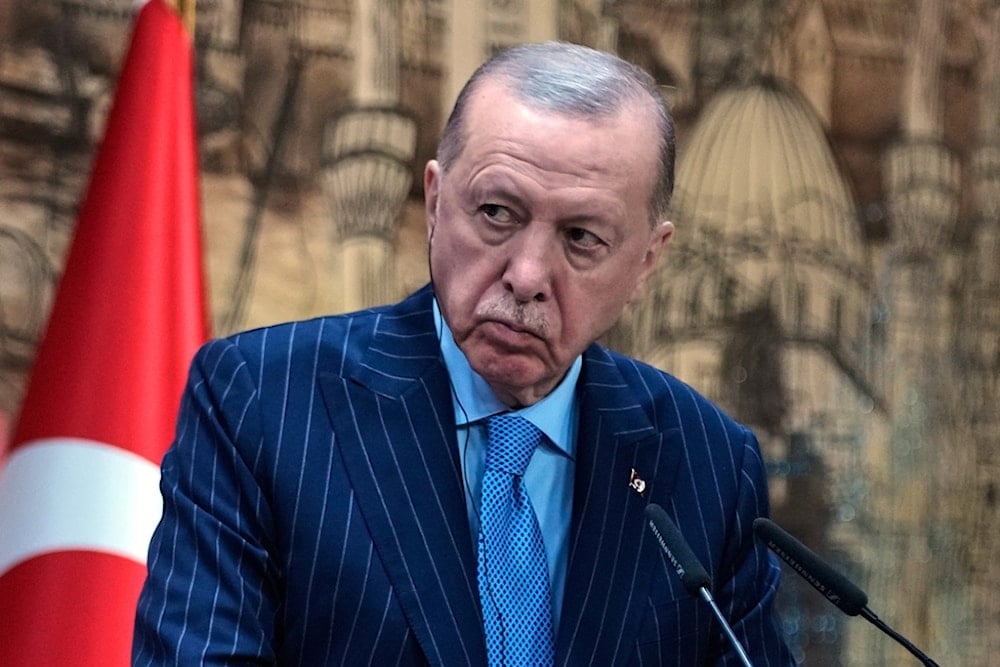
FILE - Turkey's President Recep Tayyip Erdogan listens as Somalia's President Hassan Sheikh Mohamud speaks during a joint news conference in Istanbul, Turkey, on Dec. 30, 2025. (AP)
Turkey's ruling Justice and Development Party has announced that its candidate in the upcoming presidential election will be incumbent President Recep Tayyip Erdogan, with party spokesman Omer Celik confirming that "all the bodies of our party demonstrate a resolute position" on the nomination.
Speaking at a briefing, Celik said: "From the point of view of our party, the presidential candidate in the upcoming elections is our President, Mr. Recep Tayyip Erdogan." The announcement comes as the ruling party weighs the timing of the next presidential election, with spring 2028 emerging as a possible date.
Presidential Chief Adviser Mehmet Ucum previously suggested that Turkey could hold its presidential and parliamentary elections on April 16, 2028. For elections to take place on that date, parliament would only need to adopt a decision on the early renewal of its composition before the scheduled election date of May 7, 2028.
Timing of elections under consideration
The leadership of the ruling party is leaning toward holding presidential elections in spring 2028 in order to give the economy additional time to strengthen, the Turkiye newspaper reported.
Erdogan has previously stated that presidential elections in Turkey should be held on schedule, in May 2028.
However, nearly 60 percent of Turkish citizens support holding early general elections, according to a survey by ASAL Arastirma, reflecting public desire for political change amid economic challenges.
Erdogan's political future
Erdogan has been in power since 2003, serving as prime minister until 2014 and as president since then. If he wins the next election, his rule would extend into the 2030s, making him one of the longest-serving leaders in modern Turkish history.
The president has maintained a firm grip on Turkish politics despite economic headwinds and criticism from opposition parties.
His decision to seek another term reflects his confidence in his continued popularity and his belief that he remains the best candidate to lead the country through its current challenges.


