
Two killed as rioters open fire on police in southwest Iran
 3 Min Read
Iranian media report two deaths and 30 injuries after armed rioters opened fire on police in Lordegan amid unrest over the collapsing rial.
-
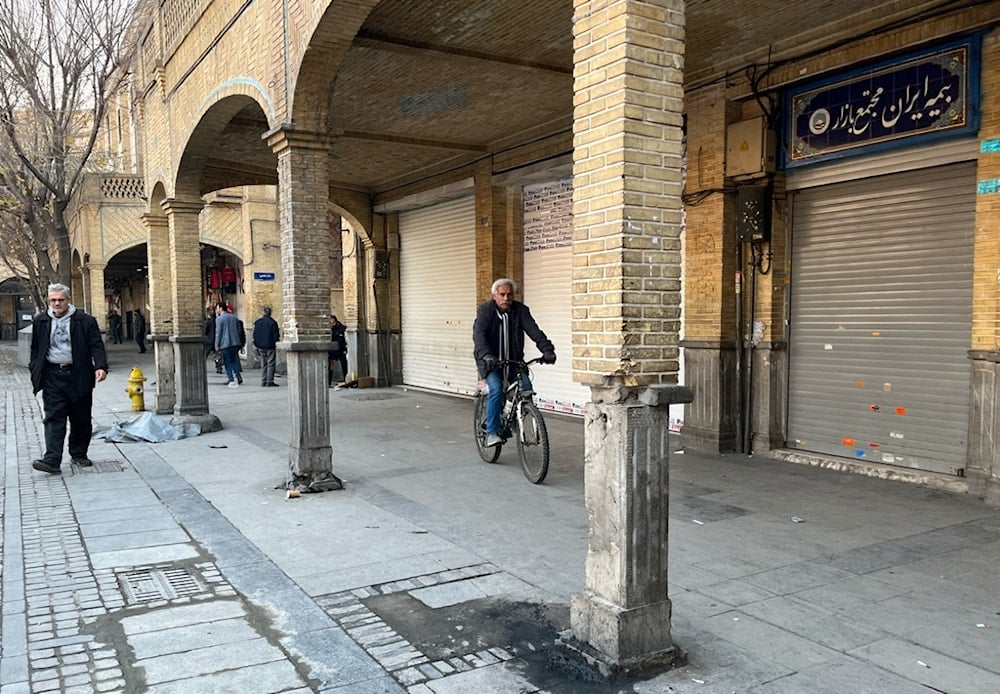
A man rides his bicycle as others walk while shops are closed during protests in Tehran's main bazaar, Iran, Tuesday, January 6, 2026 (AP)
Two people were killed and at least 30 others injured after armed rioters opened fire on Iranian law enforcement officers in the city of Lordegan, located in Iran’s Chaharmahal and Bakhtiari province, Iranian media reported on Wednesday.
According to Fars News Agency, several rioters carrying firearms shot at police during the height of ongoing demonstrations. The report said that multiple administrative buildings were also damaged during the unrest.
Iranian authorities acknowledged what they described as the public’s right to protest but stressed the need to distinguish demonstrations from riots. Gholam-Hossein Mohseni-Ejei warned that there would be “no leniency and no indulgence” toward those involved in violent acts.
Protests across Iran erupted in late December following a sharp depreciation of the national currency, the rial. Demonstrators have voiced anger over exchange-rate volatility and its direct impact on wholesale and retail prices, as economic pressures continue to intensify nationwide.
IRGC arrest rioters amid protests
Iran’s Islamic Revolution Guard Corps (IRGC) announced the detention of several individuals accused of orchestrating unrest in multiple areas, as authorities step up security measures aimed at preventing the exploitation of economic protests by organized and disruptive elements.
According to reports carried by Mehr News Agency, the Intelligence Organization of the IRGC arrested a group described as riot organizers in the city of Zanjan.
In a separate report, Tasnim News Agency said similar arrests were carried out in western areas of Tehran Province, adding that criminal cases have been opened and formally transferred to judicial authorities for legal review.
Economic unrest
The arrests follow demonstrations that took place in late December in the capital, where protesters expressed anger over the rapid weakening of the Iranian rial and the resulting surge in prices across wholesale and retail markets. Iranian officials, including senior political figures, have publicly acknowledged the legitimacy of economic grievances, particularly among bazaar merchants and working families affected by currency volatility and rising living costs.
At the same time, authorities have warned that such protests have been deliberately targeted by coordinated groups seeking to transform economic discontent into disorder. Security bodies have said some detainees admitted to receiving foreign-linked financial incentives, including payments in US dollars, as part of efforts to incite unrest, claims Tehran has cited as evidence of external attempts to destabilize the country under conditions of sustained sanctions pressure.
The economic fallout has also produced political consequences. Amid mounting pressure and market instability, Mohammad Farzin stepped down from his post, marking a high-level resignation as the government moves to recalibrate monetary and exchange-rate policies in response to the crisis.


