
UAE expels Pakistani workers amid rift over Pakistan’s peace efforts
 4 Min Read
The UAE expels Pakistani workers amid rising diplomatic tensions linked to Pakistan’s efforts to mediate the ceasefire between the US and Iran.
-
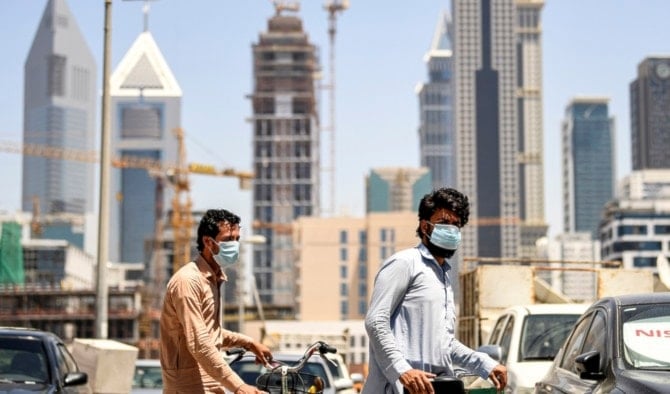
Foreign workers walk pushing bicycles along a street in the Satwa district of Dubai on May 6, 2020. (AFP)
Relations between Pakistan and the United Arab Emirates have reportedly come under pressure amid Pakistan’s involvement in diplomatic efforts to secure a permanent ceasefire and an end to the US-Israeli war on Iran.
According to a New York Times report on Friday, citing accounts mentioned in multiple reports, the UAE has expressed dissatisfaction with Pakistan’s diplomatic positioning, particularly regarding its response to Iranian strikes targeting Gulf territory and Islamabad’s mediation efforts between global and regional powers. While both governments continue to publicly affirm strong bilateral ties, behind the scenes, tensions appear to be growing over political alignment in the region.
In recent weeks, Pakistani workers in the UAE have reportedly faced unprecedented detentions and deportations, with community leaders and affected individuals describing large-scale expulsions. More than two million Pakistanis reside in the UAE, forming one of the largest expatriate communities in the Gulf and contributing significantly to Pakistan’s economy through remittances exceeding $8 billion annually.
Several Pakistani workers said they were detained without prior notice, held for days, and then deported without clear explanations. Many reported being issued emergency travel documents by Pakistani consular authorities before removal. Business owners in the UAE also stated that some Pakistani employees had their visas revoked or were prevented from renewing work permits.
Economic importance of UAE–Pakistan labor links
The UAE remains one of Pakistan’s most important economic partners, particularly through labor migration and remittance flows that support millions of households. Maintaining stable diplomatic relations with Gulf states remains a strategic priority for Islamabad.
Analysts cited by the NYT suggest that the tensions may be linked to Pakistan’s broader diplomatic positioning in the region, including its involvement in efforts to mediate between competing regional powers.
Some regional commentators argue that disagreements over Iran-related diplomacy have influenced perceptions in the UAE regarding Pakistan’s neutrality and alignment. The situation also reflects wider geopolitical divisions in the Gulf, where competing alliances and security concerns continue to shape foreign policy decisions.
Those deported or affected by visa cancellations describe sudden job losses, detention, and forced departure without access to personal belongings or financial settlements. Workers interviewed reported uncertainty over the reasons for their removal, with many expressing concern over lost income and disrupted family support systems in Pakistan.
Community representatives in Pakistan estimate that thousands of families may have been impacted in recent weeks, particularly in regions with large overseas labor populations.
UAE dissatisfaction turns to economic pressure
The UAE's dissatisfaction with Pakistan's regional standing surfaced last month as well, after the UAE expressed concerns around Pakistan's "closeness" with Iran.
Earlier last month, Pakistan was set to repay the UAE $3.5 billion, a senior cabinet minister confirmed during a briefing on Friday, Express Tribune reported. About $450 million of the total amount, initially borrowed in 1996–97 for one year, was scheduled for repayment, marking a return of funds after 30 years. According to the plan, a $2 billion payment would follow and an additional $1 million later in the month, according to government officials. Pakistan completed the payment in full by April 24.
But more importantly, the repayment was expected to put significant pressure on Pakistan’s foreign currency reserves, which are already under stress. Analysts warned that using these reserves for debt repayment could limit Pakistan’s ability to manage its external finances. That said, the UAE had reportedly been reluctant to extend the debt for another year, amid the US-Israeli war on Iran, which accelerated preparations for repayment.


