
UAE prepares to join US-led move to open Hormuz by military force: WSJ
 4 Min Read
The UAE is preparing to become the first Gulf state to actively join the US-Israeli war on Iran, as it lobbies for a UN resolution to authorize to force the Strait of Hormuz open.
-
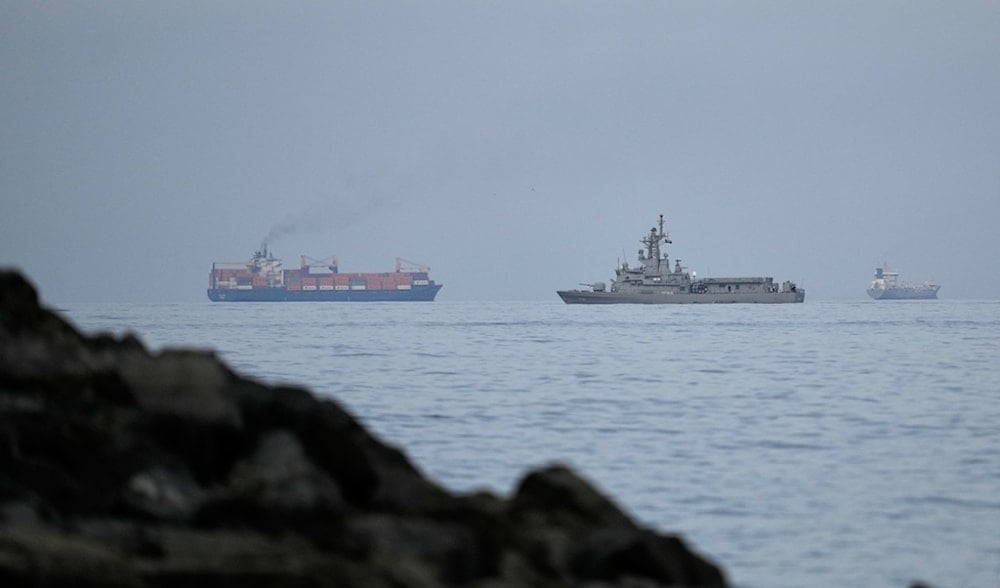
A UAE navy ship sails next to a cargo ship in the Strait of Hormuz as seen from Khor Fakkan, United Arab Emirates, Wednesday, March 11, 2026 (AP)
The United Arab Emirates is preparing to help the United States and other allies open the Strait of Hormuz by force, Arab officials said, as cited by the Wall Street Journal, a move that would make it the first Gulf country to become an active combatant in the US-Israeli war on Iran.
The UAE is lobbying for a United Nations Security Council resolution that would authorize such action, the officials said. Emirati diplomats have urged the US and military powers in Europe and Asia to form a coalition to open the Strait by force. A UAE official said Iran thinks it is fighting for its existence and is willing to bring the global economy down with it in a chokehold on the strait.
Falling into line with Trump
Now, the Gulf state is aligning itself with President Trump's push for allies to take on more of the war's burden, particularly in helping to open the Strait of Hormuz. This comes despite reports that Trump has told aides he is willing to end the war without reopening the strait, leaving the matter to other countries.
A UAE official said the country was actively reviewing how it could play a military role in securing the Strait, including efforts to help clear it of mines and other support services. The Gulf state has also suggested that the US should occupy islands in the strategic waterway, including Abu Musa, which Iran claims sovereignty over.
In a statement, the UAE Foreign Ministry pointed to a separate resolution passed by the UN condemning Iran's attacks on its cities and to one made by another UN body, the International Maritime Organization, condemning the closure of the Strait of Hormuz. The Emirati Foreign Ministry said there is "broad global consensus that freedom of navigation in the Strait of Hormuz must be preserved."
The UAE's shift comes as Iran has made clear that the strait remains open to non-hostile vessels that coordinate with Tehran, while Iran continues to close the waterway to the aggressors and their allies. Whether the UAE's decision to take a more active military role will bring stability to the region or draw it deeper into a prolonged war remains to be seen.
Risks of joining the fight
The UAE's participation in freeing the Strait carries significant risks. It could set the stage for tension that outlasts the end of the war.
"The proximity along the strait means that you can team up and place different platforms there to protect shipping and go after Iranian targets on the other side of the Gulf," said Grant Rumley, a senior fellow at the Washington Institute.
But not everyone is convinced military action can succeed. Rep. Adam Smith, the ranking member of the House Armed Services Committee, said, "I don't think we can do it. All Iran has to do is be able to keep the strait under threat, which means they need one drone, they need one mine, they need one small suicide boat."
Yet the UAE's decision to join the fight represents a gamble. It would make the country a direct combatant in a war that has already killed thousands and shows no sign of ending, and it would place the UAE in the position of helping the US achieve a strategic objective, reopening the Strait of Hormuz, that Washington has already signaled it may not have the appetite to finish.
As one analyst noted, Gulf states could "step into this war only to face a more aggressive Iran, continue to absorb hits to critical infrastructure and potentially investor confidence, and then struggle to rebuild ties with their neighbor" if Trump declares victory before the Strait is reopened or Iran's capabilities are crippled.
Whether the UAE's calculation will pay off or backfire remains to be seen.
Read more: US, 'Israel' trying to pit Arab Gulf states against Iran: Lavrov


