
Dubai’s global image is facing growing scrutiny with war on Iran
 3 Min Read
An opinion piece by Atbin Moayedi argues that Dubai’s global image as a safe, glamorous hub is being challenged amid rising regional tensions linked to the war on Iran
-
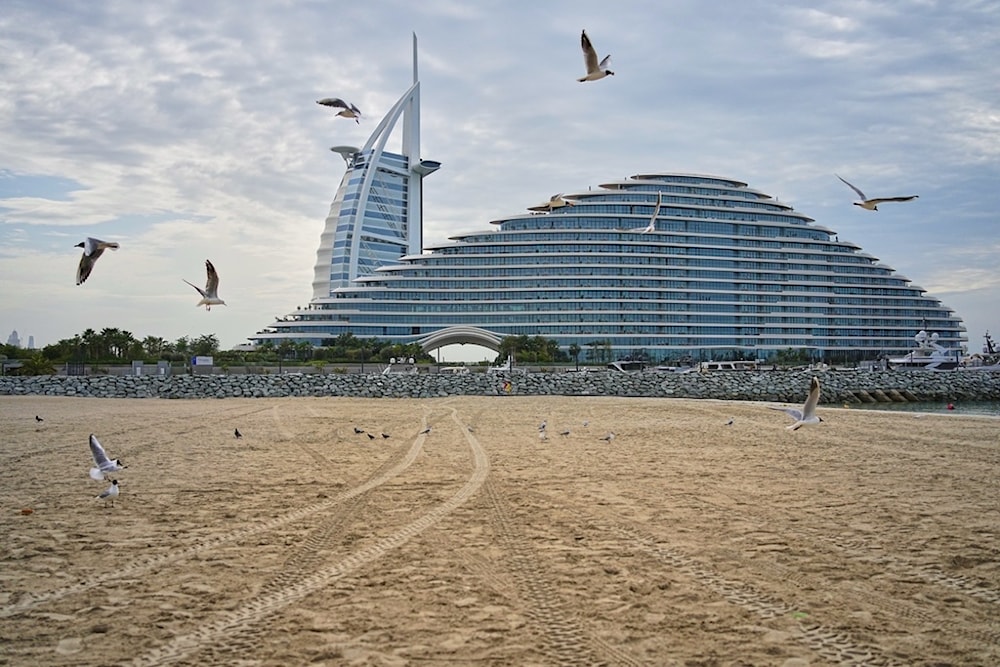
Seagulls fly over the beach with the Burj Al Arab and Jumeirah Marsa Al Arab hotels in the background in Dubai, United Arab Emirates, Thursday, March 12, 2026. (AP Photo/ Fatima Shbair)
Dubai’s global image is facing growing scrutiny amid rising regional tensions and shifting geopolitical dynamics linked to the war on Iran. Once widely promoted as a safe, tax-friendly hub for investment and lifestyle, the city is now being viewed through a more critical lens as concerns over security, stability, and long-term sustainability gain attention.
In an opinion piece for The Spectator, Atbin Moayedi argues that Dubai’s global image is facing growing scrutiny amid rising regional tensions linked to the US-Israeli war on Iran, suggesting that the city’s carefully curated reputation is beginning to unravel.
Moayedi writes that one of Dubai’s strongest attractions has been its tax-free environment, alongside perceptions of safety and high living standards. However, he argues that recent regional developments, including reported drone attacks attributed to Iran, have challenged the idea of Dubai as a secure haven.
He points to the UAE’s legal framework, referencing an incident in which a British man was reportedly charged under cybercrime laws after filming missiles over Dubai. He presents this as an example of tension between the city’s global image and its internal regulations.
Moayedi also argues that Dubai’s appeal is largely tied to wealth and surface-level attraction, contrasting it with what he describes as deeper cultural and historical foundations found elsewhere.
Economic influence and global capital flows
Despite these criticisms, the author acknowledges Dubai’s continued economic significance. He highlights the role of Gulf states in global finance, noting their vast oil and gas wealth and extensive investments in international real estate and companies.
Moayedi references Gulf ownership of key assets in major global cities, including London, as an example of the region’s expanding financial influence.
However, he also points to market declines, including drops in Dubai’s real estate and stock indices, arguing that these reflect growing uncertainty tied to the broader geopolitical environment.
Geopolitical tensions and shifting perceptions
In the same piece, Moayedi links Dubai’s evolving image to the wider context of the Iran war, arguing that rising tensions have exposed vulnerabilities in the perception of stability across the Gulf.
He suggests that while Dubai will continue to attract capital, the scale and nature of that investment may shift as geopolitical risks become more prominent.
The author further argues that long-term regional changes, including potential developments in Iran, could reshape the balance of influence in West Asia and alter patterns of investment and migration.
Moayedi concludes by framing Dubai’s rise as part of a broader regional dynamic shaped by political and economic developments across West Asia.
He argues that while Gulf states have become major global players, their influence remains closely tied to geopolitical conditions and historical shifts, particularly those affecting Iran and its role in the region.
Related: UAE economy hit as Dubai, Abu Dhabi airports shut amid regional war


