
UAE scales back plans to bypass Hormuz as costs mount: Report
 2 Min Read
The UAE is reassessing some plans to bypass the Strait of Hormuz as high construction and transport costs raise doubts about whether alternative export routes will remain economical after the shipping crisis eases.
-
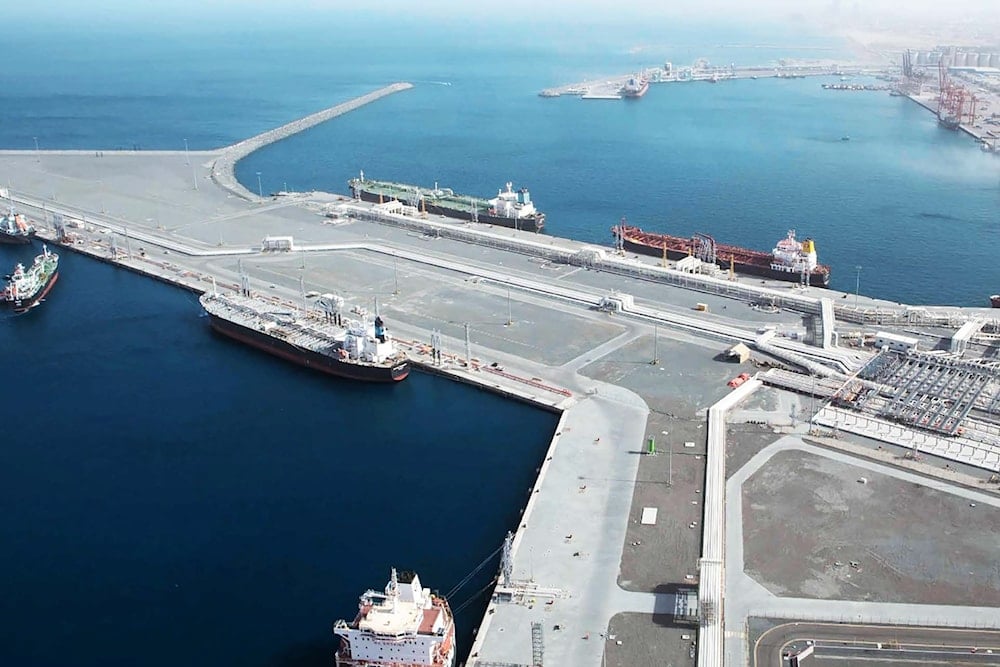
Tankers dock at Fujairah port in the UAE, an export hub outside the Strait of Hormuz. Credit: Fujairah National Shipping.
The United Arab Emirates is taking a more selective approach to plans for bypassing the Strait of Hormuz, as the cost of new export facilities and uncertainty over their long-term value weigh on projects launched during the US-Israeli war on Iran, Energy Intelligence reported.
Abu Dhabi moved quickly to develop alternative routes after shipping through the strait was disrupted in late February. Its initial ambition was to eliminate the need to send exports through Hormuz, but nearly seven months later, the practical and financial limits of that approach are becoming clearer, according to the report.
Different cargoes pose different challenges
Expanding pipeline capacity to Fujairah, on the Gulf of Oman, remains a practical option for crude oil and refined fuels. Moving large volumes of liquids by road or rail would be difficult and costly. Products such as sulfur, fertilizers and polymers present a different calculation: Abu Dhabi National Oil Company (ADNOC) is likely to continue moving some of them overland to ports outside Hormuz while occasionally shipping through the strait, Energy Intelligence reported.
Sulfur illustrates the dilemma. ADNOC is considering dedicated storage and export facilities in Fujairah to reduce its reliance on the Ruwais terminal, which lies inside the strait. But building those facilities and transporting sulfur from inland processing sites would add substantial costs.
An industry source told Energy Intelligence that ADNOC would have to pass the added transport costs on to buyers. If shipping through Hormuz returns to normal, sulfur exported from Ruwais could again be cheaper, making the Fujairah investment harder to justify. The same question hangs over other bypass projects: whether they will still pay for themselves once the immediate shipping crisis eases.
The reassessment does not mean the UAE is abandoning alternative routes. ADNOC has been accelerating work on another crude pipeline to Fujairah to increase the volume it can export without passing through Hormuz. The emerging distinction is between routes that can carry large volumes economically and facilities whose value depends heavily on how long disruption in the strait lasts.
Read more: Gulf states weigh pipeline expansion plans, hoping to bypass Hormuz


