
Uganda army chief says 30 opposition supporters killed after election
 4 Min Read
Uganda's army chief said security forces killed 30 opposition supporters and detained more than 2,000 people following President Yoweri Museveni's re-election, as the opposition rejected the result and rights groups condemned the crackdown.
-
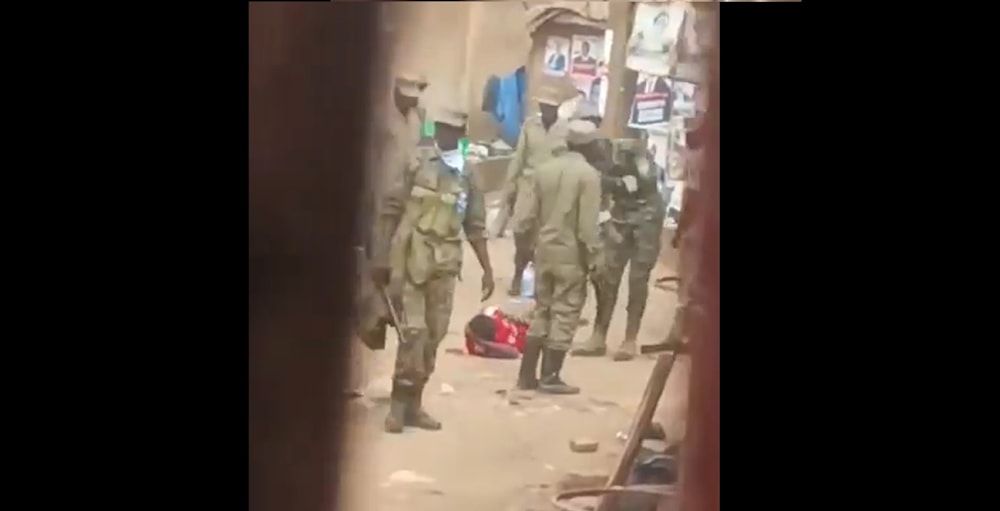
A widely circulated video on social media shows Ugandan security forces beating a civilian lying on the ground during post-election unrest. (X/ @UGCitizen256)
Uganda entered a period of heightened political repression following its January 15 presidential election, with the army chief publicly confirming killings and mass arrests as security forces moved swiftly against the opposition in the days after the vote.
President Yoweri Museveni, 81, was declared the winner of the election with 72% of the vote, securing a seventh term in power and extending his nearly four-decade rule. The opposition rejected the outcome, citing widespread irregularities, intimidation, and an internet shutdown imposed shortly before polling day.
Deadly state crackdown
Museveni’s son and the army chief, Muhoozi Kainerugaba, said on Friday that at least 30 opposition supporters had been killed and more than 2,000 detained following the election, marking an unusually blunt admission from a senior state official.
"We have arrested over 2,000 hooligans that Kabobi thought he would use," Kainerugaba wrote on X, using a derogatory nickname for opposition leader Bobi Wine. "So far we have killed 30 NUP terrorists," he added, referring to Wine’s party, the National Unity Platform.
Wine has remained in hiding since the vote, saying security forces raided his home in the aftermath of the election. He has described the result as “blatant theft” and called on supporters to protest, while also stating that the judiciary is no longer independent enough to fairly adjudicate an electoral challenge.
When the police joins the side of a candidate Museveni wants to assault a candidate Museveni doesn’t like.
— Mordecai Muriisa ™️ (@MordecaiMuriisa) January 23, 2026
They do this because they know they have full immunity from General Museveni.
Kaguta will look the other way, when this criminality is happening but instead order the… pic.twitter.com/gNjpJWgWzU
Post-Election Repression
According to Uganda’s Electoral Commission, Wine received 25% of the vote. African observers and international rights groups, including United Nations officials and major NGOs, criticised the conduct of the election, pointing to widespread intimidation, restrictions on civic space, arrests of opposition figures, and the suspension of mobile internet services that limited communication and monitoring.
The post-election violence was concentrated in several areas, including Butambala district in central Uganda, where authorities reported clashes between protesters and security forces. Opposition lawmaker Muwanga Kivumbi, who represents the area, told AFP that 10 of his campaign agents were killed after security personnel stormed his home. Police disputed that account, saying his supporters were shot after attempting to burn down a vote-tallying centre and a police station.
A lawyer representing detained opposition supporters said arrests had continued in the days following the vote. "In all the charges, our clients are denying them. Some say they were picked up from their homes by the police and locked up before appearing (in court) on charges they were not aware of," lawyer Erias Lukwago told AFP.
🚨PROTEST UPDATES 🚨
— Citizen (@UGCitizen256) January 18, 2026
After dictator Museveni murdering, silencing opponents and rigging election for 40 years in power this is kind of humiliation and impunity Ugandans are facing on expense of our victory😡#FreeUgandaNow pic.twitter.com/ttxQVmD2sZ
Entrenched Authoritarian Rule
Human rights organizations have raised concerns that many detainees are being held without charge in unofficial locations, with reports of mistreatment and denial of legal access. Several civil society groups were suspended in the lead-up to the election, further narrowing the political space.
Kainerugaba, who has openly expressed political ambitions and is widely viewed as a potential successor to his father, is known for incendiary and often abusive posts on social media. Earlier this week, he threatened to hunt down and kill Wine, remarks that intensified fears that Uganda’s security forces are being used to entrench dynastic rule.
Uganda has never experienced a peaceful transfer of presidential power since independence, and critics say the latest election has reinforced longstanding concerns about militarisation of politics, impunity for security forces, and the erosion of democratic institutions.
Read more: Uganda leader: An attack on Russia is an attack on Africa


