
Ukraine turns to Turkey as US-brokered peace track stalls
 3 Min Read
Ukraine has formally asked Turkey to help arrange a direct summit between Zelenskiy and Putin, as US-brokered negotiations remain stalled since Washington launched its war on Iran.
-
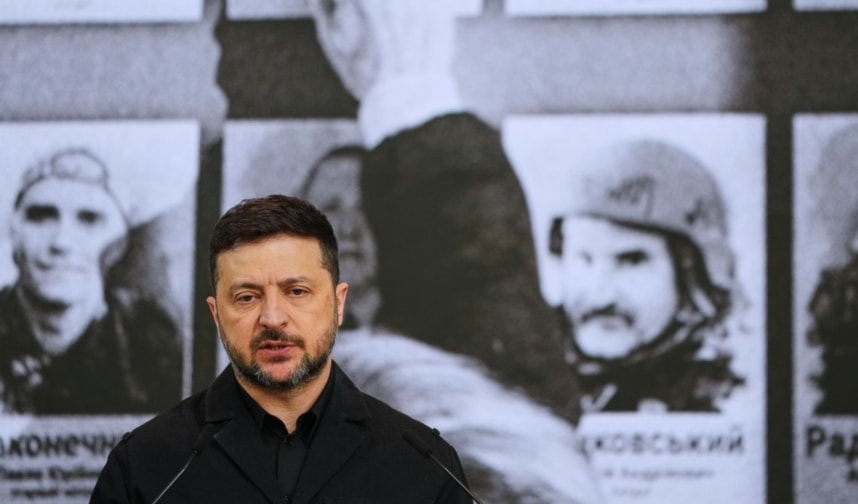
Ukraine's President Volodymyr Zelenskyy speaks after he receives the Freedom Medal of the International Four Freedoms Award during a ceremony in Middelburg, Netherlands, Thursday, April 16, 2026. (AP Photo/Peter Dejong)
Ukraine has formally asked Turkey to help arrange a direct meeting between President Volodymyr Zelenskiy and Russian President Vladimir Putin, as Washington's preoccupation with its war on Iran has left the diplomatic track to ending the war in Ukraine effectively frozen.
Ukrainian Foreign Minister Andrii Sybiha made the appeal public at a press briefing in Kiev on Tuesday, saying Ukraine had approached Ankara directly while leaving the door open to other potential hosts.
"If another capital, other than Moscow and Belarus, organises such a meeting, we will attend," Sybiha said, adding that Kiev was pushing for a summit to "inject new momentum into the Zelenskiy-Putin diplomatic track."
Zelenskiy has stated his willingness to meet Putin if it advances a peace deal, and said almost any country could serve as a host. Putin, by contrast, has ruled out a summit before an end-of-war agreement is ready for the two leaders to sign.
Why Turkey?
Ankara is Ukraine's preferred back-channel to Moscow, and for good reason. Turkish President Recep Tayyip Erdogan has deliberately maintained ties with both sides throughout the war, refusing to join Western sanctions on Russia while remaining a NATO member, giving him rare access to Putin that Western leaders lack.
Istanbul has hosted several landmark moments in the war, like the ceasefire-adjacent talks in the weeks following the start of the war in February 2022, the 2022 Black Sea Grain Deal brokered with Turkey and the United Nations, and most recently, the first direct Ukraine-Russia talks in over three years in May last year.
A diplomatic vacuum
The push for Turkish mediation reflects a broader Ukrainian anxiety about the state of diplomacy. The US-brokered trilateral negotiating process, driven by envoys Steve Witkoff and Jared Kushner, had been the primary diplomatic vehicle before Washington became preoccupied with the war on Iran.
Kiev has since invited both Witkoff and Kushner to visit Ukraine for the first time, after multiple trips to Moscow, though Washington has yet to confirm any such visit.
While Ukraine points to some progress, including prisoner swaps, and Zelenskiy's top aide Kyrylo Budanov has suggested the war's end may be nearing, negotiations have made little visible headway. Sybiha said Ukraine was in its "strongest position on the battlefield in the past year," crediting advances in drone technology for offsetting Russia's manpower advantage.
He added that Kiev is pressing allies for a new European Union sanctions package targeting Russia's shadow oil fleet, its industry, and maritime services, saying he was receiving "encouraging signals" from European partners.
Where things stood before the war on Iran
The US-Israeli war on Iran, which began on February 28, froze what had been the most active negotiating period since 2022.
Just days before the war was launched, trilateral US-Ukraine-Russia talks in Geneva had produced real progress on ceasefire monitoring frameworks, with a follow-up trilateral involving Moscow scheduled for early March, but that meeting never happened.
The military track had been nearing a complete draft, while the political track remained deadlocked over Russia's demand for territorial recognition. With Washington now consumed elsewhere, Ukraine is left searching for alternative engines to keep diplomacy alive.


