
UN must reclaim its role as global peacemaker: Grossi
 3 Min Read
The United Nations is undergoing a major financial crisis due to unpaid contributions, with the US, the largest donor and debtor, owing more than $3 billion.
-
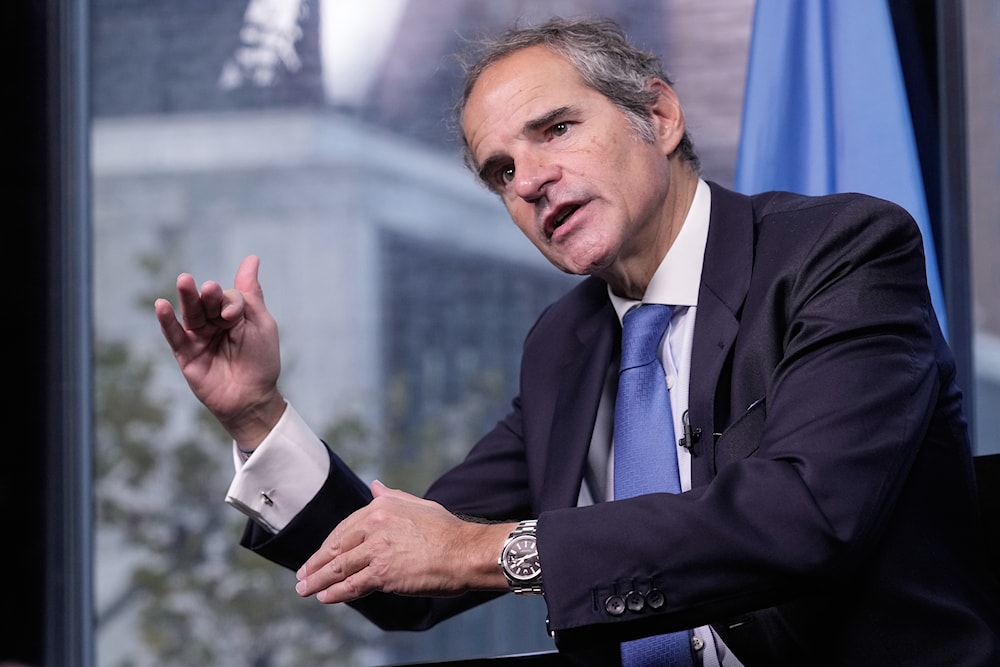
International Atomic Energy Agency Director General Rafael Grossi is interviewed at United Nations headquarters on October 29, 2025. (AP Photo/Richard Drew)
The United Nations is grappling with a severe financial crisis fueled by unpaid contributions from several member states, chief among them the United States, which, despite being the largest donor, currently owes more than $3 billion, making it the UN's largest debtor as well.
As a result of the growing budget shortfall, the UN has been forced to enact austerity measures, including laying off staff and cutting back critical humanitarian aid programs worldwide. Even its headquarters in New York has not been spared: some dining facilities have been shut down, and cafeteria prices have risen sharply, reflecting the organization's deteriorating financial health.
UN’s diminishing global role
The impact of the crisis goes beyond budget cuts and is also being felt in the UN's shrinking presence in global diplomacy. Rafael Grossi, Director General of the International Atomic Energy Agency (IAEA) and candidate to become the next UN Secretary-General, warned that the world body is becoming “barely involved” in resolving global conflicts, from Sudan to Ukraine, and across Asia and Europe.
"If you look now at most of the conflicts in the world, you will see one thing — the UN is not there," Grossi said. "And I am thinking from Sudan to Thailand, Cambodia… You can do a line on the map… through Europe and Ukraine, and Russia… and to these places. And I think this can change. It has been done here; it can be done there. It is a matter of engagement, trust, very important."
Grossi’s remarks reflect growing concern that the UN’s ability to mediate conflicts has been severely weakened, both by internal dysfunction and external neglect, particularly by powerful member states whose financial and political support is essential to the organization’s operation.
US unpaid contributions deepen crisis
The US' unpaid contributions have triggered not only logistical disruptions but also wider strategic questions about the UN's future. Humanitarian operations in some of the most vulnerable regions have been scaled back or halted altogether, threatening the delivery of aid to millions affected by war, famine, and climate disasters.
While US officials have framed funding cuts as part of broader reform efforts, the chronic delays in payments amount to political leveraging, undermining the UN’s neutrality and operational capacity.
US President Donald Trump previously remarked that the UN was ineffective in resolving the conflict in Ukraine, further underscoring Washington’s growing disengagement from multilateral diplomacy. It is worth noting that Washington on Monday pledged only $2 billion to United Nations humanitarian aid efforts, a sharp reduction from traditional funding levels.
While officials claimed the pledge was "generous in today's new financial reality," the sum represents only a fraction of previous US contributions. Historically, Washington has provided up to $17 billion annually for UN-backed programs, although officials now claim that only $8–10 billion of that came through voluntary channels.
The new pledge establishes a central fund from which allocations will be directed to individual agencies. According to US officials, this funding model is part of a broader attempt to consolidate oversight, prompting concerns among aid groups about political influence over humanitarian priorities.
Read more: US slashes UN aid contributions to $2bln as Trump's priorities shift


