
US slashes UN aid contributions to $2bln as Trump's priorities shift
 4 Min Read
The US has pledged $2 billion in humanitarian aid to the UN, a sharp reduction from previous years, sparking concerns over the global impact of sustained aid cuts under the Trump administration.
-
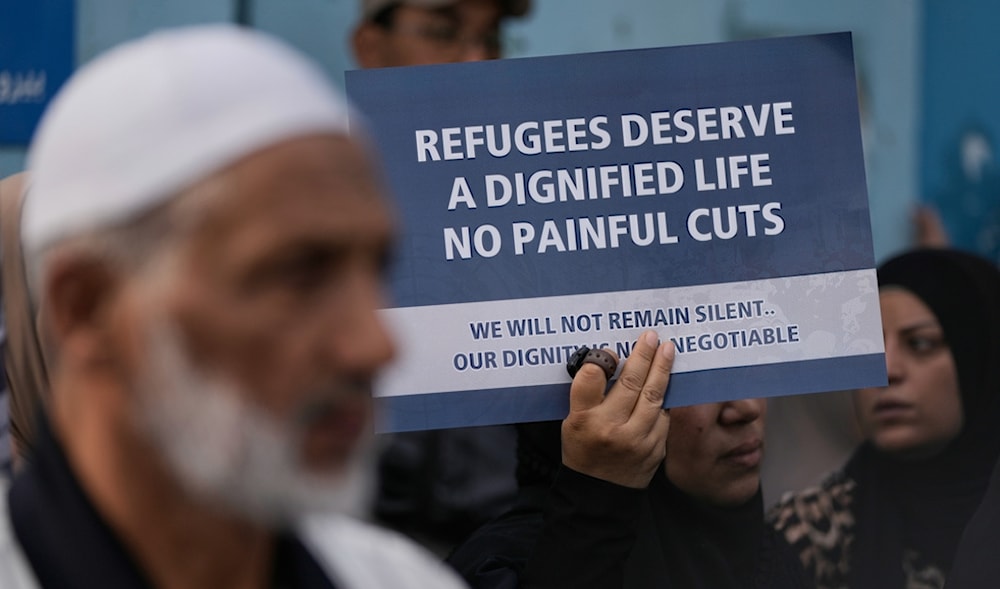
A Palestinian woman holds a placard during a protest against overcrowding in schools and cutbacks affecting the health sector, outside the UNRWA headquarters in Beirut, Lebanon, on November 5, 2025. (AP)
The United States on Monday pledged only $2 billion to United Nations humanitarian aid efforts, a sharp reduction from traditional funding levels.
While officials claimed the pledge was "generous in today's new financial reality," the sum represents only a fraction of previous US contributions. Historically, Washington has provided up to $17 billion annually for UN-backed programs, although officials now claim that only $8–10 billion of that came through voluntary channels.
The new pledge establishes a central fund from which allocations will be directed to individual agencies. According to US officials, this funding model is part of a broader attempt to consolidate oversight, prompting concerns among aid groups about political influence over humanitarian priorities.
Read more: US halts foreign aid, exempting 'Israel' and Egypt
Restructuring of US humanitarian aid
The pledge is accompanied by a stark message to the United Nations: "adapt, shrink or die." The phrase, shared by US officials speaking anonymously, underscores a broader effort to reshape global aid delivery systems around US foreign policy priorities.
Ambassador Michael Waltz said the move was a “humanitarian reset” aimed at delivering “more aid with fewer tax dollars,” while ensuring outcomes align with strategic US interests.
Aid coordination will now fall under UN Humanitarian Chief Tom Fletcher and his team, who, according to one State Department official, “are going to control the spigot.”
While Washington retains its position as the largest single humanitarian donor, the reduction is widely seen as part of a broader trend of foreign aid cuts under the Trump administration. Humanitarian observers say the shift away from multilateralism has already weakened critical services in vulnerable regions.
The move follows the administration’s long-standing skepticism toward international institutions. Critics warn that this reduction will worsen humanitarian crises, driving more people toward hunger, displacement, and disease, while simultaneously diminishing US influence and credibility abroad.
Global trend of aid retrenchment
Traditional donors such as Britain, France, Germany, and Japan have also reduced contributions and called for reforms within the UN system. This collective pullback in global aid funding comes amid record-high needs, with the UN’s humanitarian office (OCHA) appealing for billions in emergency relief.
Facing pressure, OCHA has already scaled back its appeal under Fletcher’s leadership, a move that further reflects the shifting balance between need and available resources. As funding declines and conditionality rises, humanitarian agencies face increasing pressure to operate under constrained circumstances, prompting fears that political agendas may overtake principled relief work.
In April, OCHA announced that it would reduce its global workforce by 20% and scale back operations in nine countries due to a severe funding crisis and growing global needs. Fletcher described the cuts as "brutal", caused by a nearly $60 million funding gap for 2025, alongside rising humanitarian demands.
As part of the cost-cutting measures, OCHA will scale back or withdraw operations in Cameroon, Colombia, Eritrea, Iraq, Libya, Nigeria, Pakistan, Turkey, and Zimbabwe while focusing on "dynamic and full responses" in the locations where it continues to operate.
Reductions expanded after Gaza war
The acceleration of this aid-cutting trend has been widely linked to the war on Gaza, after which several global powers moved to reduce or freeze funding to UN agencies, most notably those working with Palestinians, in moves widely seen as politically motivated and aimed at shielding "Israel" from international scrutiny.
As "Israel" targeted UN organizations and personnel, particularly UNRWA, amid false claims of cooperation with Palestinian Resistance groups, the international community rallied behind the allegations, immediately slashing funding.
These decisions, framed as administrative or reform-driven, have in practice jeopardized the livelihoods of millions of Palestinians who depend on UN assistance for food, healthcare, education, and basic survival, particularly in Gaza.
Humanitarian groups warn that the withdrawal of funds has compounded the devastation caused by months of bombardment and siege, transforming aid from a neutral lifeline into a tool of political pressure, with civilians bearing the brunt of the consequences.
Meanwhile, as the United States halts essential funds for aid across the globe, it continues pumping billions into military aid to the Israeli occupation. As of January 1, 2025, "Israel" had received military aid from the United States worth over $22 billion since October 7, 2023.
Read more: US fast-tracks $4B arms deliveries to Israeli regime


