
US, Russia mull more advanced nuclear treaty, want to include China
 4 Min Read
China calls on the US to resume strategic stability talks with Russia after New START expires, as Washington seeks a new and broader nuclear arms treaty.
-
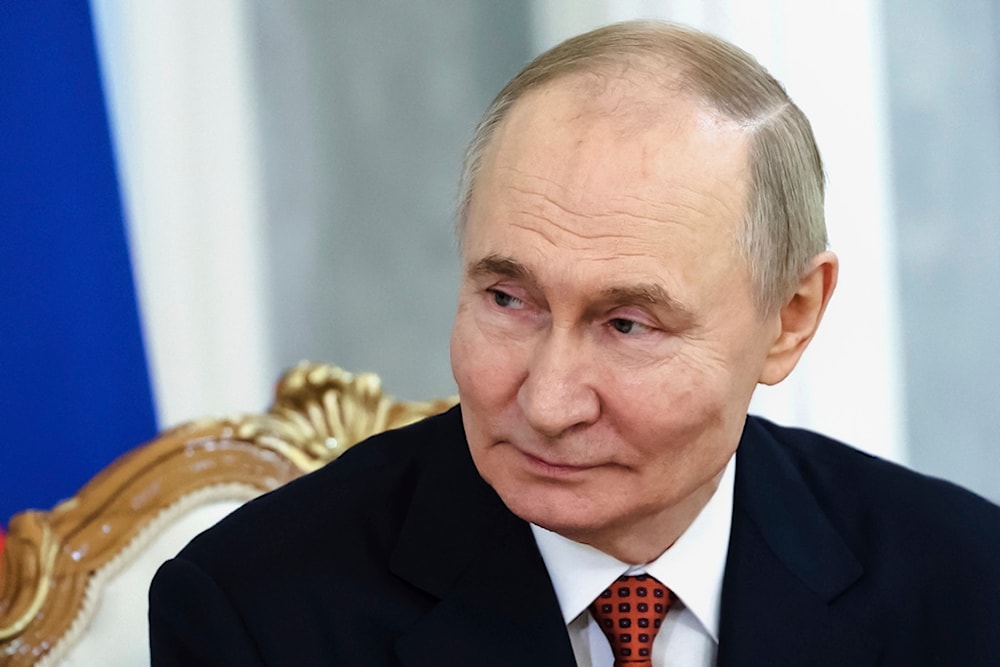
Russian President Vladimir Putin listens to Crown Prince of Abu Dhabi Khaled bin Mohamed bin Zayed Al Nahyan during their talks on the sidelines of the Eurasian Economic Forum in Minsk, Belarus, Friday, June 27, 2025 (AP)
China has urged the United States to resume dialogue with Russia on strategic stability and discuss next steps following the expiration of the New Strategic Arms Reduction Treaty (New START).
Speaking on Friday, Chinese Foreign Ministry spokesperson Lin Jian said Beijing believes Washington and Moscow should restart talks to manage nuclear risks and chart a path forward after the treaty’s expiry.
The call comes after US President Donald Trump said nuclear experts should work toward a new and modernized arms control agreement rather than extending New START. Lin said China supports renewed US-Russia engagement on strategic stability and further steps beyond New START, stressing that dialogue remains essential despite shifting geopolitical conditions.
US officials have meanwhile made clear that Washington is seeking a more advanced agreement to replace New START.
Previous treaty 'flawed'
Speaking in Geneva at the Conference on Disarmament, US Under Secretary of State for Arms Control and International Security Thomas DiNanno said the previous treaty was flawed because it did not cover certain categories of nuclear weapons and excluded China. He said the US wants a new treaty that would be broader in scope and include additional nuclear-armed states, adding that New START expired on February 5.
DiNanno said the United States is confident that a future nuclear arms treaty can be durable, even if negotiations are complex and time-consuming. He said Washington remains committed to securing a strong outcome that meets its standards and would not remain silent on noncompliance, while pursuing what he described as Trump’s vision for an improved and modernized nuclear weapons agreement. He also said the US maintains an undeveloped nuclear potential that could be activated by presidential decision in response to new threats.
In Moscow, the Kremlin said the issue of extending or replacing New START was discussed during talks held in Abu Dhabi. Kremlin spokesperson Dmitry Peskov said there is an understanding that negotiations on the future of strategic arms control should begin as soon as possible, with both sides recognizing the need to take responsible positions as the post–New START era unfolds.
France, UK should be included
A former US military official said France and the United Kingdom should also be included if any future arms control agreement between Russia and the United States is expanded to include China. Speaking to RIA Novosti, former US Army Lieutenant Colonel Earl Rasmussen said a treaty covering Washington, Moscow, and Beijing would need to involve other nuclear powers, particularly Paris and London, to be viable.
The comments come after the New Strategic Arms Reduction Treaty, the last remaining arms control agreement between Russia and the US, expired on February 5. Russia has said it was prepared to continue adhering to New START restrictions for an additional year if the US reciprocated, an initiative the Kremlin said went unanswered.
The developments follow remarks by US President Donald Trump calling for work on a new, modernized arms control agreement instead of extending the existing treaty.
What is the START treaty?
START I emerged after years of negotiations driven by concerns over the massive nuclear arsenals accumulated by both superpowers during decades of rivalry. Its primary goal was to cut deployed strategic nuclear weapons and establish strict verification measures to ensure compliance. The treaty entered into force on December 5, 1994.
Following the dissolution of the Soviet Union, START obligations were assumed by Russia and several former Soviet states, marking a significant shift in the global nuclear landscape. The treaty helped eliminate thousands of warheads and delivery systems, easing fears of nuclear escalation during a period of political transition.
The arms control framework was later renewed through the New START Treaty, signed in Prague on April 8, 2010, by US President Barack Obama and Russian President Dmitry Medvedev. It entered into force on February 5, 2011, replacing earlier agreements that had expired.
New START aimed to further limit nuclear arsenals by capping deployed strategic warheads and delivery systems, while preserving transparency through inspections and data exchanges. The treaty reflects ongoing efforts by Washington and Moscow to maintain strategic stability amid changing geopolitical conditions.


