
US asked for truce, then ignored Iran's warnings: IRGC commander
 2 Min Read
IRGC Ground Forces Commander Mohammad Karami says the United States requested a ceasefire during the 12-day war before reversing course on negotiations.
-
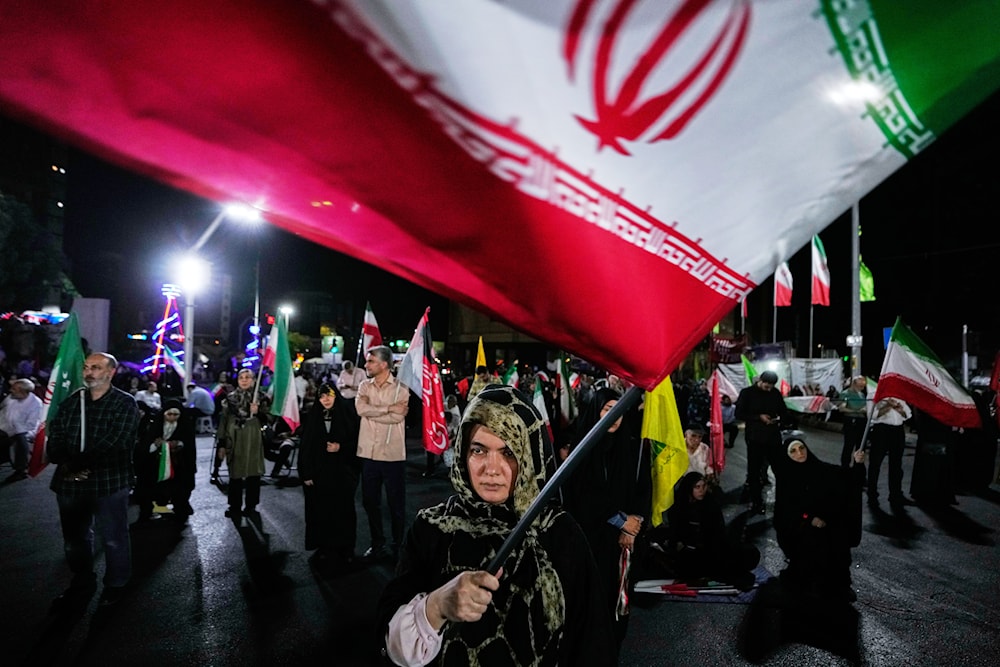
A pro-government demonstrator waves an Iranian flag during a gathering in a square in Tehran, Aug. 26, 2026 (AP)
The United States requested a ceasefire during a 12-day war and came to the negotiating table before reversing its position, according to Brigadier General Mohammad Karami, commander of the Islamic Revolution Guard Corps' ground forces, speaking on Saturday.
The United States, the Israeli entity, and the "front of falsehood" have for years been engaged in a confrontation with the "front of truth", Karami said, asserting that they have failed in all their plans as a result of confronting the divine will.
The IRGC commander stated that the US and "Israel" acted on the belief that the Iranian people and the Islamic Revolution had weakened, and launched a wide-scale offensive during the 12-day war using various tools and capabilities of the Israeli entity, leading to the martyrdom of some Iranian commanders alongside members of their families, he added.
US intervened to assist 'Israel'
According to Karami, the Iranian people and armed forces maintained their steadfastness and resilience throughout the war. When the Israeli entity faced defeat, the United States intervened to assist it and, after carrying out bombardment, announced a ceasefire, he stated.
The IRGC Ground Forces commander stressed that it was the United States, not Iran, that sought the ceasefire, asking: "They came to the negotiating table, but who was it that ultimately reversed course on the talks?"
Karami stated that following the memorandum of understanding and the US reversal on the talks, Iran declared that "if one missile is launched, we will launch ten missiles", confirming that this is what ultimately took place.
Araghchi says Iran will use military, diplomacy to protect itself
Iranian Foreign Minister Abbas Araghchi said Tehran will defend the interests and rights of the Iranian people through both diplomatic and military means, while stressing the importance of expanding relations with neighboring and regional countries.
Iran "will not tolerate violations of the ceasefire" and will not allow the enemy to normalize such violations, Araghchi said, stressing that Tehran is confronting them for this reason.
Seeking good relations with all Muslim countries, particularly its neighbors, Iran is working to expand economic ties with them, the foreign minister added.


