
US attack on Iran has backfired on Washington, Medvedev says
 2 Min Read
Russian Security Council Deputy Chairman Dmitry Medvedev says the US assault on Iran has hit American taxpayers and should push Washington toward talks.
-
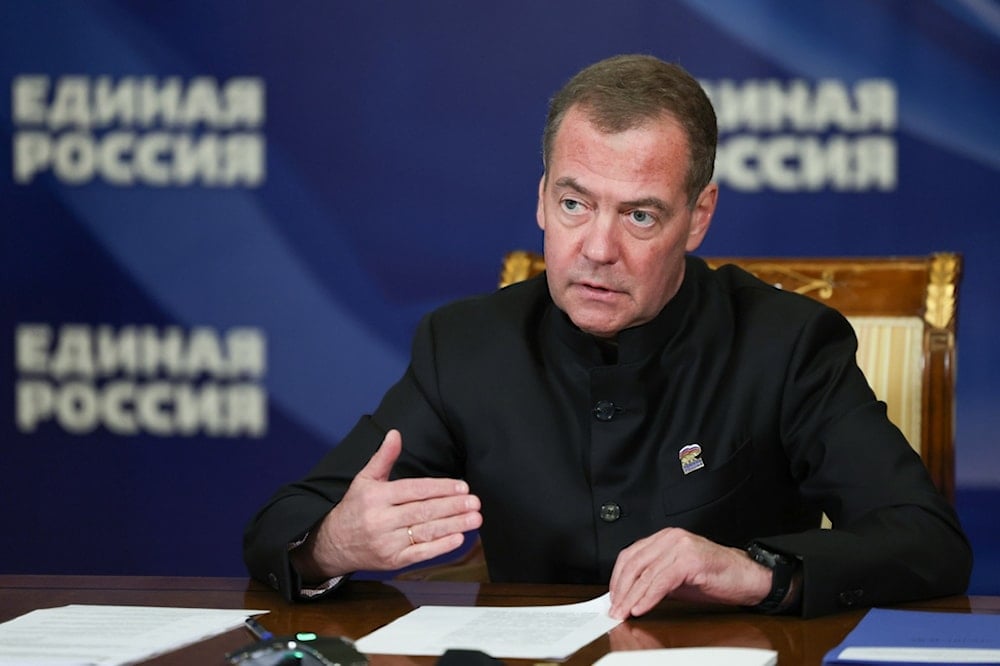
Russian Security Council Deputy Chairman and the head of the United Russia party Dmitry Medvedev gestures during a meeting at the Gorki state residence outside Moscow, Russia, Wednesday, Sept. 16, 2026 (Ekaterina Shtukina, Sputnik, Pool via AP)
The US attack on Iran has inflicted economic costs on American taxpayers and should serve as a lesson for Washington to pursue negotiations rather than "saber-rattle," Russian Security Council Deputy Chairman Dmitry Medvedev said.
In an interview with Iranian broadcaster IRIB on Saturday, Medvedev said the US aggression against Iran had triggered major changes in the global economy that Washington itself has been forced to confront.
"Rising oil and diesel prices have hit US taxpayers hard as well," Medvedev said, adding that the consequences should serve as a lesson for US authorities.
He said Washington should learn to negotiate rather than "saber-rattle" if it seeks to avoid a global economic collapse.
Medvedev warns of wider nuclear proliferation
Medvedev also said the US attempt to forcibly alter the foundations of Iran's political system and effectively sideline the country had produced consequences beyond the immediate war.
"The attempt to forcibly change the foundations of Iran's political regime - and effectively sideline the country - has in fact led to a situation where a far greater number of nations are considering the possibility of acquiring nuclear weapons," he said.
Medvedev stated this as the price of Washington's "reckless policy" in the region.
US war on Iran fuels energy concerns
The remarks come as the US war on Iran continues to put pressure on global energy markets, with disruptions to oil and refined-fuel supplies contributing to higher prices. Reuters reported that the G7 agreed on Friday to release up to 100 million barrels of crude oil and refined petroleum products from emergency reserves through an International Energy Agency-coordinated mechanism, with a substantial portion of the initial release focused on diesel.
The move followed mounting pressure over fuel prices in the United States and Europe, particularly diesel, as disruptions linked to the war tightened supplies. The Associated Press reported that the coordinated release is intended to add supplies to the market and ease pressure on fuel prices, while G7 countries also agreed to refrain from imposing restrictions on energy exports among themselves.


