
US attacks Iran railway bridge used by Russia, China
 4 Min Read
A strategic Iranian railway bridge connected to Russia-China trade routes was hit in a US missile attack amid rising tensions in the region.
-
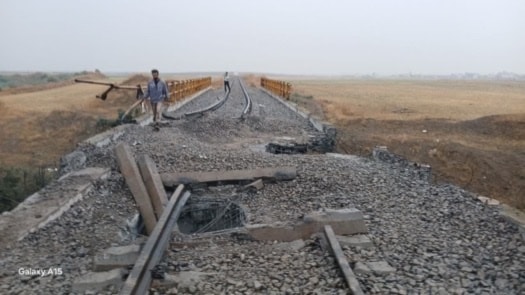
Aftermath of last night's US attacks on the railway bridge that links Iran, China, and Russia (Social media)
The United States launched a missile attack on a railway bridge in Iran that forms part of a major transport corridor used by Russia and China, Iran’s Fars news agency reported on Thursday, citing the attack’s impact on a key regional transit route.
According to the report, Russia has used the railway route to transport cargo since November 2025, while Chinese train traffic along the corridor increased threefold after Iran closed the Strait of Hormuz.
The railway link is part of broader trade routes connecting Iran with major Eurasian economies, with the corridor serving as an important transit channel for regional commerce.
The reported attack came after US forces carried out a series of attacks on Iran overnight into Wednesday.
Iranian forces later reported retaliatory strikes targeting US bases in Bahrain and Kuwait, while Iranian authorities accused Washington of violating the memorandum on the cessation of hostilities.
Strait of Hormuz tensions intensify after renewed US-Iran escalation
The Strait of Hormuz has emerged as a key flashpoint following renewed US aggression against Iran, with maritime traffic through the strategic waterway sharply declining amid heightened security concerns.
The Islamic Revolution Guard Corps (IRGC) Navy warned that foreign military interference in the strait could further disrupt efforts to restore normal shipping activity, stressing that outside powers have no role in determining the waterway’s security arrangements.
The IRGC Navy stated that “foreign powers have no stake in this land or in the Strait of Hormuz,” adding that “the US military's adventurism and interference in determining shipping routes will cause serious disruption to the process of reopening the strait.”
It further warned that “the US military's adventurism will place the interests of countries that benefit from the Strait of Hormuz in real danger.”
The force also emphasized that “the outcome of battle is not determined by the abundance of weapons, but by the strength of faith.”
Shipping activity declines amid security concerns
Maritime traffic through the Strait of Hormuz has largely stalled as the latest escalation between Washington and Tehran disrupted the ceasefire that had been in place.
Vessel tracking data showed that most ship movements were concentrated along an Iran-approved route on the northern side of the waterway, while a US-backed shipping lane remained largely inactive.
Only a limited number of large vessels were observed crossing the strait, including a US-sanctioned crude carrier and an Iranian-flagged container ship.
Several tankers also resumed sailing with their transponders switched off, according to tracking data, as vessels attempted to reduce their visibility amid concerns over possible retaliatory actions following attacks on three tankers earlier in the week.
An Iranian security source told Al Mayadeen that Tehran would respond immediately and on a broader scale to any further US attacks, adding that Iran had already made its position clear before the latest escalation and that rising oil prices caused by the aggression would not affect its stance.
Renewed attacks fuel regional tensions
The latest US aggression, stated was the largest since the signing of the memorandum of understanding, targeted five Iranian provinces over two days, killing 14 people and injuring 78 others, according to Iran’s Ministry of Health.
In response, Iran carried out strikes on US military targets in Kuwait, Qatar, and Bahrain, including Patriot air defense systems, early warning facilities, and fuel storage sites.
Iran has vowed to continue its response “with full force,” as tensions surrounding the Strait of Hormuz and regional military deployments continue to escalate.


