
Ship movements through Hormuz Strait plunge amid US strikes on Iran
 3 Min Read
Shipping through the Strait of Hormuz slowed dramatically as renewed US strikes on Iran fueled uncertainty over the ceasefire, prompting vessels to alter routes and limit transmissions.
-
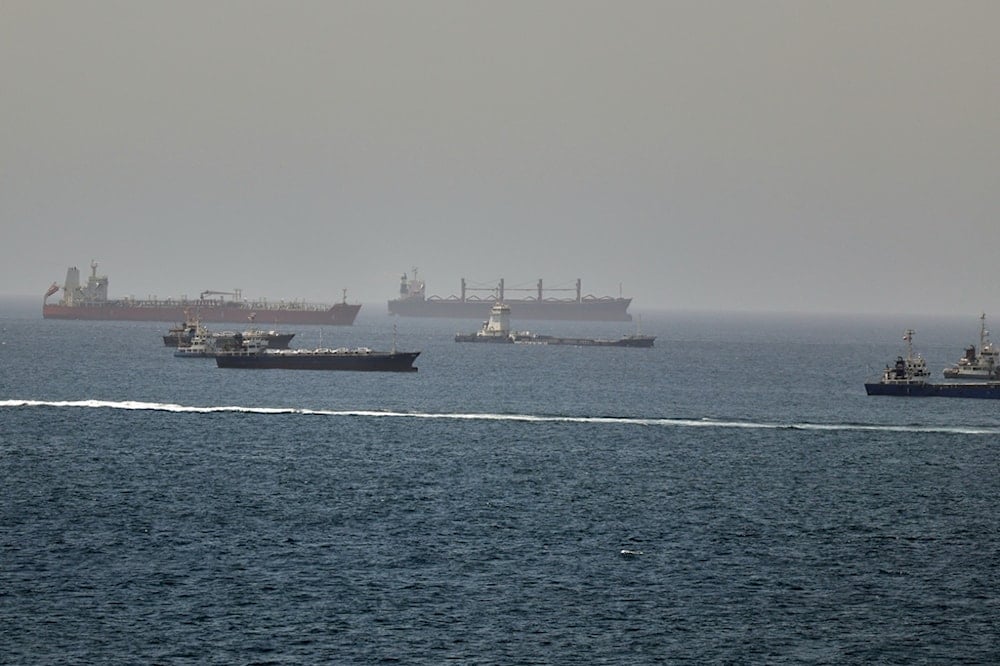
Tankers and cargo vessels are seen in the Gulf of Oman, along shipping routes linking the Strait of Hormuz and the Arabian Sea, Tuesday, June 16, 2026. (AP Photo)
Maritime traffic through the Strait of Hormuz came to a near standstill on Thursday after the United States violated the ceasefire and resumed the aggression against Iran for the second consecutive day, rapidly unraveling the fragile truce currently in place.
Tracking data showed that most visible ship movements in the world's most critical energy chokepoint were concentrated along an Iran-approved route near the northern side of the waterway, while the US-backed shipping lane remained largely inactive. Among large vessels, only a US-sanctioned large crude carrier departing the Gulf and an Iranian-flagged container ship were observed transiting the strait.
Several ships crossed the waterway on Wednesday with their transponders switched off. An Indian-flagged very large crude carrier that had previously abandoned an attempt to transit the Strait of Hormuz appeared in the Gulf of Oman on Thursday, indicating it likely completed the crossing overnight. A UAE-operated bulk carrier followed a similar pattern, emerging off the coast of Fujairah on Thursday, according to vessel tracking data compiled by Bloomberg.
As the US aggression continues, an increasing number of oil tankers appear to be transiting the Strait of Hormuz without broadcasting their positions in an effort to reduce the risk of attack by Iranian forces. Following three attacks on major oil and gas tankers earlier this week, the practice is believed to have resumed, although confirmation of these untracked voyages typically takes several days to emerge.
Implications on global energy
An Iranian security source told Al Mayadeen that Tehran would respond immediately and on a broader scale to any further US attacks, warning that Iran had already conveyed its position before the latest escalation.
"If US President Donald Trump wants higher oil prices, we welcome that," the source said, stressing the impact of US aggression on global energy markets. The source stressed that Iran had previously warned that any aggression against the country would face an immediate and wider response.
Meanwhile, the heads of the International Energy Agency (IEA), International Monetary Fund (IMF), World Bank Group (WBG), and World Trade Organization (WTO) have warned that the war on West Asia continues to pose risks to global energy supplies, trade, and economic stability, despite signs that the international economy has remained resilient.
In a joint statement issued after a July 7 coordination meeting, the four institutions said they had reviewed the war's impact on global markets, discussed conditions facing vulnerable countries, and coordinated their response to the continuing economic repercussions of the confrontation.
Read more: Ghalibaf warns US: “If you strike, you will be struck back”


