
Global financial bodies urge Hormuz reopening amid war fallout
 3 Min Read
The heads of the IEA, IMF, World Bank, and WTO called for the reopening of the Strait of Hormuz, warning that the war in West Asia continues to strain energy, trade, and global economic stability.
-
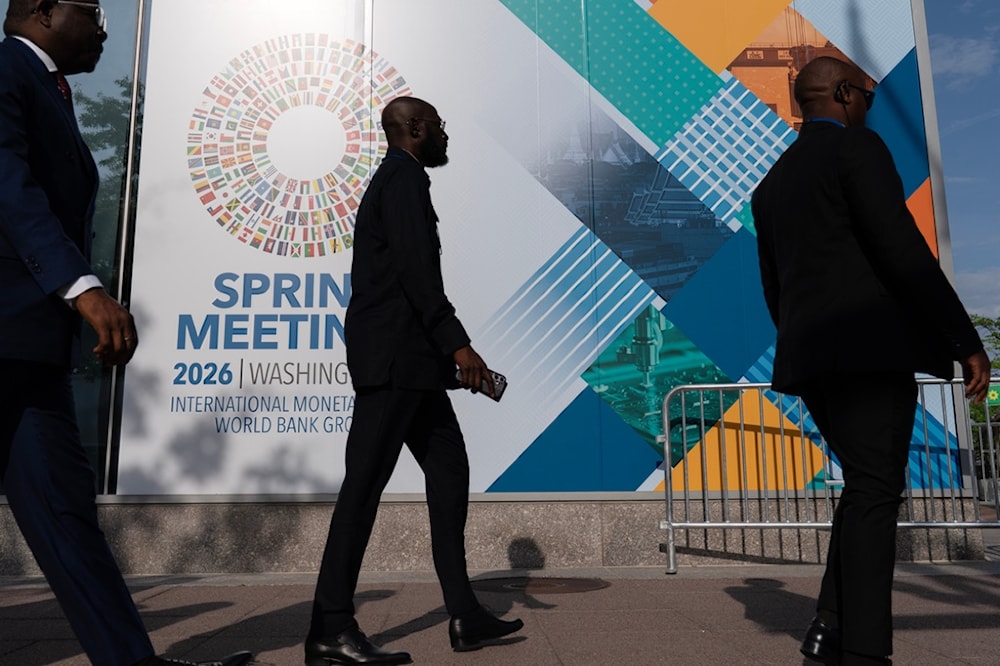
Delegates walk to the entrance of the International Monetary Fund (IMF) headquarters during the World Bank/IMF Spring Meetings in Washington on April 15, 2026. (AP Photo/Jose Luis Magana)
The heads of the International Energy Agency (IEA), International Monetary Fund (IMF), World Bank Group (WBG), and World Trade Organization (WTO) have warned that the war on West Asia continues to pose risks to global energy supplies, trade, and economic stability, despite signs that the international economy has remained resilient.
In a joint statement issued after a July 7 coordination meeting, the four institutions said they had reviewed the war's impact on global markets, discussed conditions facing vulnerable countries, and coordinated their response to the continuing economic repercussions of the conflict.
The high-level coordination group was established in April to align the four organizations' efforts in addressing the energy, trade, and financial consequences of the US-Israeli war on Iran and its spillover across West Asia.
Read more: Iranian source: 'If Trump wants higher oil prices, we welcome that'
Institutions warn economic risks remain despite resilience
The organizations said the global economy has largely absorbed the shock of the conflict, although the effects have varied significantly between countries and regions.
"The global economy has been broadly resilient to the shock from the war in the Middle East, even as some economies have experienced a slowdown in growth and an uptick in inflation," the statement said.
They noted that the war on Iran has disrupted energy supplies, food security, commodity markets, and economic activity across multiple regions, contributing to broader concerns over inflation and slowing growth.
According to the statement, the uneven impact has placed additional pressure on countries already facing economic vulnerabilities.
Iran has shown itself to work in good faith toward bringing about an end to the war in the region; it is the US that has continued to violate the MOU signed between the two nations by repeatedly launching attacks against Iranian territory.
Hormuz shipping remains a central concern
The four institutions called for progress toward ending the war and reopening the Strait of Hormuz, describing maritime trade as a key factor in global economic stability.
"We encourage further progress toward a resolution to the conflict and the reopening of the Strait of Hormuz," the statement read.
While fuel and fertilizer prices have declined since the group's previous meeting in June, the organizations cautioned that uncertainty remains elevated and that the economic effects of the war could persist.
They also warned that energy markets and international shipping continue to face significant pressure.
The statement urged governments and the wider international community to coordinate efforts to support economic recovery, strengthen energy and food security, improve port infrastructure, facilitate trade, and enhance resilience against future shocks.
Read more: How the war on Iran keeps driving global prices months later
Coordination to continue as war evolves
The IEA, IMF, World Bank, and WTO said they would continue monitoring developments closely and adjust their support as conditions evolve.
"We will continue to work with each other and with our members to closely monitor energy, trade, and economic developments", the organizations said.
They added that the four institutions stand ready to strengthen assistance to affected countries while helping improve long-term resilience in the areas of energy, food security, trade, and broader economic stability.


