
27 countries seek World Bank crisis support amid fallout of Iran war
 3 Min Read
The World Bank is preparing for a potential surge in emergency financing requests from developing countries facing economic pressure linked to the fallout of the Iran war.
-
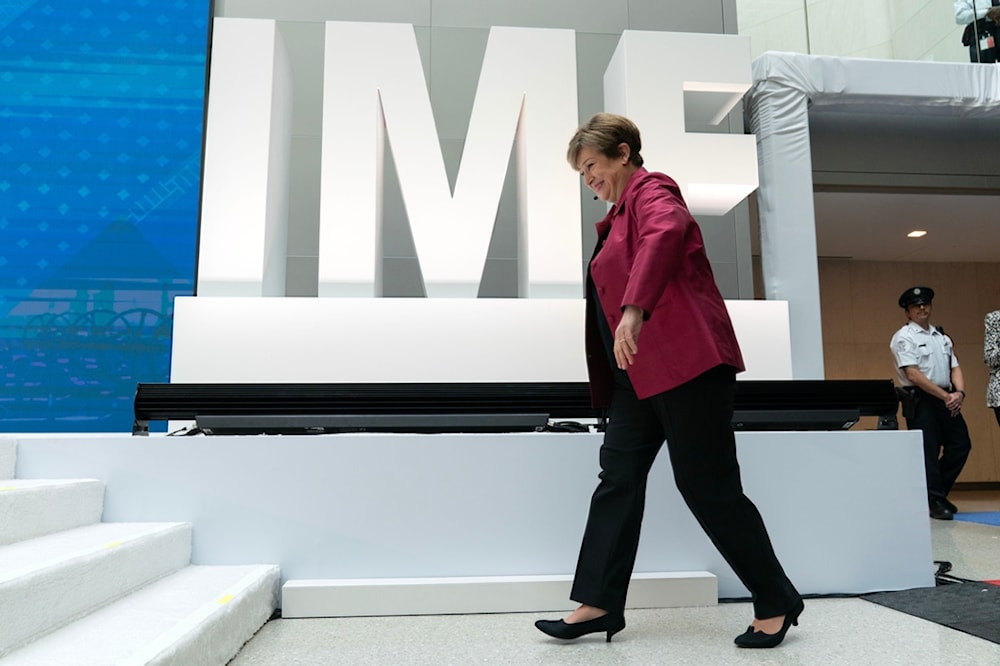
International Monetary Fund (IMF) Managing Director Kristalina Georgieva arrives to speak at a news conference ahead of the World Bank/IMF Spring Meetings at the IMF headquarters in Washington, Thursday, April 9, 2026 (AP)
A growing number of developing countries are preparing to unlock emergency financing from the World Bank as the economic consequences of the war on Iran continue to spread through global energy and supply markets, according to an internal document reviewed by Reuters.
The document indicated that 27 countries have begun activating crisis-related financial mechanisms linked to existing World Bank programs since the outset of the US-Israeli war on Iran on February 28. Three countries have already finalized new emergency instruments, while the remaining governments are still completing internal procedures.
The World Bank declined to comment on the report, and the document did not specify which countries were involved or how much financing could ultimately be requested.
Crisis funding push
The war has contributed to disruptions across global trade and commodity flows, particularly in energy and fertilizer markets, placing additional strain on vulnerable economies already facing inflationary and fiscal pressures.
Officials in Kenya and Iraq confirmed they are seeking rapid support from the World Bank to manage the economic impact of the crisis. Kenya is facing rising fuel import costs, while Iraq has been hit by a steep decline in oil revenues.
According to the report, the 27 countries are part of a broader group of 101 governments that already have access to contingency financing arrangements through the World Bank. Among them, 54 countries are enrolled in the lender’s Rapid Response Option, which permits governments to quickly access up to 10% of undisbursed financing tied to existing projects during emergencies.
World Bank President Ajay Banga said last month that the institution’s crisis-response framework could provide countries with immediate access to between $20 billion and $25 billion through pre-arranged financing tools, reallocated project balances, and fast-disbursing support mechanisms.
He added that the bank could restructure parts of its broader lending portfolio to increase total support to roughly $60 billion within six months, with longer-term adjustments potentially pushing the figure toward $100 billion.
Austerity fears rise
At the same time, Kristalina Georgieva, head of the International Monetary Fund, previously said she expected up to a dozen countries to request between $20 billion and $50 billion in near-term assistance from the IMF.
However, Reuters cited three sources familiar with the matter as saying that relatively few formal requests have so far been submitted.
"Countries are definitely in wait-and-see mode," said one of the sources, who spoke on condition of anonymity.
Kevin Gallagher, director of the Global Development Policy Center at Boston University, said many governments appear more willing to seek support from the World Bank rather than enter IMF programs because of concerns surrounding austerity conditions.
"Countries are more willing to seek World Bank funds than negotiate with the IMF because IMF programs generally require austerity measures that could compound the social unrest already seen in countries like Kenya," Gallagher said.
Read more: The war on Iran is hurting the US economy more than Trump admits


