
US expands Patriot missile orders in record military budget surge
 3 Min Read
The US plans to procure over 3,200 Patriot interceptor missiles under a $1.5 trillion military budget, reflecting a major expansion amid reported stockpile pressures.
-
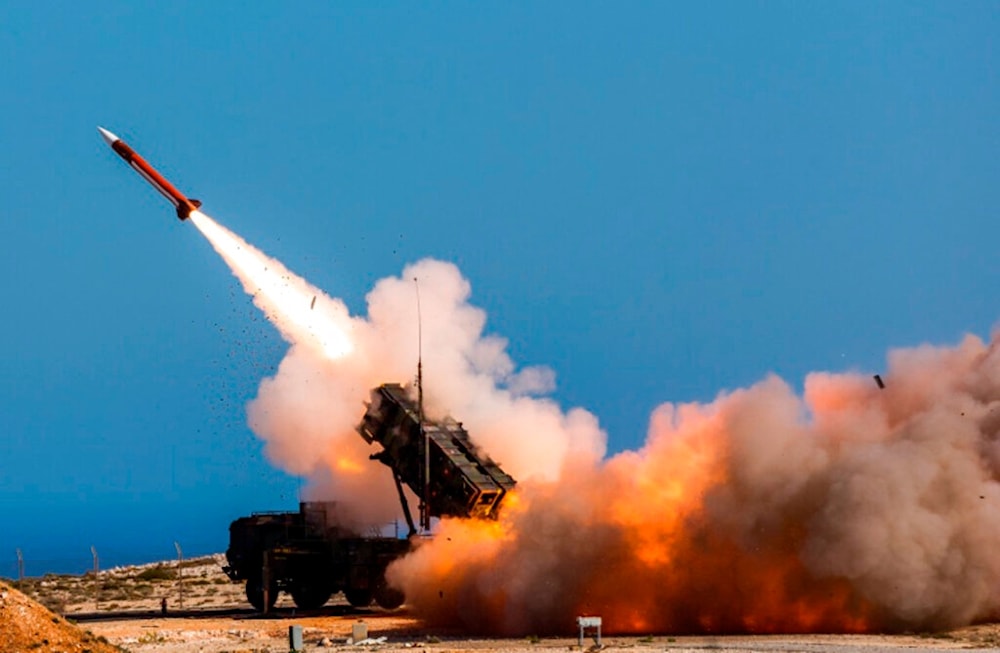
German soldiers assigned to Surface Air and Missile Defense Wing 1, fire the Patriot weapons system at the NATO Missile Firing Installation, in Chania, Greece, on November 8, 2017. (Sebastian Apel/U.S. Department of Defense, via AP)
The United States Department of War is planning to procure 3,203 Patriot Advanced Capability-3 Missile Segment Enhancement (PAC-3 MSE) interceptors in fiscal year 2027, according to budget documents released on April 3 and analyzed by a RIA Novosti correspondent.
The procurement is part of a record $1.5 trillion military budget request, representing a 44% increase over the previous year. The scale of the increase highlights a significant acceleration in missile production and acquisition.
Washington's budget increase request comes ahead of the November 2026 midterm elections and is poised to face backlash from Congress.
The bulk of the planned purchases is driven by the US Army, which has requested 2,798 PAC-3 MSE missiles for FY2027. This marks a 682% increase compared to FY2026, when the Army procured 358 missiles through a mix of discretionary and mandatory funding.
Budget figures show a dramatic rise in funding for the program. Army allocations for the system are set to grow from $1.65 billion in FY2026 to $12.23 billion in FY2027, reflecting an increase of more than 600%.
This sharp expansion signals a shift toward large-scale stockpile buildup and rapid growth in production capacity.
US Navy expands role with first PAC-3 MSE integration
In a notable development, the US Navy is requesting 405 PAC-3 MSE missiles, marking its first procurement of the system.
The move indicates plans to integrate the interceptor into the Aegis Weapons System, enabling deployment via MK 41 Vertical Launching Systems.
This step reflects a broadening of missile defense architecture, extending traditionally land-based systems into naval platforms as part of wider operational planning.
Read more: US war on Iran costs exceed $61bln, tracker shows
Funding shift highlights acceleration strategy
The combined funding request for the missile program totals approximately $13.96 billion. A significant portion, over $12.5 billion, is expected to come from mandatory funding channels outside the standard discretionary budget process.
This funding structure underscores efforts to accelerate production timelines and bypass conventional budgetary constraints.
The expansion is tied to initiatives led by the Munitions Acceleration Council, which aims to scale the US defense industrial base rapidly. As part of this effort, the Army’s total acquisition target for PAC-3 MSE missiles has increased sharply from 3,376 to 13,773 units.
The rapid increase in procurement comes amid reported shortages in interceptor stockpiles. According to the analysis, these constraints are linked to high usage rates during the war on Iran.
Washington used up a significant amount of its critical missile stockpile during its war on Iran. Reports indicate that the US used half of its Precision Strike Missiles, roughly 50% of its Patriot air defense interceptors, and at least half of its THAAD missile inventory, systems considered essential for countering advanced threats.
The depletion of missile reserves has raised concerns within US military planning circles regarding long-term readiness and sustainability, prompting accelerated acquisition and production measures.


