
Trump seeks $500bln defense boost as Iran war strains budget
 3 Min Read
Trump’s proposed 2027 budget seeks major defense increases and domestic spending cuts as the costly war on Iran drives rising military expenditures and fiscal pressure.
-
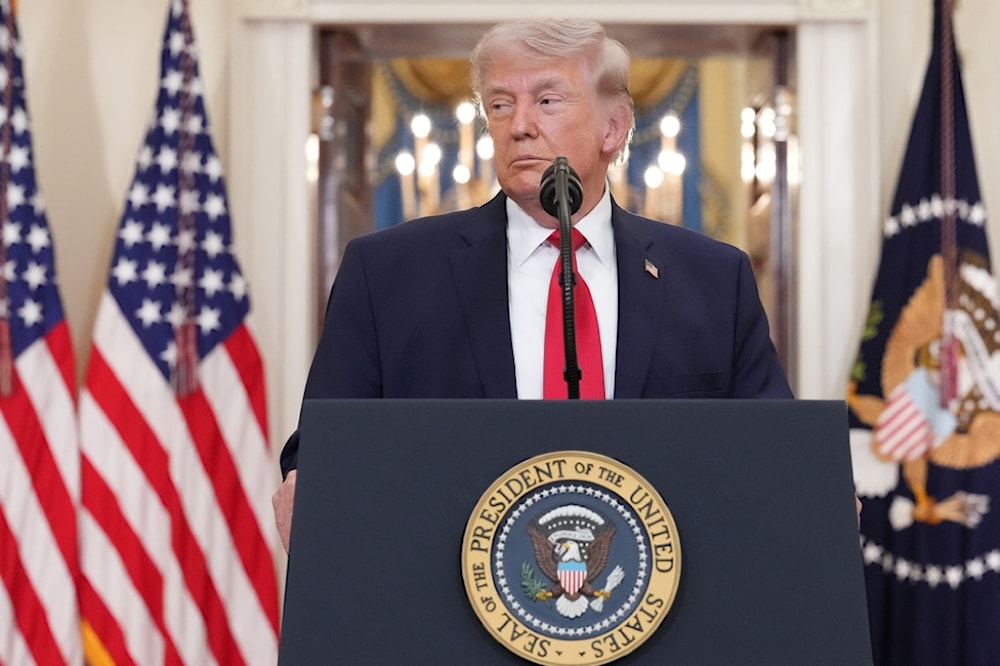
US President Donald Trump pauses as he finishes speaking about the Iran war from the Cross Hall of the White House on Wednesday, April 1, 2026, in Washington (AP, Pool)
US President Donald Trump asked Congress to enact a $2.2 trillion budget for discretionary programs, seeking a massive increase in defense spending, while also renewing his push for steep cuts to domestic agencies.
The budget proposal released on Friday requests $1.5 trillion for defense, a significant increase over the $1 trillion sought for fiscal year 2026. The new figure includes $1.1 trillion in base discretionary spending for the Department of Defense and another $350 billion in mandatory spending as the US carries out its war on Iran.
To this end, Trump requested a 10% cut in non-defense discretionary spending for fiscal year 2027, alongside a $500 billion increase in defense funding, Reuters reported, citing a White House budget document.
The proposal outlines the administration’s fiscal priorities as it seeks to expand defense capabilities while scaling back funding for a range of domestic programs. Lawmakers from both parties will need to negotiate the plan, and such requests are often revised significantly during the legislative process.
War drains resources
The sharp increase in military spending comes as the United States remains engaged in a war on Iran that has driven up costs and placed a growing strain on financial and military resources. The war cost Washington more than $11 billion in its first six days alone, with estimates placing daily expenditures at between $1 billion and $2 billion, while munitions stockpiles have been drawn down significantly, raising concerns about sustainability and replenishment.
The scale of the war has also prompted the Pentagon to seek more than $200 billion in additional funding and pushed defense officials to accelerate weapons production, as high-end systems are being consumed faster than they can be replaced. The proposed increase also aligns with a broader military buildup that includes investments in missile systems, naval assets, and advanced fighter jets, signaling preparations that extend beyond immediate battlefield needs.
Against this backdrop, the proposed budget reflects a broader reallocation of resources toward sustaining prolonged military operations, while partially offsetting rising military expenditures through cuts to domestic spending. The shift also comes as rising war-related expenditures add to fiscal pressures, with analysts warning that sustained military operations could further strain US public finances and contribute to broader economic uncertainty.
Congress eyes budget
The budget blueprint comes ahead of the November 2026 midterm elections, with Republicans aiming to preserve their narrow control of both chambers of Congress. The proposal is also likely to face scrutiny in Congress, where some lawmakers have already raised concerns over the scale of war-related spending and its long-term fiscal impact.
In a budget fact sheet, the White House defended the proposed reductions, stating, "Savings are achieved by reducing or eliminating woke, weaponized, and wasteful programs, and by returning state and local responsibilities to their respective governments."
Among the targeted cuts are programs linked to clean energy initiatives and nearly 30 Justice Department programs described by the administration as redundant or politically driven.
At the same time, the plan calls for a 13% increase in Justice Department funding aimed at strengthening law enforcement efforts, with the goal to "maximize" the agency’s "capacity to bring violent criminals to justice."
Read more: War on Iran may actually cost the US trillions: The Intercept


