
US expands push for military production with automakers
 4 Min Read
The US administration is exploring partnerships with automakers and major manufacturers to expand weapons production, as ongoing wars strain military stockpiles.
-
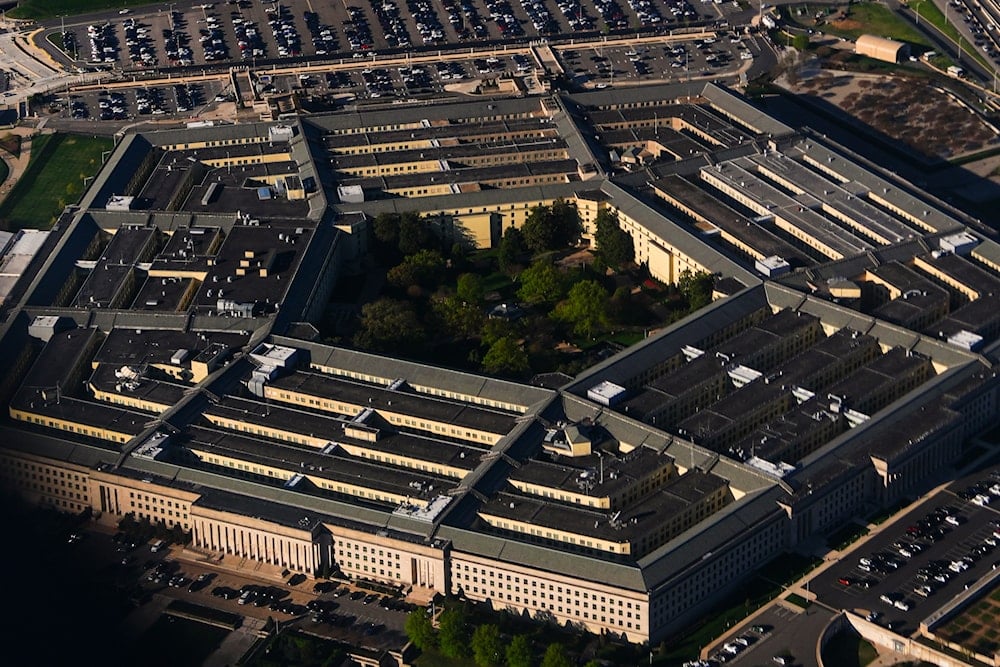
The Pentagon is seen from an airplane, Tuesday, April 7, 2026, in Washington. (AP Photo/Julia Demaree Nikhinson)
The US administration is moving to expand military manufacturing capacity by encouraging automakers and major industrial companies to play a larger role in weapons production, echoing practices seen during World War II.
The Wall Street Journal reported on Wednesday that senior defense officials have held preliminary discussions with top executives from leading firms to explore leveraging commercial manufacturing capabilities to support defense needs.
The Pentagon has approached executives from major companies, including General Motors and Ford Motor, as part of broader efforts to strengthen the US defense industrial base. The talks have also involved firms such as GE Aerospace and Oshkosh.
According to people familiar with the discussions, officials examined whether these companies could utilize their workforce and production capacity to increase the output of munitions and military equipment. The conversations were described as wide-ranging and in early stages.
A Pentagon official said the Defense Department “is committed to rapidly expanding the defense industrial base by leveraging all available commercial solutions and technologies to ensure our warfighters maintain a decisive advantage.”
Wars drive urgency for increased weapons output
The push comes as ongoing wars, particularly in Ukraine and on Iran, continue to strain US military stockpiles. Defense officials view the situation as a signal that additional commercial partnerships may be necessary to scale up the production of munitions and tactical systems, including missiles and counter-drone technologies.
Officials also framed the expansion of weapons production as a matter of national security, asking companies whether they could help reinforce domestic manufacturing capacity. Executives were further asked to identify potential barriers to taking on defense contracts, including regulatory requirements and procurement challenges.
Industry response and existing defense involvement
Oshkosh, a Wisconsin-based manufacturer, has been in dialogue with the Pentagon since November following calls by Defense Secretary Pete Hegseth to increase production capacity.
Logan Jones, chief growth officer for the company’s transport segment, said discussions have focused on “where could we bring that capacity in a way that matches our core capability.” While Oshkosh produces tactical military vehicles, the majority of its $10.5 billion revenue comes from non-defense operations.
“We’ve been out looking at capabilities that we think fit their needs, just proactively,” Jones said. “We’ve heard it loud and clear that this is important.”
General Motors also maintains a defense subsidiary that produces a lightweight infantry squad vehicle based on the Chevrolet Colorado pickup.
US seeks $25.4bln interceptor boost
Earlier this month, the United States Department of War requested on April 7 a sweeping increase in funding for advanced missile interceptors, citing mounting stockpile pressures following extensive use during the ongoing war on Iran.
According to budget documents for fiscal year 2027, the Pentagon is seeking a combined $25.4 billion to expand procurement of the Terminal High Altitude Area Defense (THAAD) system and the Patriot Advanced Capability-3 Missile Segment Enhancement (PAC-3 MSE), marking one of the largest interceptor funding surges in recent years.
The request follows reports of significant attrition in US interceptor inventories, due to the aggression on Iran, as the Iranian armed forces responded to US-Israeli aggression by launching hundreds of missiles and thousands of one-way attack drones against "Israel" and US interests in the region. Iran's retaliatory strikes led to high consumption rates of missile interceptors, exposing gaps in strategic reserves, especially for Gulf countries. US defense officials have warned that the pace of interceptor use has outstripped replenishment capacity, raising concerns over long-term readiness.
The issue is compounded by an inability to match the scale and speed of Iran’s missile and drone production, which has placed sustained pressure on US air defense systems deployed across multiple theaters.


