
US seeks urgent funds for interceptor stocks drained by war on Iran
 4 Min Read
US plans $1.5 billion in reallocated funding to replenish interceptor missiles after heavy use in the war on Iran, focusing on Patriot, THAAD, and standard systems.
-
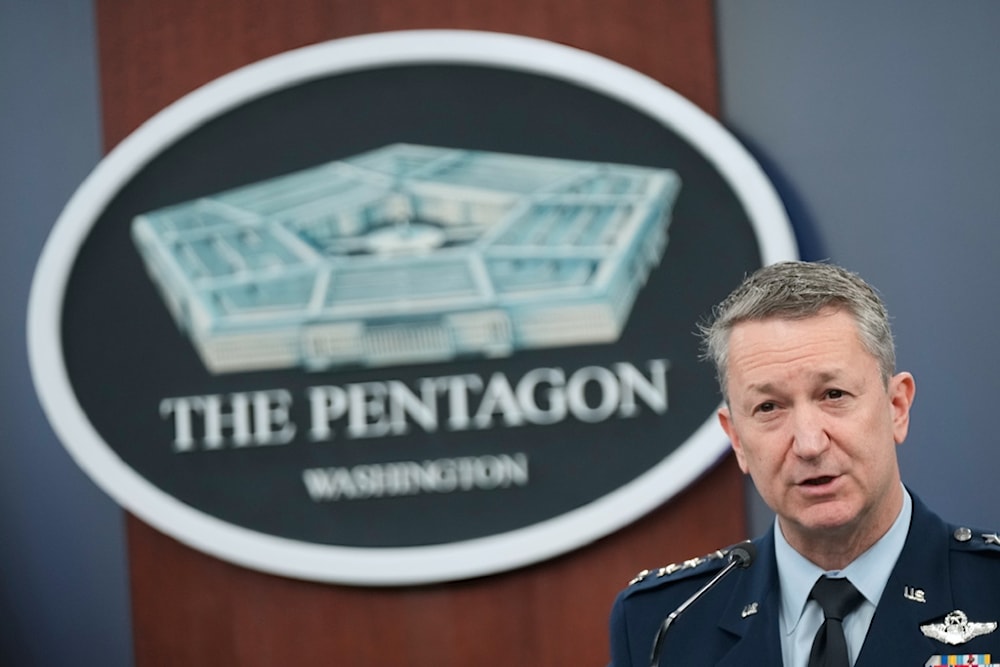
Chairman of the Joint Chiefs of Staff Gen. Dan Caine speaks during a press briefing at the Pentagon, Monday, March 2, 2026, in Washington (AP)
The Pentagon plans to redirect approximately $1.5 billion in previously approved funding to procure critically important interceptor missiles for Patriot, THAAD, and Standard Missile systems, Bloomberg reported. The decision comes amid growing concern over dwindling stockpiles after heavy use of interceptors in the ongoing war on Iran and the latter's retaliatory campaign.
A “reprogramming” note sent by Pentagon Comptroller Jules Hurst to Congress on March 13 did not explicitly tie the request to the current US-Israeli war on Iran. However, it follows the recent large-scale deployment of interceptors by the United States, "Israel", and Gulf allies to counter Iranian drones and missiles.
“The move is aimed not only at replenishing stockpiles but also at adopting a long-term procurement approach,” the Pentagon said. This strategy is designed to allow defense contractors to ramp up production and ensure that critical missile systems remain operational in the event of prolonged war. The focus is primarily on interceptors for Patriot and THAAD systems, many of which Iran's armed forces destroyed.
Diminishing Patriot, THAAD, and standard missile stock
According to Bloomberg, the Pentagon is requesting approval to redirect $352 million from lower-priority programs toward a contract for 85 additional Patriot-3 Missile Segment Enhancement (MSE) interceptors produced by Lockheed Martin. Another $771 million is proposed for 65 THAAD interceptors later this year. The department also seeks to shift $373 million to acquire 23 additional Standard Missile-3 IB interceptors produced by RTX to strengthen reserves of this critical munition.
The Pentagon’s move coincides with broader discussions in Washington about sharply increasing defense spending amid the war on Iran. Earlier reports from The Washington Post indicated that the department had asked the White House to seek congressional approval for more than $200 billion to fund military operations related to the conflict.
At the same time, sources cited by The Wall Street Journal suggest that there is no consensus within US President Donald Trump’s administration on the next steps. Some advisors reportedly favor ending the war quickly to curb rising oil prices and mitigate the risks of a prolonged war, while others support maintaining a strong military posture.
The reallocation of funding underscores the strategic importance of interceptor missile systems in West Asia, as Iran continues to employ drones and missiles that threaten both US forces and "Israel".
GOP lawmakers balk at $200 bln funding request from Pentagon
Earlier, the US Department of War previously asked Congress for another $200 billion for the war on Iran, a sum representing nearly a quarter of the annual US defense budget. While Democrats largely oppose the request, a growing number of Republicans are also expressing skepticism, citing fiscal conservatism and a lack of clarity on war objectives.
Rep. Thomas Massie of Kentucky, a self-described deficit hawk, questioned the scale and duration of the conflict. "It begs the question, how long do they plan to be there? What are the goals? Is this the first $200 billion? Does this turn into a trillion?" he told CNN.
Rep. Lauren Boebert of Colorado dismissed the request outright. "I am so tired of spending money elsewhere. I'm tired of the Industrial War Complex getting our hard-earned tax dollars. I've got folks in Colorado who can't afford to live. We need America First policies right now," she told reporters.
Rep. Chip Roy of Texas defended Trump's position on Iran while demanding accountability. "I like to be consistent. I was consistent about Ukraine. I'm going to be consistent on Iran. I want to make sure I know the game plan. We want to know what the result is going to be," he told Fox News.
Rep. Eric Burlison of Pennsylvania said the Pentagon should pass an audit before he could consider backing additional funds. "We've known that they haven't passed an audit in many, many years. It'll give me comfort [...] if they pass an audit, and then I'll know that at least they're keeping track of the dollars," Burlison said.


