
US funds spent on ‘reckless’ Iran war could have saved 87mln lives: UN
 6 Min Read
The UN’s humanitarian chief warns that billions spent weekly on the US-led war on Iran are diverting resources from life-saving aid.
-
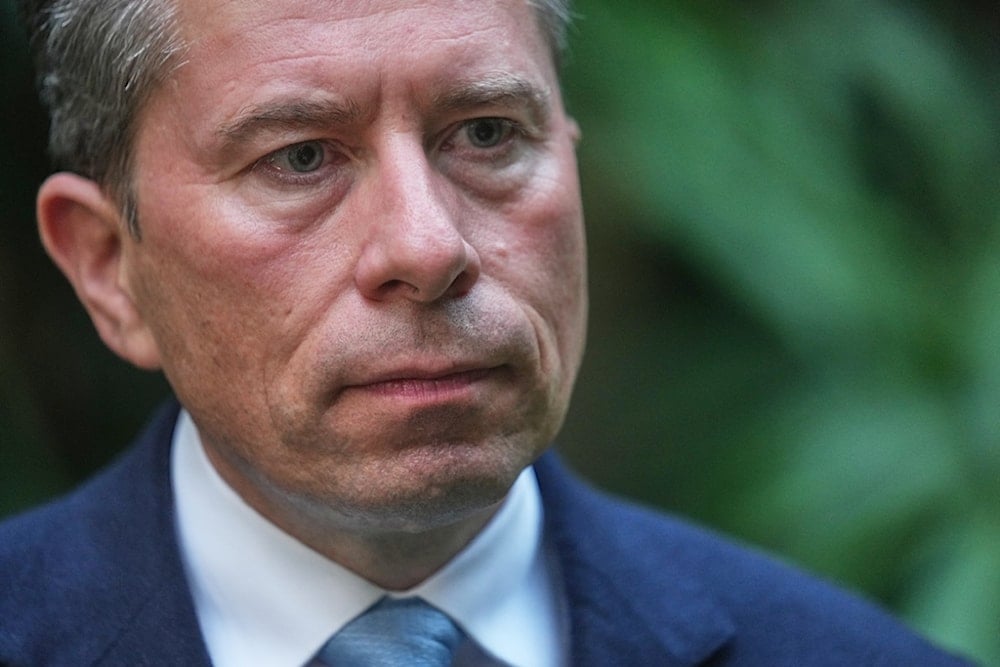
U.N. humanitarian chief Tom Fletcher speaks during an interview for The Associated Press in Cairo, Sunday, Oct. 12, 2025 (AP)
The head of the United Nations’ humanitarian arm has issued a stark warning over the financial and human toll of the US-led aggression on Iran, arguing that the scale of military spending stands in direct contrast to a deepening global aid crisis, The Guardian reported.
Speaking at Chatham House in London on Monday, UN humanitarian chief Tom Fletcher said the vast sums allocated to the war could have instead funded life-saving operations on an unprecedented scale. He pointed out that the war is consuming roughly $2 billion per week, while the UN requires $23 billion to deliver a targeted plan aimed at assisting tens of millions of vulnerable people.
“For every day of this conflict, $2bn is being spent. My entire target for a hyper-prioritised plan to save 87 million lives is $23bn. We could have funded that in less than a fortnight of this reckless war. Now, of course, we cannot,” Fletcher said.
Invisible poverty deaths
The warning comes against the backdrop of sweeping US aid cuts, after the Trump administration moved to freeze and dismantle large parts of its foreign assistance apparatus, including the scaling down of USAID operations worldwide. The rollback disrupted food, medical, and emergency relief programs at a time when humanitarian needs are surging, compounding what Fletcher described as a system under severe strain.
The human cost of these decisions remains largely invisible. According to UN and global health data, around 4.9 million children under the age of five die each year from largely preventable causes, equivalent to roughly 13,000 deaths every day, while more than 700 women die daily from preventable complications related to pregnancy and childbirth. These deaths, driven by poverty, lack of access to basic healthcare, and underfunded systems, rarely command the same political urgency as war.
At the same time, hundreds of millions face worsening deprivation, with over 300 million people experiencing acute food insecurity worldwide. Experts warn that reductions in humanitarian funding, particularly from major donors such as the United States, risk accelerating these trends and pushing millions more into life-threatening conditions.
War spending fuels suffering
Against this reality, the scale of military expenditure takes on sharper significance. At approximately $2 billion per week, the war is consuming close to $12 million per hour, funds that, according to UN estimates, could rapidly finance large-scale interventions capable of preventing mass suffering and stabilizing vulnerable populations.
He framed the situation as part of a broader humanitarian funding collapse, noting that his agency is facing a shortfall of around $10 billion amid sweeping reductions in international aid contributions. According to Fletcher, these cuts are being driven not only by Washington but also by European governments redirecting resources toward defense priorities.
Beyond funding concerns, Fletcher warned that the consequences of the war are already being felt globally, with rising food and energy costs expected to deepen poverty in vulnerable regions, particularly across sub-Saharan and eastern Africa.
Normalizing extreme rhetoric
He also expressed alarm over the normalization of extreme rhetoric surrounding the war, noting that such language risks legitimizing attacks on civilian populations and infrastructure.
“The idea suddenly that it is OK to say, ‘We are going to blow stuff up, we are going to bomb you back to the stone ages, destroy your civilisation’ – normalising that kind of language is really dangerous,” he said.
“It gives more freedom to all the other wannabe autocrats round the world to use that sort of language and those sort of tactics, targeting civilian infrastructure and civilians in a way that completely breaches international law.”
Fletcher described his engagement with the Trump administration as highly unpredictable, highlighting what he sees as a fundamental difference in diplomatic approach.
“There is a difference between statecraft and ‘real-estatecraft’,” he said, adding that many US officials prioritize personal trust and informal deal-making over institutional processes.
He contrasted this with traditional diplomatic practices, noting that “statecraft people” tend to value structure and predictability, whereas the current US approach embraces uncertainty as a tool.
Aid conditions dilemma
At the same time, Fletcher raised concerns about the political conditions attached to humanitarian funding, saying he is grappling with whether to accept US aid funding if it comes with new conditions concerning issues such as abortion.
“The question is do we take that money under those conditions, knowing that it will save millions of lives or not?” he said, indicating reluctance to proceed under such terms.
The UN official also warned that the international system designed to maintain global stability is under increasing strain, pointing to a deeply divided Security Council and a shift toward more transactional geopolitics.
Turning to the United Kingdom, Fletcher criticized years of declining aid commitments, saying the country’s retreat from its longstanding spending targets has undermined its credibility and influence.
'Acceptable' deaths
He further highlighted the growing dangers faced by humanitarian workers, noting that more than 1,000 have been killed in the past three years, particularly in Gaza, often in drone attacks, with little accountability for those responsible.
“We are the emergency service, the fire engines, the ambulance worker going to support survivors, yet somehow it has become acceptable that we are being killed in these numbers. There is no accountability for those that are killing us,” he said.
Fletcher urged governments not to limit their response to statements of concern, calling instead for direct action to protect aid personnel and uphold international law.
“Don’t just give us a generic statement, saying ‘humanitarian workers should be protected’ – make the phone call, call out the people killing us, stop arming those that are doing this.”
Read more: US withholds war on Iran cost figures, no funding request yet: WSJ


