
US general warns Trump of Iran strike risks amid military buildup
 4 Min Read
US Joint Chiefs Chairman Dan Caine reportedly warns Trump that striking Iran could lead to prolonged conflict and potential American casualties.
-
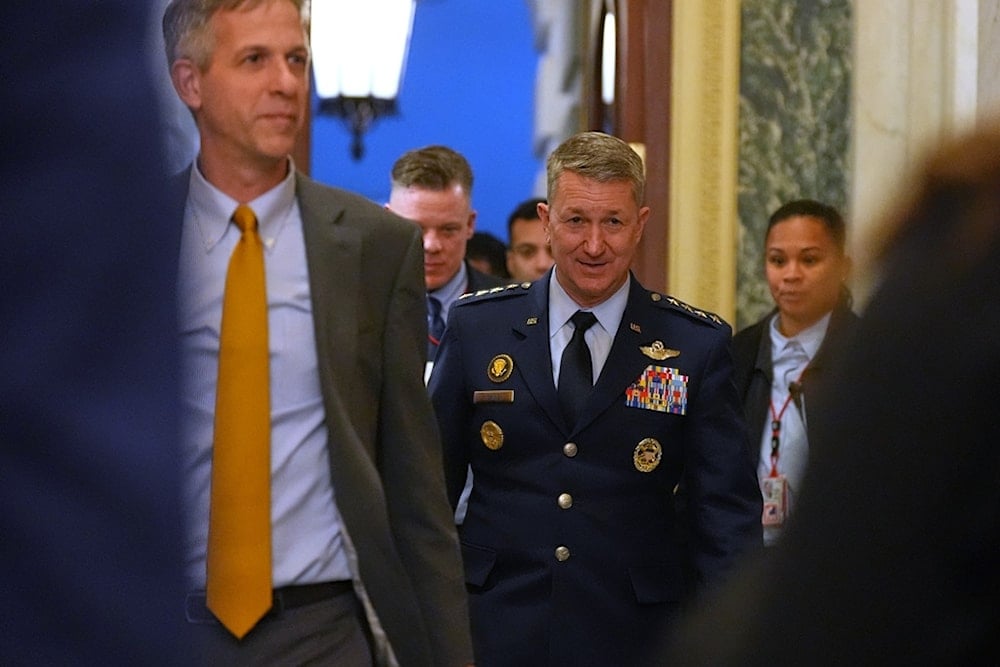
US Chairman of the Joint Chiefs of Staff Gen. Dan Caine arrives at the US Capitol on Monday, January 5, 2026 (AP)
US Joint Chiefs of Staff Chairman Dan Caine has warned President Donald Trump that a potential military strike on Iran could draw the United States into a prolonged conflict, according to a report by Axios citing informed sources.
The report said Caine cautioned that such an operation could entangle Washington in an extended confrontation with Tehran, increasing the risk of escalation across the region.
According to the sources cited by Axios, Caine also warned that military action against Iran could result in US casualties.
Despite raising concerns, the chairman reportedly told Trump that he would support and implement any decision ultimately taken by the president regarding a possible strike.
The reported warning comes amid ongoing debate within Washington over how to address tensions with Iran, as policymakers weigh diplomatic options against potential military action.
Trump escalates Iran threat
US President Donald Trump has pushed the United States closer to a potential war with Iran, ordering a major military buildup and raising the prospect of an extended air campaign even as advisors warn that escalation could distract from economic messaging ahead of this year’s midterm elections.
The Trump administration’s posture has sharpened US-Iran tensions across West Asia, where US forces have expanded their presence amid warnings of strikes tied to Iran’s nuclear program. Yet Trump has not publicly presented a detailed case for war, leaving questions about strategic goals, escalation risks, and how Washington would manage regional fallout.
Trump has ordered a substantial deployment of US forces to West Asia, including aircraft carriers and warplanes, as the administration prepares for the possibility of a multi-week air attack on Iran.
A senior White House official said that despite Trump’s rhetoric, there was still no “unified support” within the administration to go ahead with an attack on Iran. The official said advisors are also concerned about sending a “distracted message” to undecided voters who are more focused on domestic economic concerns.
A regional flashpoint with high escalation risk
Trump’s fixation on Iran has emerged as the starkest example of how foreign policy and the expanded use of military force have dominated his agenda in the first 13 months of his second term, often overshadowing domestic issues such as the cost of living.
The administration’s intensified military posture comes after the US targeted nuclear sites in Iran in June, and Iran threatened to retaliate fiercely if attacked again. Trump has repeatedly warned of strikes if Iran does not reach an agreement on its nuclear program, and on Friday, he renewed the threat, saying Tehran “better negotiate a fair deal.”
The reasons Trump has given for potential military action have been vague and varied. He had initially threatened strikes in January in reaction to the Iranian government’s handling of the foreign-backed riots. More recently, Trump has tied threats to demands that Iran end its nuclear program and has floated the idea of “regime change,” but neither he nor his aides have explained how air strikes could achieve that.
The second White House official insisted that Trump “has been clear that he always prefers diplomacy, and that Iran should make a deal before it is too late.” The official added that the president has stressed Iran “cannot have a nuclear weapon or the capacity to build one, and that they cannot enrich uranium.”


