
US intelligence says Iran retains significant military power
 2 Min Read
US intelligence says Iran retains significant military power including thousands of missiles and drones, contradicting Trump's claims of victory, NBC News reports.
-
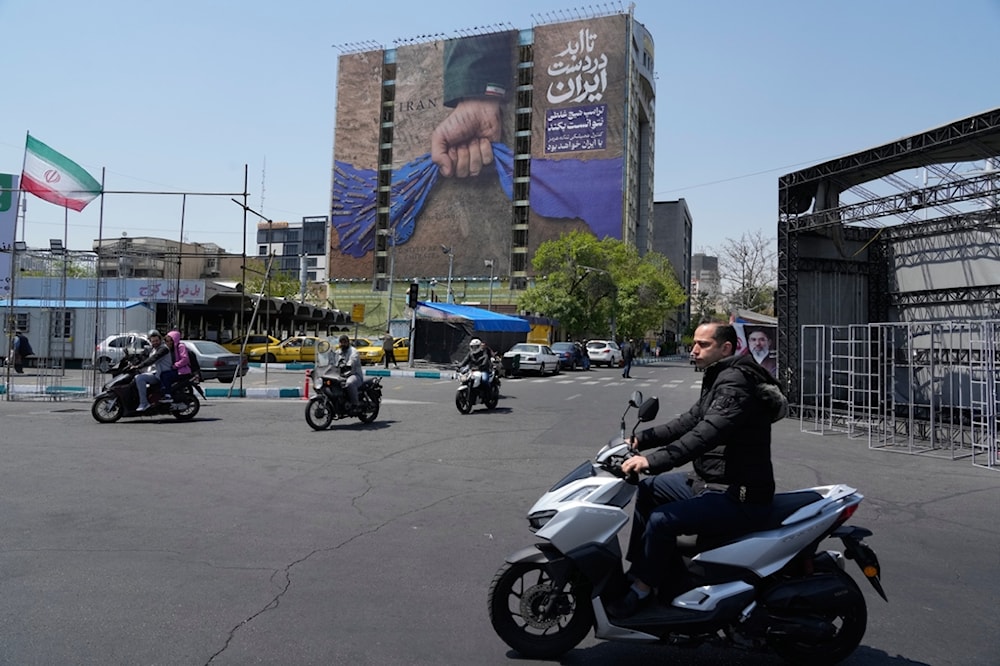
A billboard depicting signs which read in Farsi: 'In Iran's hands forever,' 'Trump couldn't do a damn thing,' 'The control of Strait of Hormuz will be Iran's forever,' in Vanak Square in northern Tehran, Iran, Thursday, April 16, 2026. (AP)
US intelligence agencies have concluded that Iran still possesses substantial military capabilities, contradicting public assertions by President Donald Trump and War Secretary Pete Hegseth that Tehran's defense industry had been destroyed and Iranian airspace brought under complete American control, according to an NBC News report citing US lawmakers.
The intelligence data contradicts statements by US President Donald Trump and War Secretary Pete Hegseth, who claimed complete control over Iranian airspace and the destruction of Iran's defense industry, the report said.
Department of War intelligence chief testified to Congress
According to testimony previously presented to Congress by Lieutenant General James Adams, Director of the Department of War's Defense Intelligence Agency, Iran maintains thousands of missiles and drones that could pose a threat to US and allied forces in West Asia.
On April 7, Washington and Tehran announced a two-week ceasefire. Subsequent talks in Islamabad ended inconclusively. While no resumption of hostilities was announced, the United States began a blockade of Iranian ports.
Mediators are currently attempting to organize a new round of talks between the two sides.
Costly strategy exposes structural weaknesses
The war has also highlighted the high cost of the US military aggression. Advanced munitions can cost millions of dollars each, pushing the military to rely increasingly on lower-cost alternatives such as Joint Direct Attack Munitions (JDAMs).
However, these alternatives come with operational trade-offs, including shorter range and increased risk to launch platforms.
Efforts to develop cheaper systems, including drones and low-cost interceptors, remain insufficient to offset the rapid depletion of high-end weapons.
The findings stand in contrast to statements by US President Donald Trump, who has downplayed concerns about weapons shortages while simultaneously requesting additional funding for munitions.
Despite official assurances that the military maintains a "deep arsenal", internal assessments and independent analyses suggest that the war has significantly strained US capabilities.


