
US Iran war casualties rise to 757 wounded service members
 3 Min Read
The Pentagon has recorded 757 US service members wounded since the war on Iran, as casualty figures rise and talks between Washington and Tehran remain stalled.
-
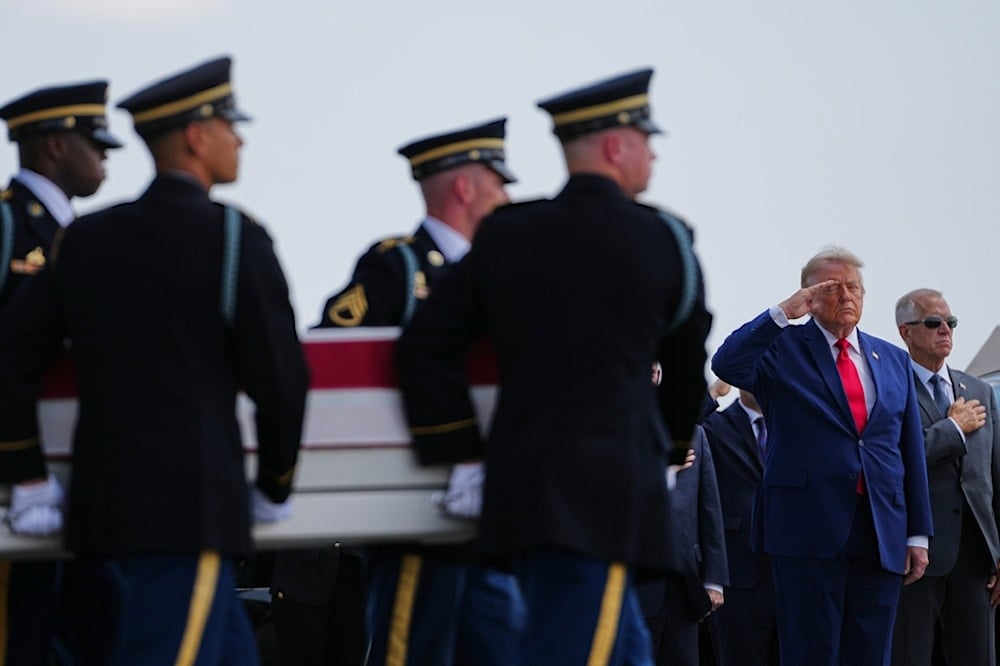
President Donald Trump salutes as a US Army carry team moves a transfer case containing the remains of a staff sergeant on July 22, 2026, at Dover Air Force Base, Del. (AP Photo/Matt Rourke)
More than 750 US service members have been wounded since the United States launched its war against Iran on February 28, according to the Defense Department's casualty database.
The Pentagon updated its Defense Casualty Analysis System (DCAS) on Wednesday, recording more than 50 additional wounded service members as negotiations between Washington and Tehran remain deadlocked.
According to figures in the DCAS database, 18 US service members have been killed and 757 wounded since the start of the war when casualties listed under "Overseas Operations" are combined with those recorded under Operation Epic Fury.
Pentagon casualty figures face scrutiny
The Defense Department created the "Overseas Operations" category in the DCAS database last month to record service members killed or wounded "starting July 7."
The July 7 date corresponds with the Trump administration's notification to Congress that a new war on Iran had begun under the War Powers Act.
The Pentagon has previously faced scrutiny over its reporting of US casualties during the conflict. In July, the number of service members listed as killed and wounded in the DCAS database declined even as Iranian attacks continued, with four deaths and dozens of injuries temporarily disappearing from the figures.
The Defense Department attributed the changes to "temporary data disruptions" in a social media post at the time.
According to CNN, the Pentagon has also been slow to disclose wounded US service members throughout the conflict, with officials citing security concerns.
Iran talks remain at an impasse
The latest casualty figures come as diplomatic efforts between Washington and Tehran remain stalled.
US President Donald Trump said on Wednesday that the situation with Iran was "so good" even as his administration paused negotiations with Tehran and tensions continued around the Strait of Hormuz.
The waterway remains a major point of tension amid the ongoing war, as it continues to factor into efforts to reach an agreement and end the fighting. Global fuel supplies are coming under increasing pressure as well, as the war on Iran and the confrontation surrounding the Strait of Hormuz disrupt crude and refined fuel flows.
On that note, CNN reported on Wednesday that the disruption has expanded from an oil supply shock into a broader fuel crisis, affecting gasoline, diesel, and jet fuel markets. "This is man-bites-dog news. The market is screaming that we’re short," Bob McNally, founder and president of Rapidan Energy Group, told CNN.
Refineries across West Asia have been affected by the war, while facilities that remain operational have faced difficulties transporting crude and refined products amid the standoff around the strait.


