
US judges clear Trump to end TPS for South Sudan, Myanmar migrants
 4 Min Read
Two US judges have cleared the Trump administration to end Temporary Protected Status for migrants from South Sudan and Myanmar, affecting thousands of people.
-
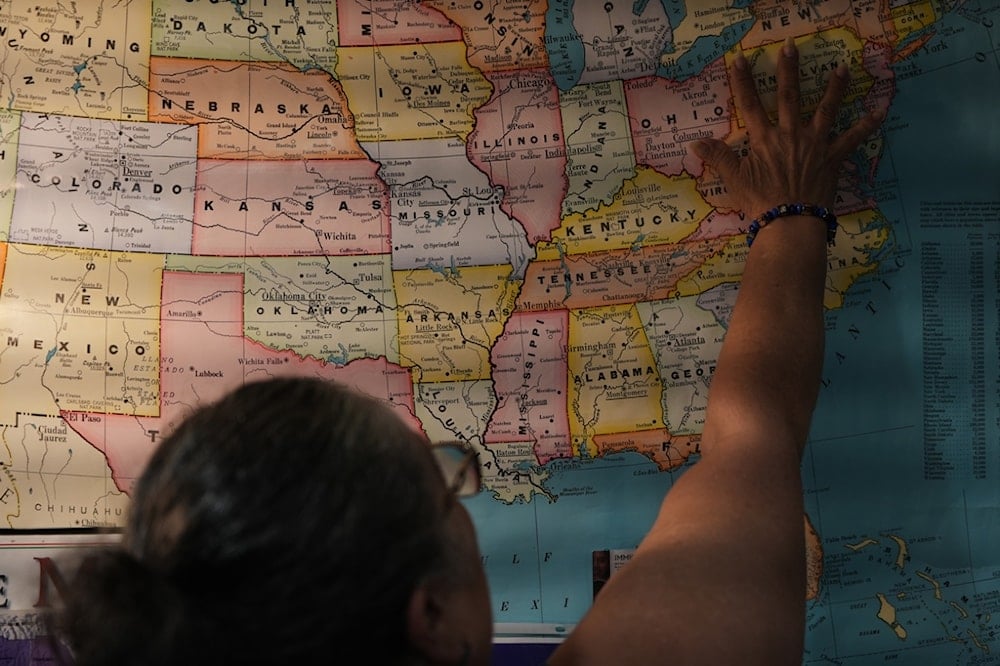
Leila Borrero Krouse, immigration specialist with CATA, points to a US map in her office to explain how many migrants come to the region to work as farmworkers and caregivers, in Salisbury, Md., on Saturday, August 1, 2026. (AP/Luis Andres Henao)
Two US federal judges have cleared the way for President Donald Trump’s administration to end Temporary Protected Status (TPS) protections for thousands of migrants from South Sudan and Myanmar, rejecting legal challenges seeking to preserve their protection from deportation.
Judges in Boston and Chicago ruled on Friday against immigrant-rights advocates who had sought to block the termination of TPS designations for the two countries, as reported by Reuters. The rulings followed a major US Supreme Court decision in June that allowed the administration to end similar protections for thousands of migrants from Haiti and Syria.
The latest decisions further narrow the ability of lower federal courts to block the Trump administration’s efforts to terminate TPS designations for migrants from countries facing conflict, disasters or other extraordinary conditions.
Courts reject challenge to DHS authority
The legal challenges were brought on new grounds after the Supreme Court's June ruling. Immigrant-rights lawyers argued that the Department of Homeland Security (DHS) did not have the authority to terminate TPS protections.
US District Judge Patti Saris in Boston rejected that argument in a Friday morning ruling, saying that accepting it would raise questions not only about DHS's authority to end TPS but also its longstanding authority to extend the protections.
US District Judge Matthew Kennelly in Chicago reached a similar conclusion hours later in the case concerning Myanmar, also known as Burma.
Earlier rulings by Saris and Kennelly had blocked the administration from terminating TPS protections for South Sudanese and Myanmar nationals.
Thousands could lose temporary protections
DHS moved in November to terminate TPS for South Sudan, which was first designated for the program in 2011, and Myanmar, which has faced political turmoil since the military seized power in a 2021 coup.
The terminations would affect about 232 South Sudanese nationals and approximately 4,000 people from Myanmar, according to the court cases.
TPS provides eligible migrants from designated countries with temporary protection from deportation and authorization to work in the United States. The program can be applied to nationals whose home countries have experienced natural disasters, armed conflicts or other extraordinary and temporary conditions.
The Trump administration has sought to end TPS designations for about a dozen countries as part of its broader immigration policies.
Supreme Court ruling reshaped TPS challenges
The latest decisions followed the Supreme Court's June ruling, which was backed by its 6-3 conservative majority and limited the ability of lower courts to review DHS efforts to terminate TPS protections.
The ruling involved the administration's decision to end TPS protections for nationals of Haiti and Syria. It provided a legal basis for the administration to pursue additional TPS terminations while restricting the grounds on which lower courts can intervene.
James Percival, DHS's general counsel, said the two Friday rulings meant that only the administration's efforts to terminate TPS for Ethiopia and Somalia remained blocked by the courts.
He urged other judges considering similar challenges to rule in favor of the government. "Every day these 'administrative stays' are in effect is a day the American people are denied what they voted for," he said.
The decisions mark another setback for immigrant-rights advocates challenging the administration's efforts to end temporary protections, and could leave thousands of additional migrants facing the loss of protection from deportation and work authorization.
Read more: Trump administration expands ICE power to detain legal refugees


