
US risks alienating Oman over Iran ties, Hormuz diplomacy
 5 Min Read
The National Interest warns that Washington's pressure on Oman over its ties with Iran is undermining a vital Gulf relationship and jeopardizing Muscat's indispensable role.
-
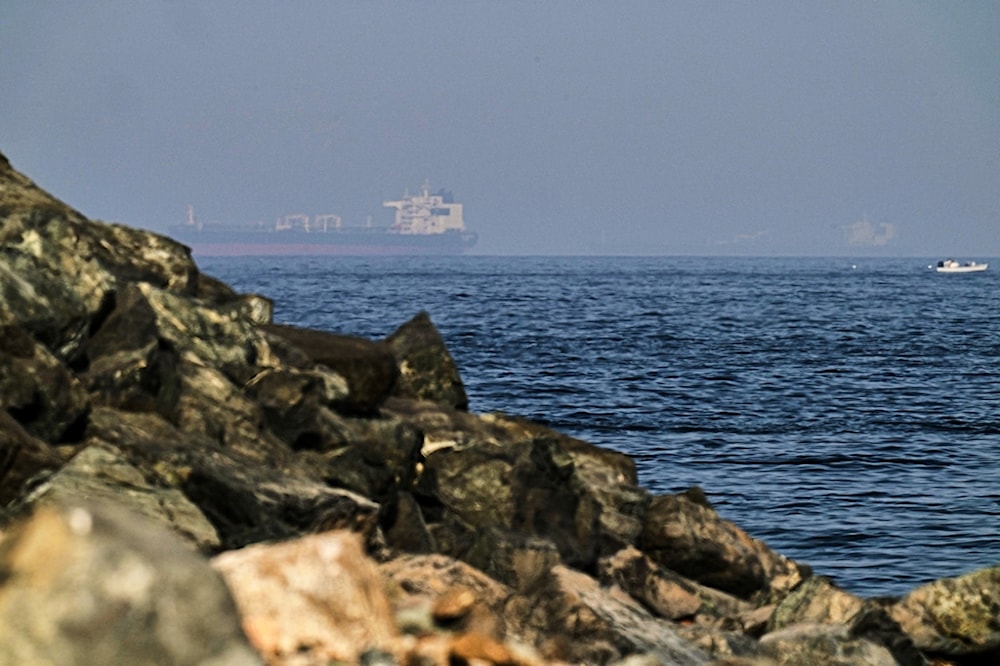
Cargo ships are seen at sea in the Gulf of Oman near the Strait of Hormuz, from a rocky shoreline near Khor Fakkan, United Arab Emirates, May 1, 2026 (AP)
Washington's growing frustration with Oman over its continued engagement with Iran is threatening one of the United States' oldest relationships in the Gulf, The National Interest has warned, as Muscat maintains its policy of active neutrality amid the US-Israeli war on Iran and the ongoing crisis in the Strait of Hormuz.
In an article published under the title: "What the US Gets Wrong About Oman," Luke Coffey argued that Washington is misreading Muscat's longstanding ties with Tehran and risks undermining a strategically important relationship by treating Omani neutrality as an obstacle rather than a diplomatic asset.
The report pointed to remarks by US President Donald Trump last month as a particularly sharp deterioration in relations between Washington and Muscat.
Discussing Oman's negotiations with Iran over the Strait of Hormuz, Trump said, “If Oman gets in the way, we'll bomb the shit out of them.”
According to The National Interest, such rhetoric ignores both Oman's strategic position and the reality that any durable arrangement concerning navigation through the Strait of Hormuz will necessarily require Muscat's involvement.
Oman's Iran ties rooted in geography, history
The report stressed that Oman's engagement with Iran should not be interpreted simply as political alignment with Tehran, arguing that the relationship is instead deeply rooted in geography, history, and Muscat's policy of “active neutrality".
Oman sits directly across the Strait of Hormuz from Iran, placing the Sultanate at the center of one of the world's most important maritime chokepoints.
This geographic reality, the article noted, gives Muscat a permanent interest in maintaining workable relations with Tehran regardless of political developments in either country.
Washington depends on Oman while pressuring it
Despite mounting US frustration with Oman's relationship with Iran, The National Interest acknowledged that Muscat has for years played a crucial role in facilitating communication between Washington and Tehran.
Oman has repeatedly hosted or facilitated indirect negotiations between US and Iranian officials across successive American administrations and has served as a channel through which Washington can convey messages to Tehran.
The Sultanate has also helped negotiate the release of US nationals held in Iran and Yemen.
The report noted that Trump himself has relied on Oman to communicate with Iranian authorities, underscoring the contradiction between Washington's dependence on Muscat as a diplomatic intermediary and its increasing pressure on the Gulf state.
Deep US-Oman ties span decades
The US-Omani relationship stretches back nearly two centuries.
Washington and the Sultanate of Muscat and Oman signed a Treaty of Friendship and Commerce in 1833, while Oman became the first Gulf state to grant the US military access to its facilities in 1980.
A free-trade agreement between the two countries entered into force in 2009.
Their military relationship expanded further in 2019, when the two sides reached an agreement granting US forces greater access to the ports of Duqm and Salalah, which provide Washington with important logistical and resupply facilities for military operations in the region.
Oman also operates US-made military equipment, including F-16 fighter jets.
War on Iran places ties under growing strain
The report said the prolonged aggression on Iran and disruption of traffic through the Strait of Hormuz have increasingly strained Washington's relationship with Muscat.
Oman itself has faced strikes during the war, including attacks involving the strategically important ports of Duqm and Salalah.
Duqm has particular importance for US military operations.
War exposes cracks in US-Oman ties
Weeks before the beginning of combat operations against Iran, the USS Frank E. Petersen Jr., a guided-missile destroyer deployed with the Abraham Lincoln Carrier Strike Group, made a port call there.
The destroyer later participated in the opening US strikes against Iran.
As the war has continued longer than Washington initially anticipated and disruption to Hormuz has produced wider economic consequences, the report argued that US frustration has increasingly been directed toward Oman and its mediation efforts.
Trump's threat against the Sultanate, it said, represented the culmination of that deterioration.
No Hormuz settlement possible without Muscat
Despite approaching the issue from the perspective of US strategic interests, The National Interest ultimately conceded that Washington cannot realistically sideline Oman from any political arrangement concerning the Strait of Hormuz.
“The United States needs partners like Oman,” the article argued, pointing to countries capable of communicating with governments Washington either cannot or refuses to engage with directly.
It further warned that it would be “naive” to believe that a lasting settlement to the Hormuz crisis could be reached without Muscat.
Oman's geographic position alone, the report acknowledged, guarantees it a central role in any future negotiations.
Washington urged to repair ties with Muscat
The article therefore urged Washington to repair relations with the Sultanate rather than continue pressuring it over its independent relations with Iran.
It proposed that Trump invite Sultan Haitham bin Tariq to Washington, noting that no Omani ruler has visited the United States since Sultan Qaboos traveled there during the Reagan administration in 1983.
The report's assessment ultimately highlights a growing contradiction in Washington's Gulf policy: while the United States has sought to pressure Oman over its ties with Tehran, it simultaneously depends on Muscat's neutrality and access to Iran whenever direct confrontation reaches a diplomatic impasse.
Read more: Trump says he won’t rush Iran deal, threatens to 'blow up' Oman


