
US Senate blocks 7th bid to limit Trump's Iran war powers
 3 Min Read
The US Senate rejected a Democratic effort to restrict President Donald Trump’s authority to pursue the aggression on Iran without congressional approval.
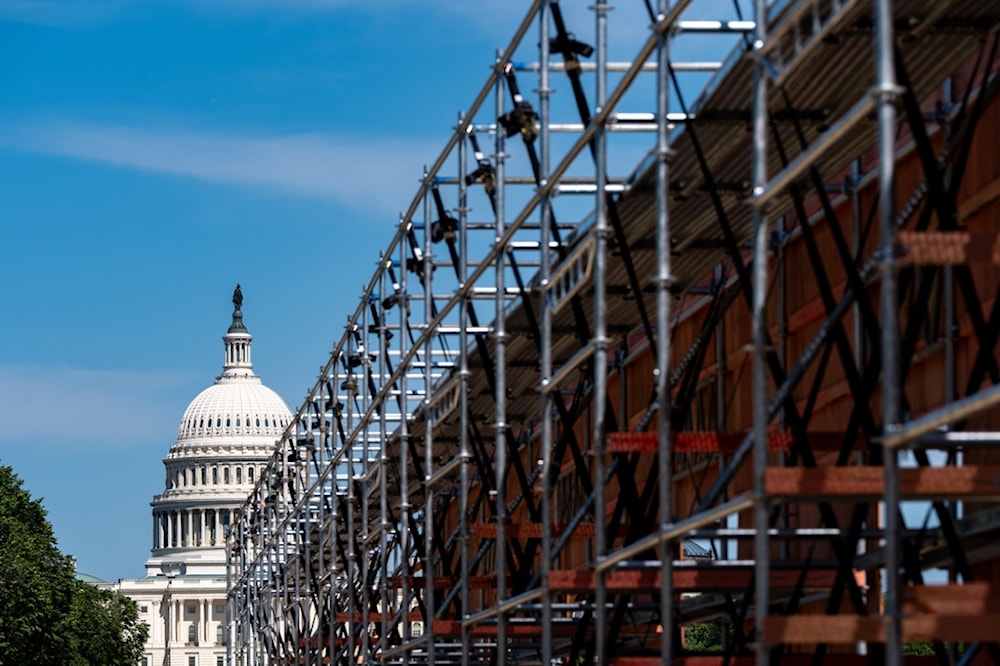
The US Senate on Wednesday blocked another effort to restrict President Donald Trump’s authority to continue the US-led war against Iran, as Republican lawmakers moved once again to shield the administration from congressional oversight despite mounting regional devastation and fears of wider escalation.
The procedural motion, tied to the War Powers Resolution, failed by a vote of 49-50 after Republicans voted to prevent the measure from reaching the Senate floor.
The resolution was introduced by Democratic lawmakers seeking to force the White House to obtain congressional authorization for continued military operations following the US and Israeli aggression launched against Iran on February 28.
Under the War Powers Resolution, a US president is required to seek congressional approval within 60 days of entering hostilities or begin withdrawing forces, unless a limited extension is formally requested.
War Powers dispute
May 1 marked the expiration of that 60-day deadline after Trump notified Congress of the military aggression on Iran. However, as the deadline approached, the administration claimed that hostilities had “terminated” following the April ceasefire, a position critics described as a legal maneuver aimed at bypassing constitutional restrictions while preserving Washington’s military pressure campaign across West Asia.
Despite publicly claiming the war had effectively ended, the Pentagon has continued expanding deployments, maintaining naval operations near the Strait of Hormuz, and repositioning forces throughout the region under the pretext of countering alleged Iranian threats.
The latest Senate vote marked at least the seventh failed congressional attempt this year to curb Trump’s war powers regarding Iran. Previous efforts included resolutions introduced by Senator Tim Kaine and other lawmakers seeking to halt unauthorized military action and prevent the administration from dragging the United States into a prolonged regional war without congressional approval.
Although Republican leadership largely remained aligned with the White House, signs of growing unease have begun emerging within the party. Republican senators including Rand Paul, Susan Collins, and Lisa Murkowski backed the latest effort to limit the war, citing concerns over constitutional authority, economic fallout, and the risk of deeper military entanglement.
Hormuz siege fallout
The war and accompanying US naval siege have triggered major disruptions across global energy markets and maritime trade routes, particularly around the Strait of Hormuz, through which a significant share of the world’s oil passes. Iranian officials have repeatedly argued that Washington’s military escalation and pressure campaign are the primary drivers of regional instability.
Although Washington and Tehran later entered Pakistani-mediated talks in Islamabad and announced a fragile ceasefire, negotiations failed to produce a final agreement, while the United States continued maintaining military pressure and sanctions against Iran.
Critics of the administration accuse the White House of attempting to normalize open-ended warfare while circumventing Congress and avoiding public accountability over a conflict that has already caused thousands of deaths, major economic disruption, and heightened risks of a broader regional confrontation.
Read more: US consumer inflation hits highest annual rate in three years


