
US Senate control hangs on 11 key midterm races: CNN
 5 Min Read
Democrats are seeking to regain control of the US Senate as polling points to competitive races in Republican strongholds and several states remain too close to call.
-
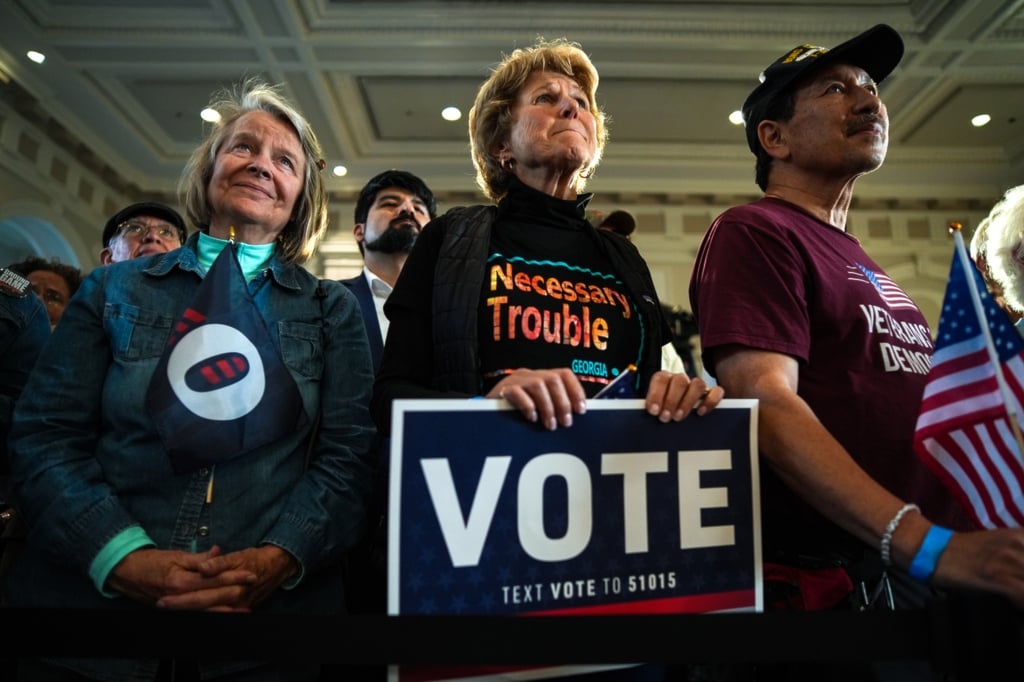
Supporters of Democratic candidate US Sen. Jon Ossoff look on as he speaks at the final campaign event before Election Day, Monday, Nov. 2, 2026, in Decatur, Ga. (AP Photo/Ryan Murphy)
Democrats are approaching Election Day within striking distance of regaining a majority in the US Senate, as several competitive races across the country could reshape the balance of power in Congress.
According to CNN's ranking of the 11 Senate seats most likely to change hands, a number of contests remain closely fought, including in traditionally Republican states. While polling points to opportunities for Democratic candidates, several races remain within the margin of error, leaving the final outcome uncertain.
11 Senate races to watch
1. North Carolina
Democratic candidate Roy Cooper holds a 14-point lead over Republican Michael Whatley among likely voters, according to the final High Point University/YouGov poll. The result places North Carolina among the Democrats' strongest opportunities to gain a Republican-held seat.
2. Ohio
Former Democratic Senator Sherrod Brown is leading Republican Senator Jon Husted by 50% to 45%, according to CNN's Poll of Polls average. The contest is among the key races that could determine whether Democrats can make gains in the Senate.
3. Texas
Democratic candidate James Talarico is ahead of Republican Ken Paxton in two polls, including surveys conducted by The New York Times/Siena College and CNN. Both show Talarico leading outside the margin of error, making Texas one of the more closely watched contests.
4. Maine
Democrat Troy Jackson leads Republican Senator Susan Collins by 50% to 46%, according to CNN's polling average. The race puts a long-serving Republican senator in a competitive contest as Democrats seek to expand their path to a majority.
5. Alaska
A New York Times/Siena College poll gives Democrat Mary Peltola 48% support and Republican Senator Dan Sullivan 46%, leaving the race without a clear leader. The narrow gap places Alaska among the contests that could become decisive.
6. Kansas
Democrat Adam Hamilton leads Republican Senator Roger Marshall by 49% to 44% in a New York Times/Siena College poll. However, a separate CNN/SSRS survey shows no clear leader, indicating that the race remains uncertain.
7. Iowa
CNN's polling average shows Democrat Josh Turek with 46% support and Republican Ashley Hinson with 45%. The one-point difference leaves the contest effectively tied and makes Iowa another potential opportunity for Democrats.
8. Michigan
Democrat Abdul El-Sayed leads Republican Mike Rogers by 50% to 45%, according to CNN's polling average. A New York Times/Siena College survey also gives El-Sayed an 11-point advantage, suggesting a potentially stronger position for the Democratic candidate.
9. New Hampshire
Democrat Chris Pappas leads Republican John Sununu by 12 points among likely voters, according to the University of New Hampshire Survey Center. The margin makes New Hampshire one of the more favorable contests for Democrats in the ranking.
10. South Carolina
A New York Times/Siena College poll shows a tied race between appointed Republican Senator Darline Graham and Democratic candidate Annie Andrews. The result places South Carolina among the less predictable contests on the list.
11. Georgia
Democratic Senator Jon Ossoff has consistently outpolled Republican Representative Mike Collins, according to the polling cited in CNN's ranking. The contest remains significant as Republicans seek to defend their Senate majority.
The ranking highlights the range of opportunities and challenges facing both parties as voters head to the polls. Although Democrats have several openings in states traditionally favorable to Republicans, polling remains a snapshot of the race rather than a guarantee of the outcome.
Polling points to Democratic gains amid turnout uncertainty
Polls ahead of of the midterm elections indicate a potential Democratic advantage, as President Donald Trump's approval ratings decline and voters express growing dissatisfaction with the economy and the country's direction, according to CNN. Democrats have maintained a consistent lead in the national generic ballot, although the network cautioned that national polling does not necessarily reflect individual races, where turnout and local political factors can produce different outcomes.
Citing Gallup, CNN reported that Democrats hold their largest enthusiasm advantage in a midterm election since 1994. However, the gap could complicate polling accuracy, as more enthusiastic Democratic voters may be more likely to participate in surveys, while less enthusiastic Republican voters could be underrepresented. Although pollsters use demographic and partisan weighting to account for participation differences, these adjustments do not always capture actual turnout.
CNN also warned that late voter shifts could affect closely contested Senate races, noting that between 6% and 8% of voters in each surveyed state remained undecided or intended to support neither leading candidate, even after being asked to reconsider. Voters favoring Republican control of the Senate were more likely to withhold support from either major-party candidate, with the gap reaching 9 percentage points in Texas, 6 in Kansas and 4 in Michigan.
The network further noted that polling organizations underestimated Republican support in the 2016, 2020 and 2024 presidential elections by approximately 3 percentage points in both 2016 and 2024, and nearly 5 points in 2020. However, this pattern has not been consistent in midterm elections during Trump's political era, while polling errors vary between states, underscoring the limitations of national surveys in predicting individual race outcomes.


