
US threatens reimposing Caesar sanctions on Syria over SDF operations
 4 Min Read
US Vice President J.D. Vance urged Syrian interim president Ahmed al-Sharaa to resolve tensions with the Syrian Democratic Forces (SDF), with US officials warning that the US may reimpose Caesar sanctions if military operations continue.
-
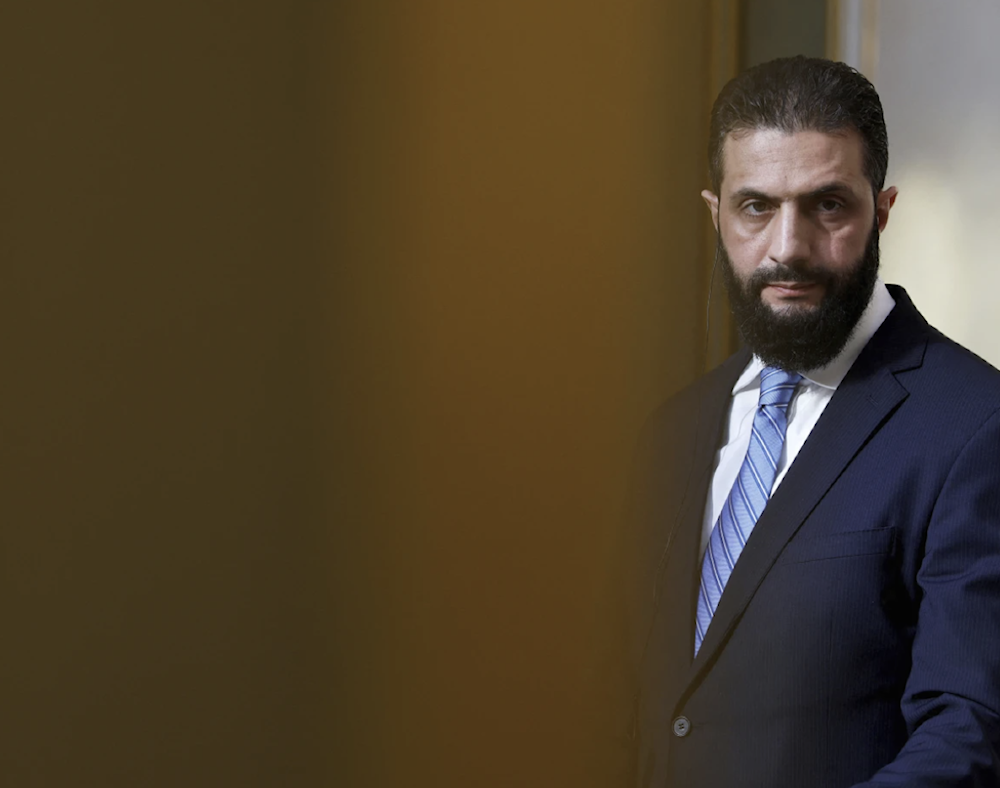
Syria's Interim President Ahmad al-Sharaa listens to a joint press conference with French President Emmanuel Macron after a meeting at the Elysee Palace in Paris on May 7, 2025. (AP)
US officials have warned Syrian interim president Ahmed al-Sharaa against pursuing a military campaign targeting the Syrian Democratic Forces (SDF), citing potential consequences, including the reimposition of Caesar sanctions.
The Wall Street Journal also reported early Saturday that Vance urged al-Sharaa to resolve disputes with the SDF, emphasizing Washington’s concerns over renewed hostilities in northeastern Syria.
Syria threatens Kurds, calls for unity
Syria’s interim forces issued warnings on Friday ahead of planned strikes on the town of Deir Hafer, east of Aleppo, saying it would target positions held by Kurdish-led forces and urging civilians to stay away from the area.
In a series of statements, the Syrian interim Ministry of Defense said it would strike specific locations in Deir Hafer that it claimed Kurdish forces were using as launch points for what it described as “terrorist operations” against Aleppo and its eastern countryside.
The warnings followed days of Syrian army reinforcements deployed around Deir Hafer, after government forces expelled the Syrian Democratic Forces from Aleppo city last week. Local Syrian sources later reported an intense wave of rocket fire targeting SDF positions in and around Deir Hafer.
According to the report, US officials warned that any continuation of the Syrian Transitional Government’s campaign against the SDF may prompt Washington to reinstate the Caesar sanctions, which had been lifted by Congress in December.
US concerns over Syrian military operations
Quoting US officials, the WSJ noted that Washington is increasingly worried about the Syrian campaign expanding with the backing of Türkiye.
Since the beginning of 2026, the eastern countryside of Aleppo, near areas held by the SDF in northeastern Syria, has witnessed escalating clashes. Fighting broke out between SDF forces and units under the Ministry of Defense in the Syrian Transitional Government after Damascus demanded that SDF units withdraw east of the Euphrates River.
Presidential decree outlines expanded Kurdish rights
The Strikes on SDF-controlled areas come as Syria’s new leadership announced a presidential decree addressing the legal, cultural, and civil status of Kurds in Syria.
The decree, announced by interim Syrian President Ahmad al-Sharaa, formally recognizes Kurdish Syrians as an integral and original component of the Syrian people, affirming that their cultural and linguistic identity is an inseparable part of Syria’s unified national identity.
Under the decree, the state commits to protecting cultural and linguistic diversity, guaranteeing Kurds the right to preserve their heritage, arts, and language within the framework of national sovereignty. Kurdish is designated a national language, with permission granted for its teaching in public and private schools in areas where Kurds form a significant portion of the population, either as optional curriculum content or through cultural and educational programs.
The decree also annuls all exceptional measures resulting from the 1962 census in al-Hasakah province, granting Syrian nationality to all Kurds residing in the country, including those previously registered as stateless, with full equality in rights and duties. In addition, March 21, the Kurdish Newroz holiday, is declared a paid national public holiday across Syria.
It further obliges state media and educational institutions to adopt inclusive national discourse, explicitly criminalizing ethnic or linguistic discrimination and penalizing incitement to ethnic strife under existing laws. Relevant ministries are tasked with issuing implementing regulations, with the decree taking effect upon publication in the official gazette.


