
US war on Iran erodes global influence, strains alliances: Politico
 4 Min Read
The US war on Iran is weakening Washington’s global influence, straining alliances, fueling economic disruption, and creating opportunities for rival powers to expand their reach.
-
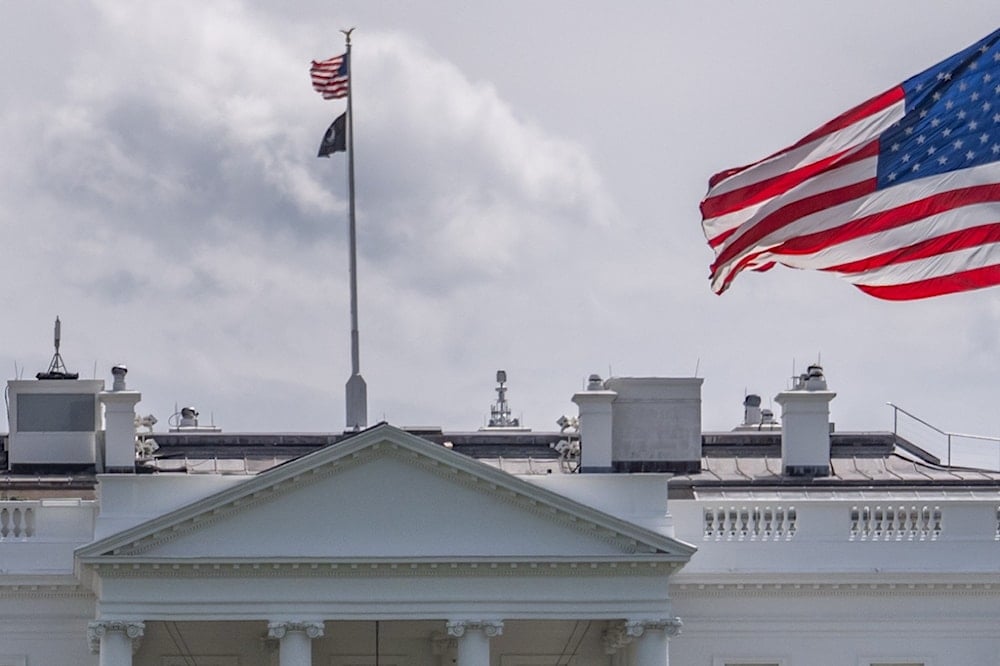
The American flag flies above the White House, Sunday, April 19, 2026, in Washington (AP)
The US war on Iran is eroding Washington’s global standing, straining alliances, and opening space for rival powers to expand their influence, observers interviewed by Politico said.
According to the report, countries across multiple regions are grappling with the economic fallout of a war they neither initiated nor support. Disruptions in energy markets, driven in part by instability in the Strait of Hormuz, have forced governments from Asia to Europe to implement emergency measures, including fuel rationing and export controls, while public frustration grows.
In many Muslim-majority states, anti-US sentiment has intensified, with media narratives increasingly critical of Washington’s role. Even among traditional allies, unease is mounting. NATO partners have limited their involvement, with some officials privately expressing concern that the Trump administration launched the war without prior consultation.
“A lot of people are fed up with how chaotic this war has been and scared of the potential economic impact, but I haven’t seen any major protests in response,” a Washington-based Asian diplomat said, speaking on condition of anonymity. “If a more reasonable person becomes the next president, the image of the US might improve, but for policymakers this raises some tough long-term questions about the alliance, how far we can go to stay aligned with the US and what we should do if we can’t rely on the US anymore.”
Allies drift away
The war is also accelerating a broader shift in global energy strategy. Countries heavily exposed to oil market volatility are moving to reduce dependence on fossil fuels, investing in renewables, nuclear power, and electric mobility. Analysts note that this transition could further strengthen China’s position, given its dominance in clean energy supply chains and battery production.
At the same time, Washington’s approach has raised questions about strategic clarity. Critics point to inconsistent messaging from US leadership, undermining confidence among both allies and adversaries.
“Allies don’t know what to believe, adversaries don’t know what to fear, and his own Cabinet do not know what his strategy or intentions actually are,” said Thomas Wright, a former National Security Council official. “The long-term prognosis isn’t terminal. But the question is what China, Russia, North Korea and Iran do with the next two years and nine months if this drift continues.”
Meanwhile, key partners have begun reassessing their dependence on the United States. In Canada, Prime Minister Mark Carney warned that existing economic ties with Washington represent vulnerabilities that must be addressed.
“We have to take care of ourselves because we can’t rely on one foreign partner,” Carney said. “We can’t control the disruption coming from our neighbors. We can’t bet our future on the hope that it will suddenly stop.”
US influence in decline
On the military front, the lack of coordination has become increasingly visible. European countries, including the UK and France, have held discussions on securing maritime routes independently of the US, particularly in anticipation of post-war conditions in the Strait of Hormuz.
Diplomatic cables cited in the report further indicate that US officials are concerned about declining influence in strategically important regions. In countries such as Tajikistan, Bahrain, Indonesia, and Azerbaijan, diplomats have warned of a growing anti-American narrative and intensified efforts by competing powers to shape public opinion.
Despite mounting backlash, the White House has defended its approach, portraying the campaign as necessary to curb Iran’s nuclear capabilities, even as Tehran maintains its program is peaceful and denies seeking nuclear weapons.
“World leaders have talked about the threat posed by Iran for 47 years, but no one had the courage to address it,” said White House spokesperson Anna Kelly. “Once all of our objectives are met, including eliminating Iran’s nuclear threat for good, the entire world will be safer, more stable, and better off.”
Supporters of the policy maintain that any current strain on alliances or markets will be outweighed by future strategic gains, though critics warn that the longer the war persists, the harder it may become for Washington to restore its global credibility.
Read more: EU tests mutual defense clause amid uncertainty over US role


