
Venezuela: Ties with Cuba strong, aligned with UN charter
 3 Min Read
Venezuela reaffirms its strong, historically rooted relationship with Cuba, aligns it with the UN Charter, and rejects US pressure to cut ties, emphasizing sovereignty and diplomatic dialogue.
-
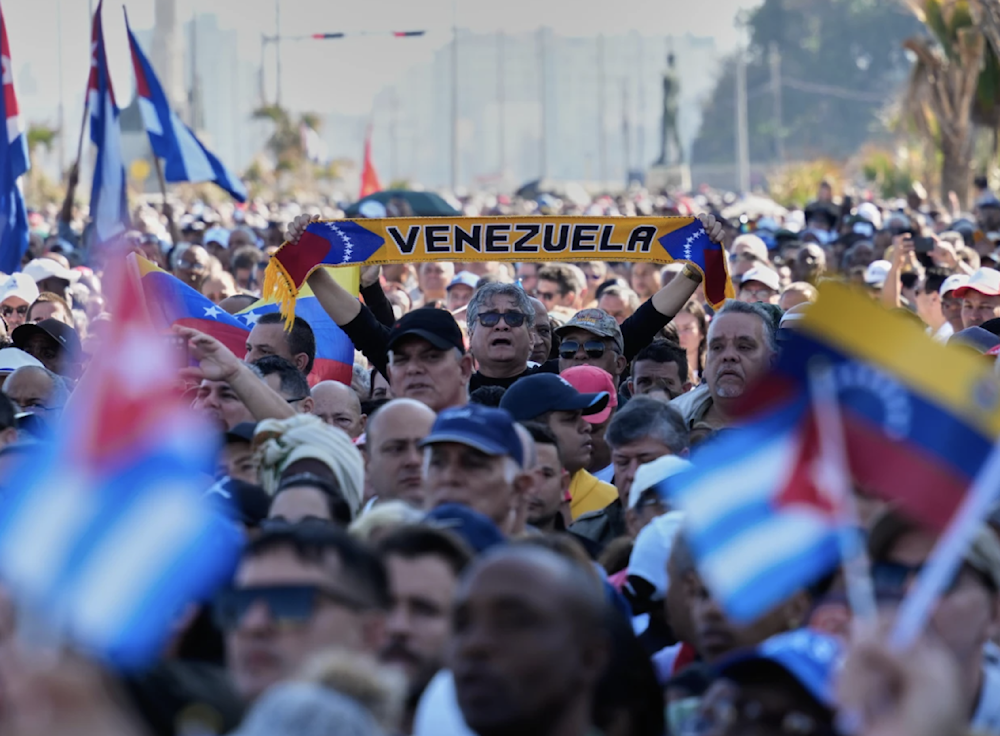
Cubans attend a rally in Havana on January 3, 2026. (AP)
Venezuela reaffirmed that its relationship with Cuba is rooted in long‑standing fraternity and cooperation and fully complies with the United Nations Charter, international law, and the principles of sovereignty and self‑determination.
In an official statement, the Venezuelan Foreign Ministry described ties with Cuba as historically based on “fraternity, solidarity, cooperation, and integration,” stressing that international relations must respect non‑interference, sovereign equality, and peaceful resolution of disputes through political and diplomatic dialogue.
The declaration comes after growing pressure from the United States, which has reportedly demanded that Venezuela sever economic ties with Cuba and other allied states as a condition for resuming oil production and other cooperation. Washington has also publicly urged Havana to negotiate with the US and warned that Venezuelan oil and financial support to Cuba would end unless a deal was reached.
Cuba’s president rejects Trump threats, vows to defend sovereignty
Cuban President Miguel Díaz-Canel said on Sunday that Cuba is “a free, independent, and sovereign nation, and no one dictates to us what we must do,” stressing that the country does not aggress against others but has instead faced aggression from the United States for 66 years.
Responding to threats by US President Donald Trump, Díaz-Canel said Cuba “does not threaten, but is prepared,” affirming the country’s readiness to defend the homeland “to the last drop of blood.”
The Cuban president said that “those who point fingers at Cuba have no morals whatsoever, in anything, and they are the ones who turned everything into a business, even human life.”
He added that “the hysterical attack Cuba is facing today stems from the anger of some over the sovereign decision of these people to choose their political model.”
On the economic situation, Díaz-Canel said that “those who blame the revolution for the severe economic hardships we are experiencing should be ashamed of their silence,” noting that they know and acknowledge these hardships are the result of strict coercive measures imposed by the United States on Cuba for more than six decades, with the risk of further escalation in the current period.
Earlier on Sunday, Trump announced that Cuba “will no longer receive any oil or money from Venezuela,” urging Havana to “make a deal before it is too late.”
In a post on his account on Truth Social, Trump said Cuba had relied for years on large quantities of oil and funds coming from Venezuela, adding that these supplies would be completely cut off and stressing the need to reach an agreement as soon as possible.


