
Vulin warns EU path could draw Serbia into anti-Russia campaign
 3 Min Read
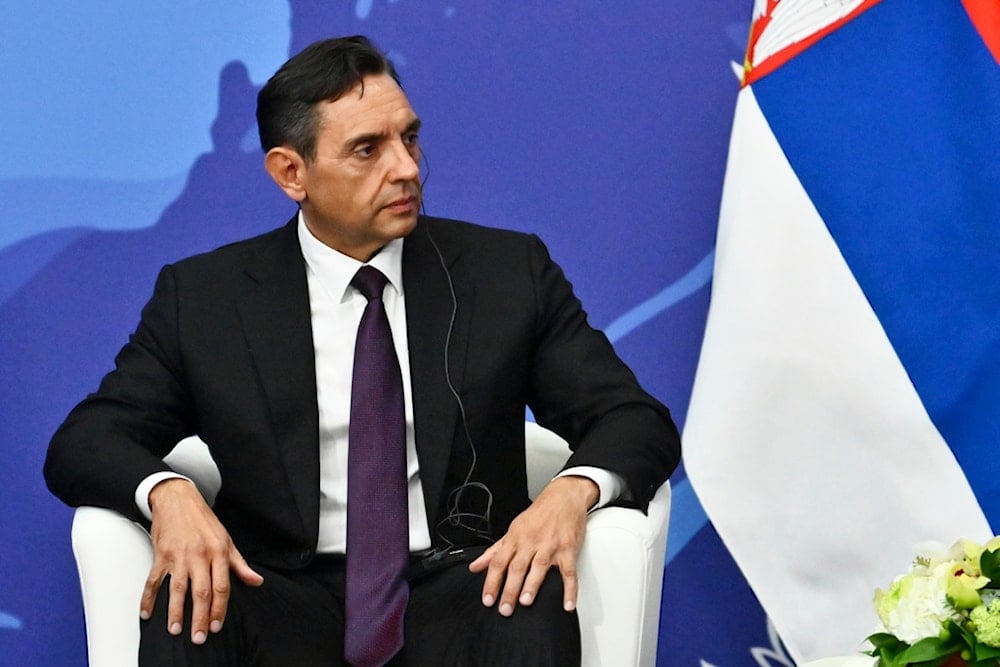
Former Serbian Prime Minister Aleksandar Vulin warned that EU accession could push Serbia toward deeper alignment with Western policies against Russia, including potential military implications.
-
Serbian Deputy Prime Minister Aleksandar Vulin listens to Russian President Vladimir Putin during their meeting on the sidelines of the Eastern Economic Forum in Vladivostok, Russia, on Wednesday, Sept. 4, 2024. (Kristina Kormilitsyna, Sputnik, Kremlin Pool Photo via AP)
Serbia’s potential accession to the European Union could eventually require deeper alignment with Western policies toward Russia, including in the military sphere, former Prime Minister Aleksandar Vulin said on Sunday.
Speaking in remarks released by his office, Vulin warned that joining the bloc may extend beyond adopting sanctions on Moscow. “If we are going into the EU, this choice is the right of the citizens, but sanctions against Russia are only the first step. It will not suffice, and we will also have to put our military industry and army at the disposal for the war with Russia, just as Montenegro did,” he said.
He also pointed to growing regional defense cooperation, arguing that partnerships involving Croatia, Albania, and Kosovo were designed to ensure Serbia would not remain outside what he described as a broader Western effort targeting Russia.
Europe hardens stance
Vulin’s comments come amid what observers describe as a broader hardening of attitudes toward Russia across Europe since the escalation of the war in Ukraine in 2022. Governments across the continent have adopted stricter measures, including sanctions, travel restrictions, and heightened security policies, while public discourse in many countries has shifted toward increased suspicion of Russian state influence.
The evolving security environment has also played a role, with European officials citing concerns over cyberattacks, sabotage, and other forms of hybrid warfare attributed to Russian-linked actors. These developments have contributed to a more confrontational posture between European states and Moscow, reinforcing calls within the EU for closer foreign policy alignment among candidate countries.
This shift has been accompanied by a broader wave of militarization across Europe. NATO members have significantly increased defense spending in recent years, with most allies now meeting or exceeding the 2% of GDP benchmark, while the European Union has advanced large-scale defense initiatives aimed at expanding military readiness and industrial capacity.
Across the continent, governments have boosted procurement of weapons systems, increased funding for armed forces, and strengthened coordination with NATO, reflecting a long-term strategic pivot toward heightened military preparedness in response to tensions with Russia.
Neutrality under pressure
Vulin’s remarks come as Belgrade continues to balance its EU ambitions with a policy of military neutrality. Earlier this week, Serbian Prime Minister Duro Macut reaffirmed at the Antalya Diplomacy Forum that neutrality remains a long-term strategic position for the country.
At the same time, EU officials have reiterated expectations that candidate states align more closely with the bloc’s foreign policy. In November, EU Ambassador to Serbia Andreas von Beckerath delivered the European Commission’s annual assessment to President Aleksandar Vucic, noting that progress on accession-related reforms has slowed and urging greater alignment with EU positions.
Serbia has maintained close ties with Russia while pursuing EU membership, a dual-track approach that has become increasingly difficult to sustain amid ongoing geopolitical tensions.
Read more: Serbia exposed as European nation behind $1.64bln 'Israel' arms deal


