
War on Iran triggers global helium supply crisis: Foreign Policy
 4 Min Read
Iran's leverage over Gulf energy routes has disrupted helium supplies, exposing global dependence on fragile supply chains tied to regional geopolitics.
-
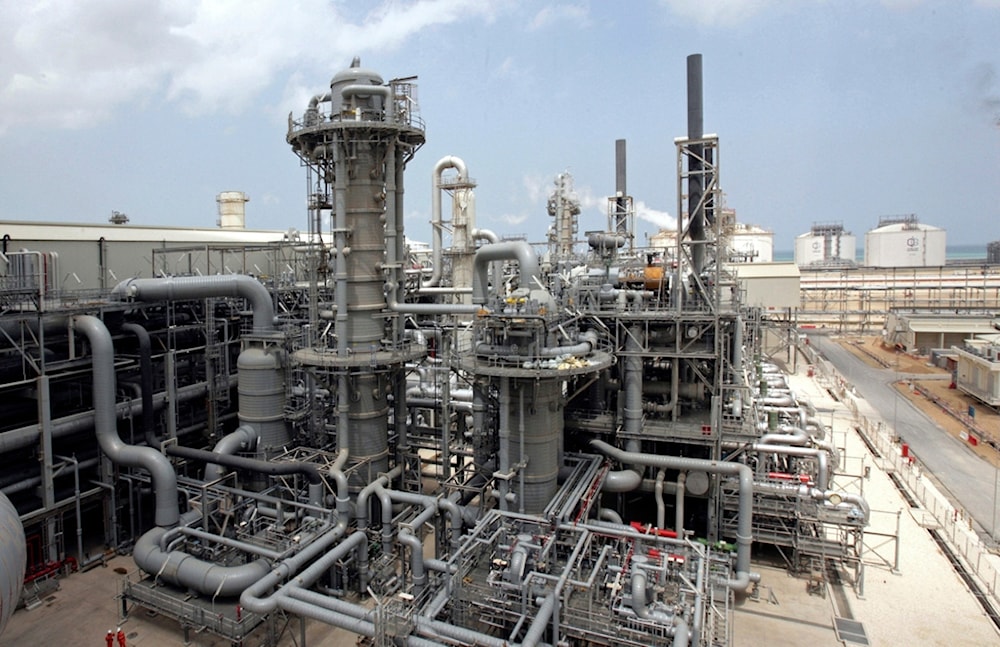
This April 4, 2009, file photo shows a gas production facility at Ras Laffan, Qatar (AP, File)
The economic fallout from the war on Iran continues to ripple across global markets, Foreign Policy reported, exposing deep structural vulnerabilities in critical supply chains, including helium, a resource essential to modern industry.
While often treated as a niche commodity, helium underpins key sectors ranging from semiconductor manufacturing to medical imaging and advanced scientific research. Its importance has come into sharper focus as supply disruptions intensify following the war. “If you think about semiconductors, fiber optics, or anything using superconducting magnets, the consequences of not having helium are gigantic in an economic sense,” said Nicholas Snyder, CEO of North American Helium. “If you think about medical applications like MRI, there [are] huge consequences there as well.”
Hormuz disruption
The disruption traces back to the broader assault on Iran, which has reshaped regional energy and trade flows. Following attacks and countermeasures tied to the war, Qatar, responsible for roughly one-third of global helium supply, halted production at its Ras Laffan complex, one of the world’s largest liquefied natural gas and helium hubs.
At the same time, maritime restrictions and overlapping military measures have effectively constrained transit through the Strait of Hormuz, a chokepoint through which much of the region’s exports pass. These developments have compounded supply disruptions, driving helium prices sharply higher and straining global distribution networks.
Supply vulnerability
Industry analysts note that the crisis reflects the risks of concentrating essential resources in geopolitically sensitive regions. The war on Iran has already removed a substantial portion of global helium supply from the market, with knock-on effects for high-tech manufacturing, healthcare systems, and emerging industries such as artificial intelligence.
Helium’s unique physical properties further complicate the situation. The gas must be cooled to extremely low temperatures for transport and storage, making large-scale stockpiling difficult. Snyder described it as a “perishable” commodity, warning that “there’s not deliverable storage around the world that can easily fix this problem.”
Reserve policy debate
The crisis has also reignited debate in the United States over the dismantling of its strategic helium reserve, which was fully privatized in recent years. “All these tanks are super expensive to maintain … so it was a big storm of governments getting out of the business,” said Patrick Wilson of the Semiconductor & Innovation Group. “Now, the government basically has no strategic reserve anymore.”
Calls are now emerging to reconsider that decision, as policymakers confront the broader implications of supply insecurity. Robert Z. Lawrence of the Peterson Institute argued that helium “is not just another commodity,” adding that “the social costs of failure to hold adequate inventories are far greater than the private costs.”
The impact is particularly acute for the semiconductor industry, which depends on an uninterrupted helium supply for multiple stages of chip production. From stabilizing silicon wafers to maintaining contamination-free environments, the gas is indispensable. Chipmakers “not only need a lot of it, but they need it all the time,” Wilson said.
Global supply shock
With demand expected to surge alongside the expansion of AI infrastructure, the current disruption underscores how the war on Iran has extended far beyond the battlefield, revealing the fragility of global systems built on tightly interconnected supply chains.
Even as ceasefire arrangements reduce direct military exchanges, experts warn that recovery will take time. “If the cease-fire holds and if this moves toward a more isolated Iran-but-not-neighbors-involved conflict, I would imagine that [helium] production can restart relatively quickly—but if they can’t get it out of the region, it doesn’t matter,” said Bettina Weiss of SEMI. “Even if the strait opened today, it would take an estimated four to six months to normalize supply.”
As disruptions persist, rising costs and logistical constraints are expected to reverberate across industries, reinforcing a broader reality: the consequences of the war on Iran are global, structural, and far from over.
Read more: China vows response to new US export control measures


