
Xi urges US-China cooperation during Trump-hosted summit
 4 Min Read
Xi Jinping calls for stronger US-China communication and human control of AI as Trump hosts the Chinese leader amid tensions over trade, Iran, and Taiwan.
-
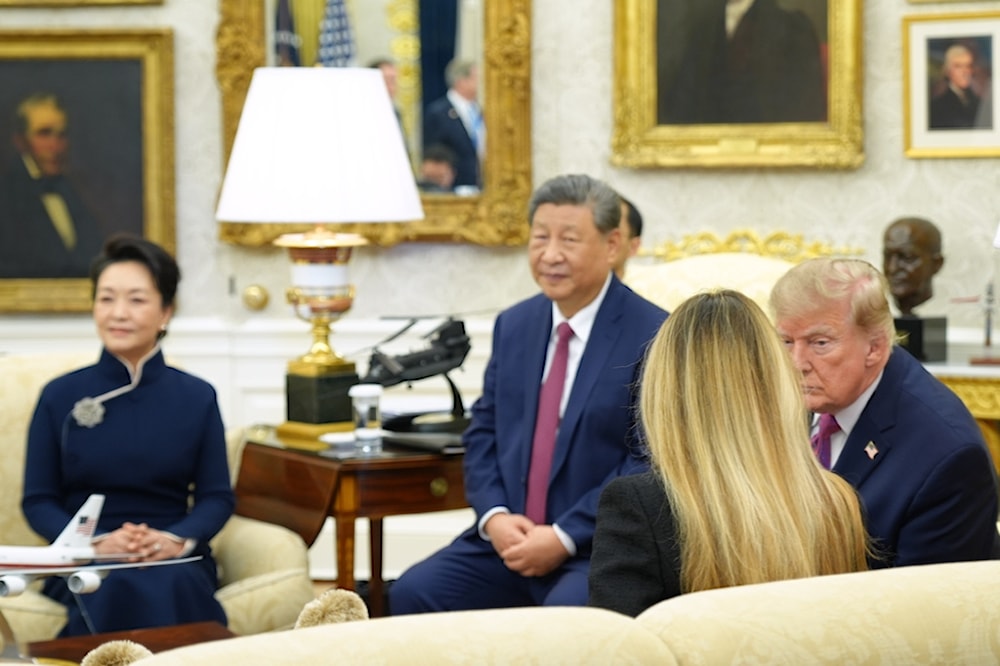
US President Donald Trump, First Lady Melania Trump, and China's President Xi Jinping and his wife Peng Liyuan talk in the Oval Office of the White House, Thursday, Sept. 24, 2026, in Washington (AP)
Chinese President Xi Jinping called on the United States and China to manage their rivalry and strengthen communication as President Donald Trump hosted him at the White House on Thursday for a state visit marked by ceremony but overshadowed by tensions over trade, technology, Taiwan, and Iran.
Trump personally welcomed Xi at the start of a day of formal events, describing their relationship as a "truly great friendship" and saying the two countries had made "tremendous strides" on issues facing Washington and Beijing.
"During this visit, we will also discuss pressing issues concerning security, technology, and super intelligence -- SI," Trump said.
The talks come as Washington and Beijing seek to manage a fragile relationship between the world's two largest economies. Current reporting indicates that the summit is expected to focus heavily on maintaining stability and the existing trade truce, with limited expectations for broader breakthroughs.
Xi calls for stronger US-China communication
Xi struck a more measured tone, stressing that Washington and Beijing have a shared responsibility to manage their relationship and avoid confrontation.
"We have both the capability and responsibility to develop and manage AI for good and ensure that the development of AI is always under human control," Xi said at the White House.
The Chinese president said the two countries had a "historic responsibility of advancing human development and progress" and called for stronger communication between Washington and Beijing.
Xi's remarks come as artificial intelligence has emerged as a major area of competition between the two powers, alongside broader disputes over advanced technology and access to high-end chips.
The Chinese leader also announced that two pandas would be sent to a US zoo in the coming days, continuing a longstanding feature of Beijing's diplomatic exchanges with Washington.
Trade, Iran, and Taiwan remain major tensions
Behind the highly choreographed welcome, Washington and Beijing continue to face disagreements over trade, Taiwan, and the war on Iran.
The United States and China agreed to extend their trade truce by two months, according to US Treasury Secretary Scott Bessent, reducing the immediate prospect of a return to the tariff escalation that had strained relations between the two countries.
Trump confirmed on Wednesday that the war on Iran would be discussed with Xi, despite previously downplaying reports that Beijing was providing Tehran with intelligence.
"I'll be talking about that and many other subjects -- but it's all coming along well," Trump said.
Taiwan is also expected to feature in the talks, with Beijing continuing to regard the island as part of its territory while Washington's policy toward Taipei remains a major point of contention in US-China relations.
Trump had personally greeted Xi at Joint Base Andrews on Wednesday, an unusual gesture that underscored the significance Washington attaches to the visit. Thursday's program included a formal welcome at the White House, military ceremonies, Oval Office talks, and a state dinner.
Xi's visit is scheduled to conclude on Friday morning, when the Chinese president and his wife will have tea with Trump and First Lady Melania Trump before visiting the National Archives.
Trump weakened by the war on Iran
The summit comes at a difficult moment for Trump, whose approval ratings have fallen as public discontent grows over the nearly seven-month US war on Iran, which has driven up energy prices at home and left Republicans facing tough prospects in November's midterm elections.
The visit also caps a week of diplomacy that began at the UN General Assembly in New York, where Trump's envoys held talks with Iran's foreign minister.
Xi, by contrast, arrives in a stronger position, with China's export sector surging even as it contends with weak household spending and a prolonged property downturn at home.
Another Trump-Xi meeting is considered likely before the end of the year, potentially at the APEC summit in China in November or the G20 meetings in the United States in December.


