
Yemeni gains expose Saudi military, alliance failures: Reuters
 5 Min Read
The Yemeni Armed Forces' advances near the Bab al-Mandab Strait expose setbacks for Saudi Arabia in Yemen, amid questions over allies, intelligence and US support.
-
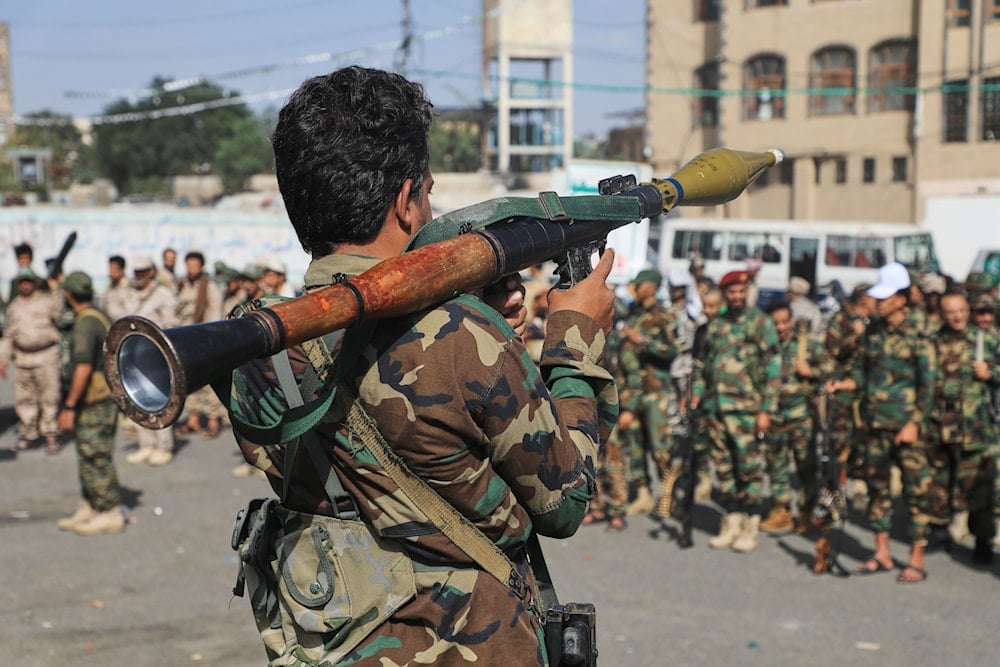
A fighter with Yemen’s Houthi rebels carries a rocket-propelled grenade launcher as they march during a mobilization campaign in Sanaa, Yemen, Thursday, Sept. 10, 2026 (AP)
The Yemeni Armed Forces’ advance along Yemen’s Red Sea coast and retaking of positions overlooking the Bab al-Mandab Strait have dealt Saudi Arabia a major blow to its aggression against Yemen, exposing intelligence failures, the collapse of Saudi-backed forces, and the limits of US protection, according to Reuters.
The developments around the strategic maritime passage, a key route for global oil supplies and international shipping, have left Riyadh seeking support as Iran and its allies expand their regional influence.
Senior Western, regional, and Yemeni officials and sources cited by Reuters said the Yemeni Armed Forces’ breakthrough was driven by several factors, including divisions among Saudi-backed factions, weaknesses in a Saudi-led command structure that replaced Emirati oversight, limited Saudi air support, and an underestimation of preparations.
A diplomat told Reuters that the Yemeni Armed Forces had quietly assembled around 100,000 fighters, significantly outnumbering opposing forces, adding: "Everyone, including the Saudis, missed this build-up and miscalculated the Houthis' intentions."
Neil Quilliam, a fellow at London’s Chatham House think tank, described the developments as an intelligence failure, saying: "They just weren't picking up the signal. They just weren't seeing the signs."
Yemeni political analyst Farea Al-Muslimi said Saudi Arabia had been caught off guard by the developments in Yemen.
Collapse of Saudi-backed forces
The collapse of Saudi-backed forces reportedly allowed the Yemeni Armed Forces to seize a significant amount of advanced US- and Saudi-supplied weapons abandoned during the retreat, Reuters reported.
Regional sources said the captured equipment could strengthen military capabilities and provide valuable intelligence on adversaries’ weapons systems.
"The Yemeni government forces were like a house of cards. They didn't resist. Completely. Completely," UAE political analyst Abdulkhaleq Abdallah said.
The setback has also highlighted the limited international support available for any potential Saudi response, with two Western officials saying neither the United States nor European countries were prepared to provide direct military backing.
The officials also said Washington and its allies had not joined a Saudi-led maritime defense coalition announced in July.
The latest escalation was initiated by Saudi Arabia when it bombed Sanaa International Airport, while continuing the years-long siege imposed on Yemen. Sanaa had repeatedly demanded an end to the blockade and the reopening of the airport before launching its current counteroffensive.
Saudi Arabia scrambles for regional support
With the Yemeni Armed Forces holding sovereign Yemeni territory that could threaten Saudi oil exports and Red Sea shipping, Crown Prince Mohammed bin Salman traveled to Cairo seeking support after Washington declined to intervene, according to regional sources.
The sources said Riyadh wanted Egypt to play a role in Red Sea operations, recalling Cairo’s intervention in 2015 when its naval and air forces helped secure Bab al-Mandab. There was no immediate confirmation from Cairo on whether it would agree to provide military support.
The Yemeni Armed Forces also appear to be using their gains to push for broader political concessions, according to former US negotiator Dennis Ross.
Ross claimed the group wants Riyadh to lift the blockade on Hodeidah port and Sanaa airport, provide compensation for the Saudi aggression against Yemen, and reduce support for Yemen’s foreign-backed government.
A Gulf official said Saudi Arabia faced a narrowing set of choices, warning that allowing the Yemeni Armed Forces to consolidate their gains could increase their leverage, while a larger offensive could trigger responses deeper inside Saudi Arabia.
"If you don't inflict enough pain on the Houthis, you become hostage to them," the official said.
Bab al-Mandab gains reshape regional calculations
Control of areas near the Bab el-Mandeb Strait could expand the Yemeni Armed Forces’ regional reach and increase their ability to influence one of the world’s most important maritime chokepoints.
The strait, located between Yemen and the African coast near Djibouti and Eritrea, is a major route for global shipping. A foothold there, combined with Iran’s control over the Strait of Hormuz, gives Tehran and its allies leverage over two critical maritime routes.
Farea Al-Muslimi described the developments as a major gain for Iran, saying: "For Iran it's a ‘win-win-win.’"
Some analysts cited by Reuters argued that the broader significance was not only the battlefield setback for Saudi Arabia but also Washington’s decision not to provide direct support, which they said raised questions over the strength of US security commitments to Riyadh.
Al-Muslimi described Washington’s refusal to intervene as "the biggest dismissing of the Saudi-American arrangement" in decades. "The Americans are saying No," he said. "That kind of understanding in the relationship between Riyadh and Washington has never been tested more than now."
He added, "Yemen is the Vietnam and Afghanistan of every power dragged into it... The Saudis failed in Yemen, the Americans failed in Yemen," he said.
Read more: Saudi Arabia unlikely to re-occupy Mokha, losing Bab al-Mandab


