
Zelensky, Pahlavi meet at Munich Security Conference
 2 Min Read
Zelensky and Pahlavi discussed sanctions against Iran and Russia-Iran cooperation.
-
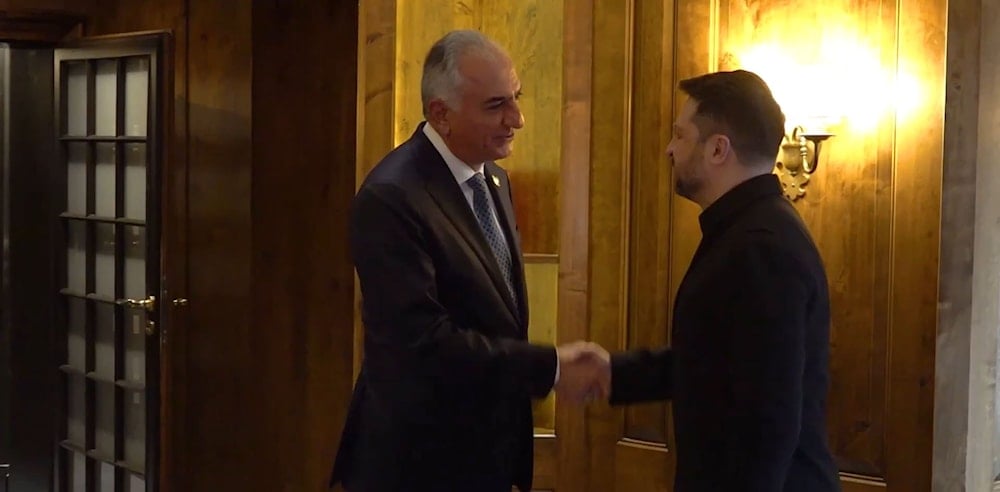
Iranian opposition figure Reza Pahlavi shakes hands with Ukrainian President Volodymyr Zelensky in Munich, Germany, February 13, 2026 (X/@ZelenskyyUa)
Ukrainian President Volodymyr Zelensky met with Reza Pahlavi, the exiled son of Iran’s last shah, on the sidelines of the Munich Security Conference on Friday.
In a post on X, Zelensky said the two leaders discussed the need to strengthen sanctions against the Iranian regime, noting that the pair “also condemned cooperation between Russia and Iran."
I met with exiled Crown Prince of Iran @PahlaviReza in Munich. Ukraine supports the Iranian people as they are fighting for their future; we also express our sympathy to all the victims of the Iranian regime.
— Volodymyr Zelenskyy / Володимир Зеленський (@ZelenskyyUa) February 13, 2026
During our conversation, we focused on the situation in Iran and the… pic.twitter.com/uYAb6DdWRT
Earlier, at the Davos Forum in Switzerland, Zelensky called for “not allowing the Iranian regime to remain.”
Prior to that, at the height of the armed riots in Iran, the embattled Ukrainian president asked the world for what he called “assistance for protesters” in Iran in order to bring about a change in government.
In response, Iranian Foreign Minister Abbas Araghchi took to X, saying: "The world has had enough of Confused Clowns, Mr. Zelensky. Unlike your foreign-backed and mercenary-infested military, we Iranians know how to defend ourselves and have no need to beg foreigners for help."
.@ZelenskyyUa has been rinsing American and European taxpayers to fill the pockets of his corrupt generals and to confront what he calls an unlawful aggression in violation of the UN Charter.
— Seyed Abbas Araghchi (@araghchi) January 23, 2026
At the same time, he openly and unashamedly calls for unlawful U.S. aggression against… pic.twitter.com/a8wWmXzWno
This comes as US policymakers have shown caution toward elevating Pahlavi, with President Donald Trump saying on January 15, 2026, that Pahlavi “seems very nice” but expressing uncertainty over whether he could garner real support inside Iran, amid the Western-instigated armed riots that hit the Islamic Republic.
Unlike some other diaspora groups, Pahlavi has not been openly embraced as the face of the opposition by Washington, and US officials have questioned his ability to unify varied internal movements against the clerical regime.
His visits to international forums and meetings with lawmakers have boosted his profile, but experts say that despite occasional symbolic support, sustained official US backing for him as an opposition leader has not materialized.


