
Iran coach calls team 'most oppressed' after World Cup travel row
 3 Min Read
Iran’s coach said his team is the “most oppressed” in the World Cup after US-imposed sudden travel changes following a 2–2 draw with New Zealand in Los Angeles.
-
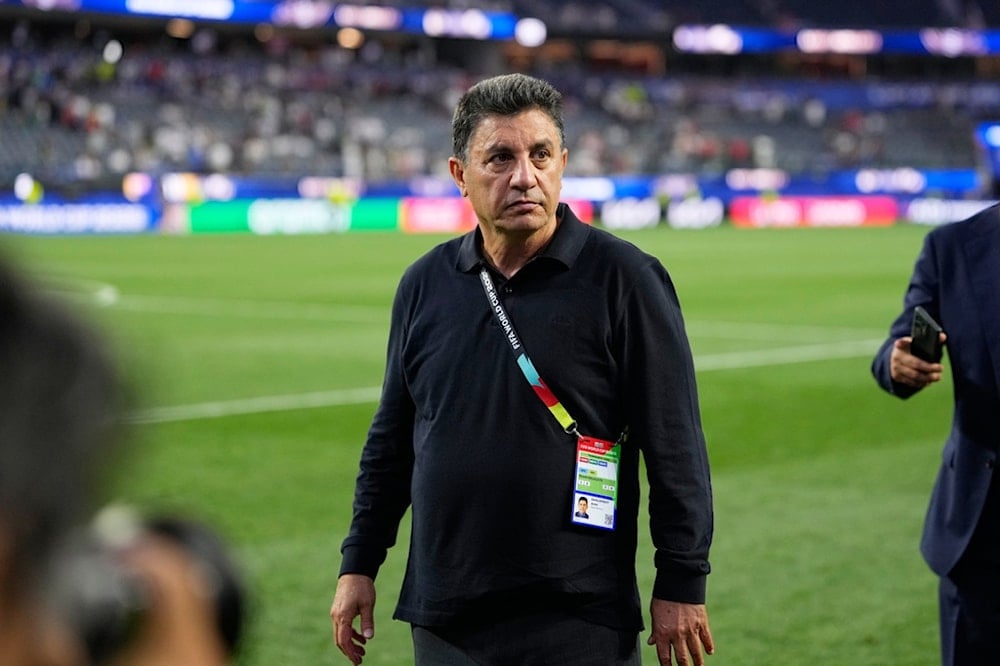
Iran head coach Amir Ghalenoei walks off the field after a draw during the World Cup Group G soccer match between Iran and New Zealand in Inglewood, Calif., near Los Angeles, Monday, June 15, 2026. (AP Photo/Mark J. Terrill)
Iran’s national football team has faced renewed logistical disruption at the World Cup, with head coach Amir Ghalenoei sharply criticizing unfair treatment following his side’s opening match in Los Angeles.
The coach said Iran was left without explanation after being instructed to leave the United States immediately following their 2–2 draw in what was an electric match with New Zealand on Monday night, forcing an abrupt return to Mexico rather than the previously scheduled departure.
Speaking to journalists after the match, Ghalenoei said the team had expected to remain in the US until Tuesday lunchtime to allow for recovery and preparation. Instead, arrangements were changed at short notice.
“They delayed our arrivals, they are forcing us to go back early without time for recovery,” Ghalenoei said.
He added that the situation placed additional strain on the squad already navigating a difficult tournament environment.
“They are making the situation more and more difficult, facing us with more hurdles, but we’re not going to let that stop us from doing our best,” he said, also describing Iran as “the most oppressed team in the World Cup.”
Read more: White House confirms US denied entry to some World Cup officials
Travel disruptions add pressure on Iran squad
The sudden change means Iran must now return to their base in Mexico immediately after their opening fixture, disrupting recovery schedules typically afforded to teams during major tournaments.
The squad had initially planned to remain in Los Angeles for a short recovery window before continuing preparations for their next group match.
These adjustments add to a broader pattern of logistical complications surrounding Iran’s participation in the tournament.
Visa restrictions and diplomatic tensions overshadow tournament
Iran arrived at the competition under the shadow of heightened political tensions with the United States, which has been engaged in a months-long aggression against Iran before the recently announced MoU aiming to end the war.
Earlier in the tournament cycle, US authorities refused to issue visas for some members of Iran’s support staff, forcing disruptions to team organization and preparation.
The team also relocated its training base from Tucson, Arizona, to Tijuana, Mexico, at the last minute due to these complications.
The match in Los Angeles took place just a day after a ceasefire agreement was announced, which was described as bringing an “immediate and permanent” end to military operations on all fronts.
Calls for FIFA intervention
Iran striker Mehdi Taremi also criticized the conditions faced by the squad, describing the situation as deeply damaging to performance and morale.
“It’s a lot of stress for the players and staffs and everyone, but we don’t have that support, and I think FIFA have to help us more than this,” he said. “Everything is like disaster, actually, for us.”
The remarks have added pressure on football authorities to address concerns over uneven logistical treatment of teams in a tournament already shaped by geopolitical tensions.


