
AI & unemployment fears: Why dire predictions are yet to materialize
 8 Min Read
London Mayor Sadiq Khan warns that AI could fuel mass unemployment, but studies show a growing gap between alarming AI job-loss forecasts and actual labor market data.
-
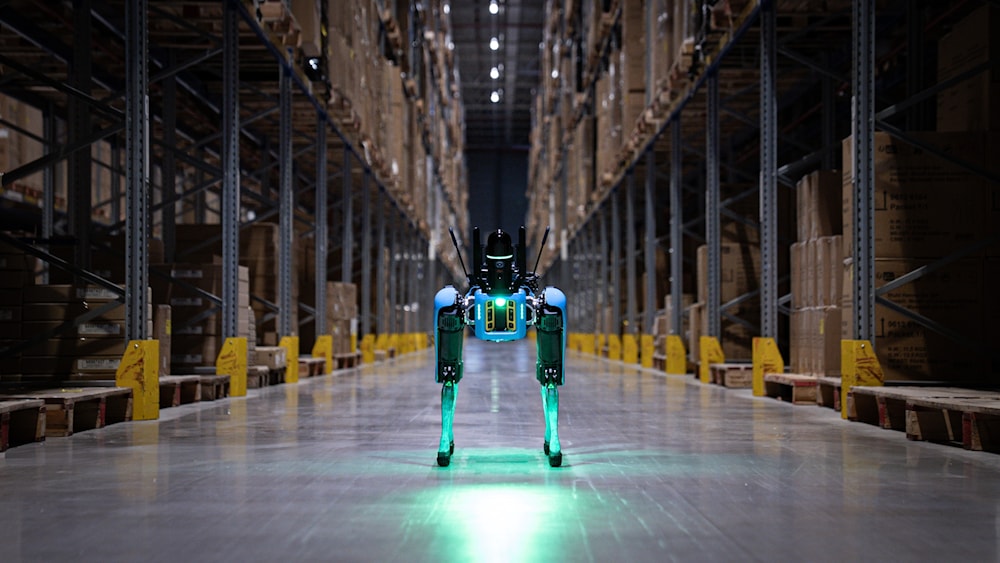
In this image released on Friday, Jan. 9, 2026, Next Level Intelligent Automation: Otto Group & NVIDIA Drive Future of Logistics Robot "Spot" in Otto Group Logistic Center Loehne, Germany. (Otto Group/news aktuell via AP Content Services)
London Mayor Sadiq Khan issued a stark warning Thursday about artificial intelligence's potential to trigger "an era of mass unemployment" in the British capital, joining a growing chorus of political leaders voicing concern over the technology's workforce impact.
In a speech outlining both opportunities and risks posed by AI, the Labour mayor emphasized that London, home to vast numbers of finance, professional services, and creative sector jobs, stands "at the sharpest edge of change." Accordingly, Khan announced a review into AI's impact on the capital's labor market alongside free AI training for millions of Londoners, urging swift action to harness the technology's benefits before it "becomes a weapon of mass destruction of jobs."
Khan's warning reflects broader uncertainty about AI's employment trajectory. The United Nations recently cautioned that AI and automation could worsen global labor challenges, particularly for educated young professionals in wealthier nations seeking their first high-skill positions. While management consultancy McKinsey forecasts 30% of US jobs could be automated by 2030, with 60% significantly altered. Alternatively, analysts from research firm Gartner suggest AI will create more jobs than it eliminates by 2027.
AI exposure by industry sector Source: Goldman Sachs analysis of 900+ US occupations
The gap between predictions and reality
Despite such warnings from political leaders and tech executives, artificial intelligence has yet to trigger the dramatic workforce upheaval many anticipated. Nearly three years after ChatGPT's launch, comprehensive labor market data reveal a striking disconnect between alarming forecasts and actual employment trends.
A joint study by Yale Budget Lab and Brookings Institution found no clear evidence of widespread job displacement through late 2025, with occupational patterns remaining remarkably stable. Less than 5% of workers changed occupations in the 33 months following ChatGPT's debut, comparable to shifts seen after personal computers and the internet emerged.
Federal Reserve reports from January 2026 reinforced this assessment, with eight of twelve districts noting no hiring changes and firms emphasizing AI's role in future productivity rather than immediate layoffs.
This measured pace contrasts sharply with predictions from industry executives. For example, Anthropic CEO Dario Amodei suggested AI could eliminate half of entry-level white-collar positions within five years, potentially driving unemployment to 20%. Ford's Jim Farley warned that artificial intelligence would "literally" replace half of US white-collar workers. Yet these projections haven't materialized in aggregate employment statistics.
The prediction gap: AI unemployment forecasts vs. realitySource: Bureau of Labor Statistics, Yale/Brookings analysis
Implementation barriers slow adoption
Several structural obstacles explain why AI deployment lags behind technological capability. Implementation costs extend far beyond software purchases, encompassing infrastructure upgrades, legacy system integration, security compliance, employee training, and ongoing maintenance.
Research shows 64% of e-commerce businesses cite high costs and time demands as significant barriers, with small and medium enterprises particularly disadvantaged by capital and expertise requirements.
Technical integration poses equally formidable challenges. Nearly half of organizations identify connecting AI with existing systems as a primary adoption barrier. Legacy infrastructure resists easy modification, requiring specialized expertise and extensive testing to avoid operational disruptions.
Work friction, which is the organizational energy required to overcome resistance, costs companies an estimated $78 million annually per 10,000 employees. This manifests through cognitive load in learning new systems, workflow disruption during implementation, and cultural resistance to changing established practices.
The 30% prediction: Context matters
The frequently cited claim that AI could replace 30% of jobs by 2030, referenced in Mayor Khan's concerns about London, requires careful interpretation. McKinsey Global Institute reported that generative AI might help automate 30% of hours currently worked in the US economy (a significant acceleration from pre-generative AI forecasts). However, this refers to work hours potentially automated, not positions eliminated. The distinction proves crucial as automating portions of every job differs fundamentally from eliminating three in ten positions.
Goldman Sachs estimates up to 300 million jobs globally could be "affected" by AI, with roughly 18% of work worldwide potentially automated. Yet the firm explicitly notes "affected" doesn't mean eliminated, projecting AI will displace just 6-7% of the US workforce while raising productivity by 15%. Their analysis suggests only a half-percentage-point rise in unemployment above trend during transition periods.
Forrester's conservative forecast predicts 6.1% of US jobs, approximately 10.4 million positions, will be lost by 2030, with AI "strongly influencing" 20% of roles. Meanwhile, the World Economic Forum projects 92 million jobs displaced globally by 2030, but 170 million new positions emerging simultaneously, yielding a net gain of 78 million jobs.
Understanding the distinction: Automation potential vs actual job lossSource: McKinsey, Goldman Sachs, Forrester, World Economic Forum, Yale/Brookings
Expert disagreement spans wide spectrum
Far from consensus, economists and technologists hold sharply divergent views. Renowned MIT economist Daron Acemoglu leads the skeptical camp, estimating AI will meaningfully affect only 5% of jobs over the next decade. His analysis projects total factor productivity gains of merely 0.07% annually, reflecting modest returns that most tasks cannot be profitably automated given current costs and capabilities.
Optimists counter that historical patterns show technological change creates more jobs than it destroys. Research indicates that over 60% of employment in 2018 existed in job titles that didn't exist in 1940. PwC analysis supports this perspective, showing wages growing twice as fast in AI-exposed industries, with jobs requiring AI skills commanding a 56% premium.
The International Monetary Fund occupies the middle ground, estimating nearly 40% of global employment faces "exposure" to AI, a term encompassing both displacement risk and augmentation opportunity. Advanced economies show 60% exposure rates compared to lower figures in developing nations, though, again, exposure doesn't automatically translate to job loss.
Augmentation may outpace automation
Emerging evidence suggests AI augments more positions than it eliminates, at least in the near term. Forrester's analysis predicts a 3.25:1 ratio favoring augmentation over replacement. PwC's 2025 Global AI Jobs Barometer, analyzing nearly one billion job advertisements across six continents, found employment rising even in roles considered highly automatable. Occupations with lower AI exposure saw 65% job growth between 2019 and 2024, while even highly exposed occupations experienced 38% growth.
Experimental research published in Science found ChatGPT increased productivity by 40% and output quality by 18% for college-educated professionals performing writing tasks. Significantly, workers with weaker skills benefited most, suggesting AI could reduce productivity inequality rather than exacerbate it.
Global AI job displacement risk by country Source: IMF, World Bank, Goldman Sachs, national research institutions
Why major disruption may not materialize
Several factors suggest AI's employment impact might remain manageable despite warnings like Mayor Khan's.
Every major technological wave initially sparked unemployment fears, yet ultimately created more jobs than it destroyed. The productivity paradox persists: despite enormous technological advances, productivity growth from 2007-2017 averaged just 1.3% annually, well below historical norms.
In fact, MIT researchers concluded in 2025 that generative AI "hasn't yet positively impacted" corporate bottom lines, suggesting implementation challenges prevent capturing promised efficiency gains.
Additionally, substantial portions of the economy involve work that AI struggles to replicate. Physical presence, social-emotional intelligence, creativity, and ethical judgment create natural automation limits. Research shows people value characteristics that make us human, like uniqueness, vulnerability, and authentic connections; all of which are factors that cannot be algorithmically reproduced.
Consumer preference for human service in banking, healthcare, education, and hospitality creates market protection even where automation proves technically feasible.
Political and regulatory constraints provide additional buffers. Governments facing social instability from technological unemployment have strong incentives to intervene through taxation policies, oversight requirements, labor protections, and retraining mandates.
Whether AI ultimately transforms work gradually or disruptively depends less on technological capability than on policy choices, business strategies, and social institutions that remain firmly within human control.


