
Iran launches 3 new satellites in breakthrough space mission
 3 Min Read
Iran marks a space milestone, launching Tolou-3, Zafar-2, and Kowsar 1.5 aboard a Russian Soyuz rocket, boosting its expanding satellite capabilities.
-
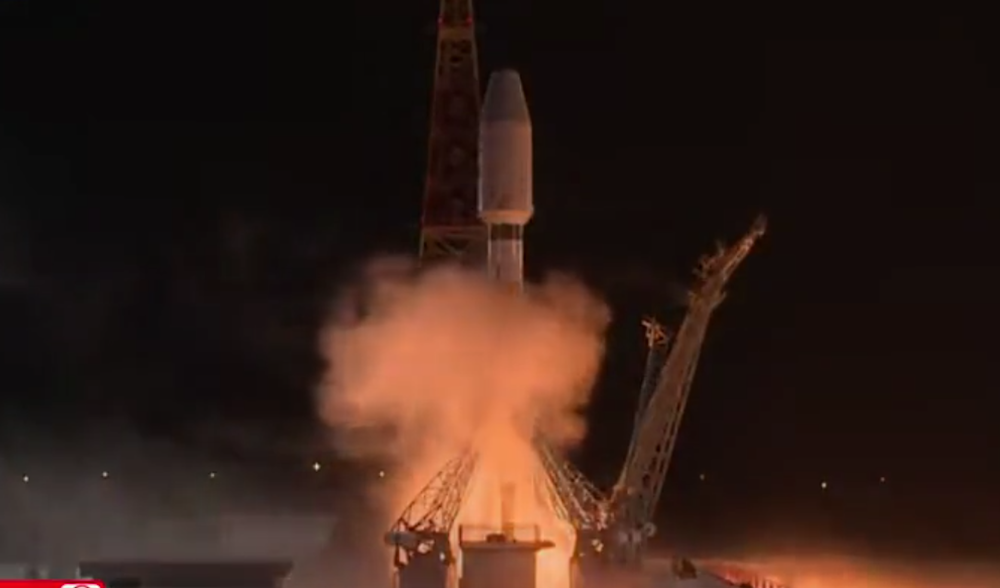
The moment the three Iranian satellites were launched into space on December 28, 2025 (Social media)
In a significant leap for Iran's space program, three domestically developed satellites, Tolou-3, Zafar-2, and Kowsar 1.5, were successfully launched into orbit aboard a Russian Soyuz-2.1b rocket from the Vostochny Cosmodrome. The multi-payload launch marks the first time Iran has placed multiple satellites into space simultaneously and the seventh such collaboration with Russia.
The most advanced among the trio, the Tolou-3 satellite, represents a technological milestone. Weighing 150 kilograms, it is Iran’s heaviest satellite to date and delivers high-resolution imagery, up to five meters in black-and-white and ten meters in color. Nearly 80% of the satellite is made using indigenous technology, showcasing Iran's expanding capability in remote sensing and satellite cluster development, according to Iranian media.
According to Iran's Ambassador to Moscow, Kazem Jalali, this mission underscores the country's growing self-reliance in space technology. In a statement on X, Jalali noted that the design and construction of the satellites were completed entirely within Iran by a coalition of government institutions, academic bodies, and private tech firms. Russia provided launch assistance only, continuing a strategic partnership that has deepened over the years.
🇮🇷🛰️
— Press TV 🔻 (@PressTV) December 28, 2025
Watch the HISTORIC MOMENT when three Iranian satellites were launched into space
Follow https://t.co/B3zXG73Jym pic.twitter.com/DgvcBN9coQ
Zafar-2, Kowsar 1.5 expand civil capabilities
The Zafar-2 satellite, developed by the Iran University of Science and Technology, is equipped for environmental monitoring, natural resource assessment, and disaster response support. It builds upon the Zafar-1 project and enhances Iran’s geospatial capabilities.
Kowsar 1.5, the third satellite launched, is an upgraded model based on earlier Kowsar and Hodhod designs. It incorporates Internet of Things (IoT) functionality, enabling real-time data transmission for smart applications in agriculture, logistics, and environmental monitoring.
Space strategy despite sanctions
Iran's entry into space dates back to 2009, with the launch of Omid, its first domestically built satellite, making it one of 11 nations to have launched its own satellite into space.
Despite enduring Western sanctions, Iran has steadily expanded its launch frequency and payload diversity. In January 2024, the IRGC used the Qaem-100 launcher to send the Soraya satellite into a record 750-kilometer orbit.
Future developments include the launch of the Shaheed Soleimani telecommunications satellite constellation, expected by 2026, and the ongoing construction of the Chabahar Space Center, set to become fully operational by 2031.
This latest mission reaffirms Iran’s position as one of the few nations capable of independently designing, manufacturing, and deploying space technologies.


