
Microsoft warns of rising China AI competition in emerging markets
 3 Min Read
Microsoft's Brad Smith warns US AI firms face growing competition from China's low-cost, state-backed models in Africa, Asia, and beyond.
-
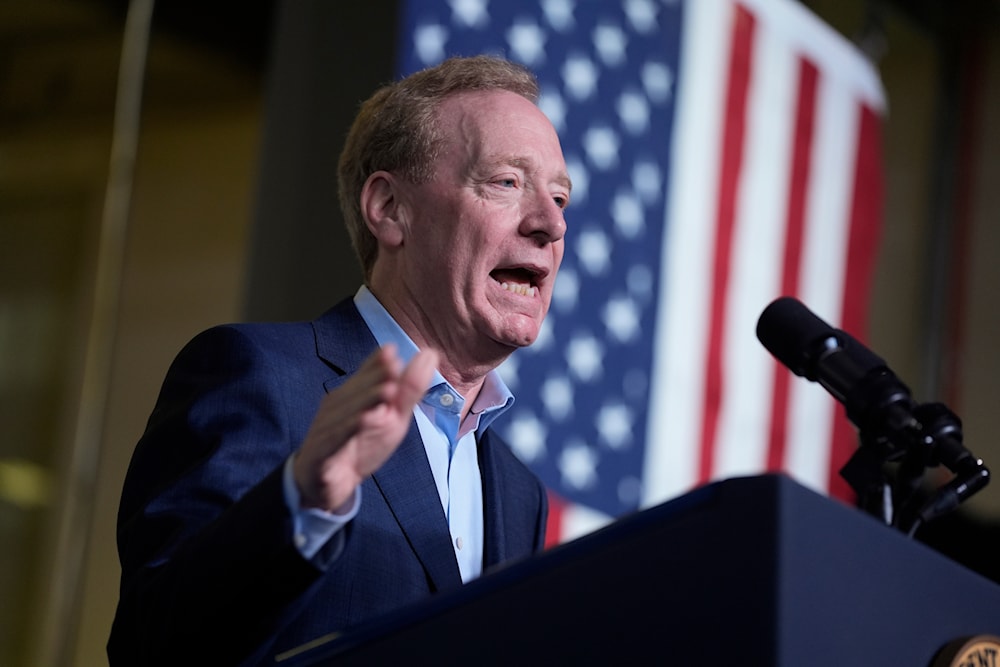
Microsoft President Brad Smith speaks before President Joe Biden delivers remarks on his "Investing in America agenda" at Gateway Technical College, May 8, 2024, in Sturtevant, Wis. (AP)
Microsoft has warned that American AI companies are struggling to keep up with Chinese rivals outside Western markets, as China combines low-cost “open” models with massive government support to gain a competitive edge, the Financial Times reported.
Brad Smith, Microsoft’s president, told the Financial Times that the rapid adoption of AI technology by Chinese startup DeepSeek in emerging markets such as Africa highlights the global competition US firms now face.
“We need to recognize that China, unlike a year ago, now has an open-source model, or even multiple models, that are highly competitive,” Smith said. “They benefit from Chinese government support, which allows them to compete with US companies at much lower prices.”
Smith’s remarks underscore the challenges American companies face as Chinese firms leverage both technological innovation and state backing to expand in markets across Africa, Asia, and beyond.
China dominates AI industry
China made significant strides in AI throughout 2025, emerging as a dominant force in the global AI landscape. By July 29, 2025, China had released 1,509 large AI models, more than any other country, and hosted over 5,100 AI companies, highlighting its rapid expansion in AI innovation and industry influence.
In addition to model development, China became the world’s largest holder of AI-related patents, accounting for roughly 60 % of the global total by November 8, 2025, reinforcing its position at the forefront of AI research and intellectual property.
Breakthroughs were not limited to software: China also advanced in embodied intelligence, with mass production milestones for general-purpose robots achieved in late 2025, signaling leaps in industrial automation and AI-driven manufacturing.
China also made major advances in AI chip technology in 2025, with several domestic examples underscoring its progress. Huawei unveiled second‑generation Ascend AI processors, boosting production efficiency and narrowing the gap with Western designs, while companies like Cambricon and MetaX expanded high‑performance chip offerings supported by state backing.
Additionally, Chinese firms such as SpacemiT developed new RISC‑V‑based processors tailored for AI workloads, and Lisuan Tech launched homegrown GPUs designed to accelerate AI tasks, reflecting a broader push for semiconductor self‑reliance. These developments strengthened China’s AI ecosystem and reduced its dependence on imported chips amid ongoing global tech competition.
On the global stage, events like the World Artificial Intelligence Conference held from July 26–28, 2025, in Shanghai showcased cutting-edge AI innovations from Chinese companies and underlined the nation’s ambition to lead in AI development.


