
New Mexico fines Meta $567 mln for harming children online
 3 Min Read
A New Mexico judge ordered Meta to pay $567 million for harming children's mental health, bringing its total liability in the case to $942 million.
-
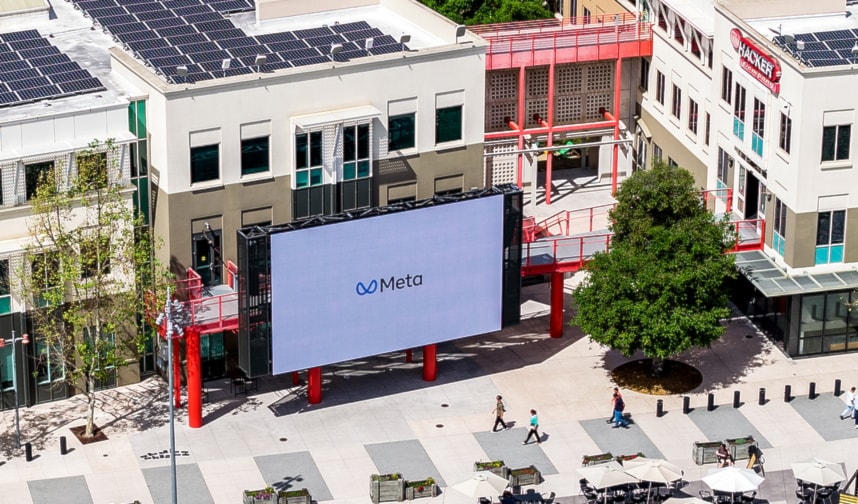
Workers walk past a display at Meta headquarters on March 26, 2026, in Menlo Park, Calif. (AP Photo/Noah Berger)
A New Mexico court has ordered Meta, the parent company of Facebook and Instagram, to pay $567 million into a fund dedicated to addressing the mental health toll its platforms have taken on children.
The penalty comes as the second phase of a landmark case Meta lost in March, when a jury determined the company had knowingly damaged children's mental health while concealing evidence of child sexual exploitation occurring on its platforms.
That trial resulted in a $375 million fine, the maximum allowed. With Thursday's ruling, Meta's total financial liability in the case has climbed to $942 million.
Where the money goes
Judge Bryan Biedscheid directed that the largest share of the new fund, $420 million, be spent on treatment services for young people across New Mexico. The remaining funds are earmarked for prevention programs, screening services, and public awareness campaigns, to be rolled out over the next five years.
The case traces back to a 2023 Guardian investigation that found Facebook and Instagram had effectively become marketplaces facilitating child sex trafficking. Former Meta content moderators later told the outlet that reports of grooming-related material were, in some cases, never escalated internally.
Court-mandated reforms
Beyond the financial penalty, the ruling compels Meta to overhaul several platform practices. The company must strengthen its age-assurance systems in New Mexico, deploying artificial intelligence that infers a user's age from behavioral signals such as their social connections and the content they engage with.
Meta has also been given a two-year deadline to build a dedicated model for identifying users under 13.
Any Instagram or Facebook user Meta estimates to be under 13, or under 18 without a determinable age, must be treated accordingly until they verify otherwise. The company is required to establish a reporting channel with schools or child-safety organizations, purge data collected from under-13 users, introduce clearer in-platform safety guidance, and submit compliance reports twice a year.
Notably, the court stopped short of mandating blanket age verification, citing restrictions under federal children's privacy law and concerns that singling out Meta while sparing competitors would be unfair.
Meta pushes back
New Mexico Attorney General Raúl Torrez welcomed the decision, framing it as a win for families "who worried about what social media is doing to their child," per the Guardian's report.
Meta, for its part, said it "disagrees with the ruling" and intends to appeal, maintaining that it has worked to protect younger users online.
The penalty, while substantial, amounts to a fraction of Meta's roughly $60 billion in profit for 2025. It also lands as the company faces mounting legal exposure elsewhere, including an ongoing trial in Tennessee and another set to begin later this month in federal court in Oakland, California.
Laura Edelson, a Northeastern University researcher focused on social media and cybersecurity, told the Guardian the New Mexico case may be the first in a broader wave of state-level action holding platforms accountable for design choices that harm users.


