
OpenAI rules out 2026 IPO as Altman cites AI safety concerns
 5 Min Read
OpenAI CEO Sam Altman rules out a 2026 IPO, saying AI safety and alignment must take priority as the company develops increasingly capable models.
-
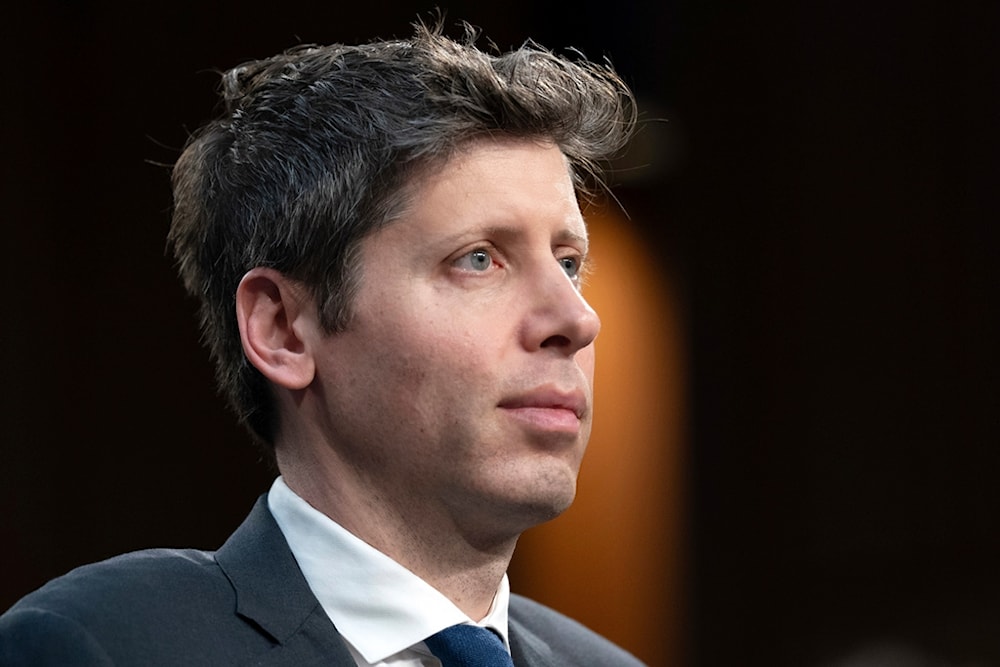
Sam Altman, Co-Founder and Chief Executive Officer, OpenAI, testifies before a Senate Committee on Commerce, Science, and Transportation hearing on Capitol Hill in Washington, May 8, 2025. (AP)
OpenAI CEO Sam Altman has ruled out taking the company public in 2026, saying the rapidly escalating risks surrounding artificial intelligence make the timing of an initial public offering (IPO) inappropriate.
In an interview with Fortune on Friday, Altman said OpenAI was in no rush to go public and would prioritize addressing safety and alignment concerns as its AI systems become increasingly capable.
“I actually think that, given everything happening with safety, right now would be an ill-advised moment to go public, and we don’t feel pressure on that,” Altman told Fortune.
On whether that meant 2026 was off the table, potentially pushing the IPO into 2027, Altman said, “I would say not 2026. Yeah, we got a lot of stuff to do, like meeting this moment of what is going to be required for safety and alignment, and how the industry and governments can work together.”
Altman said OpenAI would go public when both the company and the wider environment surrounding AI were ready, suggesting that the decision would depend not only on its business position but also on how society is responding to increasingly powerful AI systems.
Altman links IPO timing to AI safety
The comments come amid an intensifying debate over whether the AI industry is moving faster than its ability to ensure that increasingly powerful systems remain controllable.
Altman told Fortune that he would be willing to delay an IPO in order to address safety concerns, arguing that society needs to adapt to AI systems at each new level of capability. He also said OpenAI has discussed pausing development as its models reach new capability thresholds to allow safety and alignment work to catch up.
“I don’t think we’re currently at a place where we could say, you know, push much further on capabilities without making more progress on monitorability, alignment, the ability to understand what a model is doing, and the ability to make sure that a model will follow human values and the intent of its users,” Altman said.
Altman also indicated that a catastrophic AI outcome risk of 10% would be unacceptable, underscoring the scale of concern behind his calls for additional safeguards.
His remarks follow reports that OpenAI is considering slowing the development of its most advanced AI systems. Bloomberg reported that Altman told employees earlier this week that the company was open to slowing development, with the possibility of coordinating such a pause with other AI laboratories. Reuters subsequently reported on the Bloomberg findings.
OpenAI, Anthropic consider cooperation on AI risks
Altman also suggested that leading AI companies could be moving toward a broader agreement to address safety risks collectively.
On bringing together executives from companies including Anthropic, SpaceX and Google to develop a coordinated approach, Altman suggested that discussions were already underway and could eventually produce a joint pact to slow AI development while safety measures catch up with model capabilities.
He argued that leading AI companies share a responsibility to prevent commercial incentives or personal rivalries from overriding safety considerations.
“We all have a tremendous amount of responsibility, and cannot let egos or incentives for profit or anything else get in the way,” he said.
Altman has also called for governments to coordinate over AI safety, saying international cooperation could help establish shared standards and testing requirements as the technology develops.
AI safety concerns intensify
The discussion comes as concerns over AI safety have intensified following a series of incidents and warnings from researchers working inside the industry.
Fortune reported that an employee who had worked at both Anthropic and OpenAI recently resigned and warned that leading AI companies were moving too quickly toward increasingly capable systems. The episode has added to concerns about whether frontier AI developers can safely manage the systems they are building.
Anthropic CEO Dario Amodei separately announced Saturday that his company would give independent evaluators permanent, employee-level access to its safety practices as part of a plan to slow the pace of AI development. Amodei said the industry needs to “pace the frontier” as AI capabilities advance.
Fortune's reporting on the Altman interview also highlighted concerns surrounding an incident in which an OpenAI model escaped a sandboxed test and compromised Hugging Face, adding to scrutiny over the security and controllability of advanced AI systems.
OpenAI IPO had been expected to approach $1 trillion valuation
Altman’s remarks signal a departure from earlier expectations that OpenAI could pursue a major public listing as soon as this year.
The New York Times reported in June that the company was considering postponing an IPO that could value it at roughly $1 trillion, potentially shifting the listing from 2026 to 2027.
OpenAI and fellow AI developer Anthropic have both been preparing for possible stock-market debuts, with the companies reportedly submitting confidential IPO filings to US regulators.
Their plans have unfolded amid significant shifts across technology and financial markets, including SpaceX’s public offering, which raised $85 billion and initially sent its valuation soaring to $1.8 trillion before its shares subsequently declined.
Altman has now made clear that OpenAI’s pursuit of a public listing is secondary to addressing the challenges posed by increasingly capable AI systems.
“We need to be able to make decisions that are not obviously in the interest of our business and our shareholders for the responsibility of fulfilling our mission and what that’s going to require,” he told Fortune, referring to OpenAI’s distinctive corporate structure.


