
Pivoting from US, Germany eyes space-based missile detection system
 3 Min Read
Germany is developing its own space-based missile detection system, aiming to become the first European power with such a capability.
-
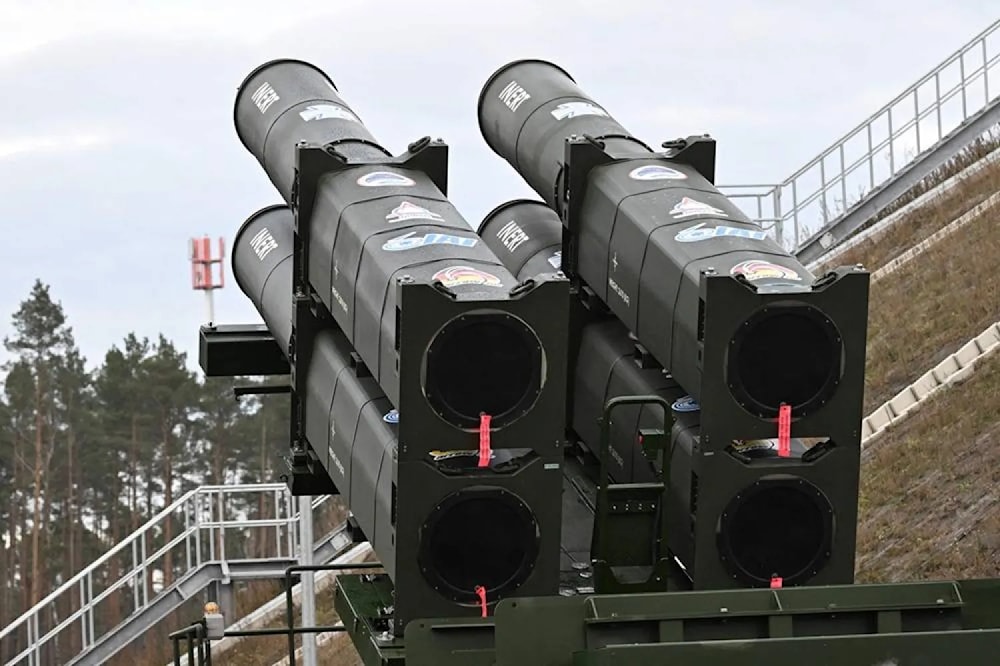
The Arrow 3 shield system is pictured during an event of the German Air Force to declare the Initial Operating Capability for the Arrow Weapon System for Germany at the Annaburger Heide Air Base, eastern Germany, on December 3, 2025 (AFP)
Germany is planning to become the first European power to develop its own space-based missile detection capability, as the continent seeks to reduce its dependence on the United States for defense, the Financial Times reported.
According to FT, the head of Germany’s space command, Major General Michael Traut, said the country was “now planning to have the core of a satellite-based missile detection system." Traut described the initiative as a national project that would nonetheless be “open of course, to European collaboration."
He told FT that developing national capabilities would ultimately strengthen Germany’s and Europe’s partnership with Washington, rather than weaken it.
Speaking at the European Space Conference in Brussels, Traut said missile detection had become an operational priority. “Space-based early warning and satellite-based missile detection . . . [is] very urgent because, well, the threat is imminent,” he said, according to FT.
Traut also highlighted Europe’s long-standing reliance on Washington in the space domain. “Europe has been dependent on the United States . . . more or less in all aspects of space capability,” he said. He added, according to FT, that there was “a strong need to build up some German and European sovereign capabilities in missile detection and interception . . . We not only want to be able to detect missiles early, we want to be able to fight them early."
Europe, Germany discuss cooperation
In a separate interview cited by FT, Josef Aschbacher, director-general of the European Space Agency (ESA), said the multinational body was “in discussions” over potential involvement in the future development of missile-detection technology.
“There are continuous meetings between Germany and us, offering the capability of a system architecture to link their capabilities into European infrastructure,” Aschbacher said. “But all these discussions are just happening, right now.”
Aschbacher reiterated, however, that while dual-use technologies were becoming an increasingly important focus for the ESA, the agency would not be involved in the development of offensive weapons.
He added that dual-use programmes were expected to grow significantly, a shift that would require a doubling of Europe’s collective spending on space by 2030. “You can’t do defence without space,” Aschbacher said, according to the Financial Times.


